



Search News
Industry Portal
Popular Tags
All categories
U.S. DOMINANCE Act Tightens Mineral Import Compliance




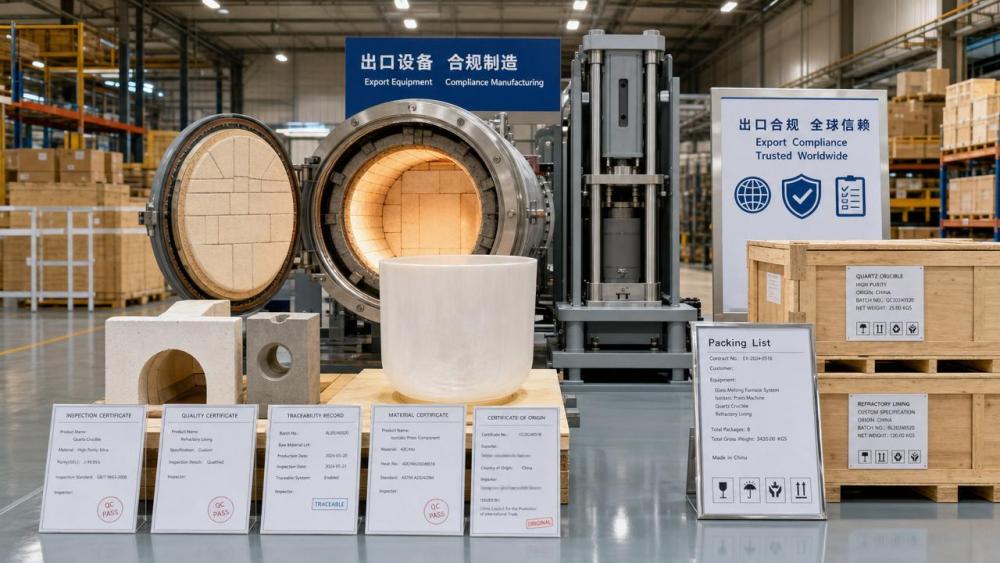
On June 14, 2026, the U.S. House of Representatives passed H.R.7037, the DOMINANCE ACT, introducing a clearer compliance track for imports involving designated critical mineral inputs. By classifying rare earths, high-purity quartz, and refractory-grade alumina as strategic supply chain core materials, the measure draws new attention to equipment exporters, component suppliers, procurement teams, and trade compliance functions tied to products that contain these materials. For manufacturers and exporters of glass furnaces, AAC autoclaves, isostatic presses, and quartz slab presses, the issue is no longer only product performance or delivery capability, but also whether mineral sourcing records and due diligence documents can support market access from 2027 onward.
What the measure now requires
The confirmed facts are limited but commercially significant. The U.S. House of Representatives passed H.R.7037, the “Dominating Overseas Minerals Investment and New Alliances for Critical Energy Act” on June 14, 2026. The measure identifies rare earths, high-purity quartz, and refractory-grade alumina, including non-metallic mineral inputs, as “strategic supply chain core materials.”
According to the provided summary, starting in January 2027, imported finished equipment or key components containing those materials will need to be accompanied by a full-chain ESG traceability declaration and a third-party mineral due diligence report. The examples specifically mentioned include refractory linings for roller kilns, quartz crucibles, and sintering molds used in vacuum hot-press equipment.
The same summary states that the act directly affects the export compliance path for Chinese-made glass furnaces, AAC autoclaves, isostatic presses, and quartz slab presses. No additional implementation details, agency guidance, or official link were provided in the input.
Where pressure may emerge across the supply chain
Exported equipment with embedded mineral inputs
From an industry perspective, manufacturers shipping complete machines may face the most immediate documentation burden when their equipment includes covered mineral-based parts or consumable-critical components. The impact is likely to appear in export review, customer qualification, bid documentation, and shipment preparation, because compliance may depend not only on the main machine but also on the traceability status of embedded materials.
Component and materials sourcing inside the equipment chain
Suppliers of refractory linings, quartz products, and specialized tooling may receive more detailed requests from downstream equipment makers. Analysis shows that the practical pressure point is likely to shift upstream into raw material declarations, supplier files, and third-party due diligence support, especially where a finished machine cannot be documented without confirming the origin and ESG traceability of key mineral inputs.
Trade, procurement, and delivery coordination
For trading companies, sourcing teams, and supply chain service providers, the rule change may affect contract review, document collection, and delivery scheduling. What deserves closer attention is whether procurement and export teams can align technical documents, supplier statements, and due diligence materials early enough to avoid compliance gaps close to shipment or customs-facing stages.
Buyers and after-sales support functions
Purchasers and after-sales teams may also feel the impact if replacement parts, spare components, or service-related deliveries involve the covered materials. Observably, the issue is not limited to first-time equipment sales; any transaction path that depends on importing covered equipment or key parts may need closer screening of supporting documents and traceability readiness.
What companies should review now
Screen affected product structures
Analysis shows that companies should first identify whether their equipment, key assemblies, or frequently replaced components contain rare earths, high-purity quartz, or refractory-grade alumina as described in the summary. This is a practical starting point for deciding which product lines may require additional compliance preparation before the January 2027 timeline.
Check document readiness beyond ordinary technical files
What deserves closer attention is the difference between ordinary product documentation and the materials now referenced by the act. A full-chain ESG traceability declaration and a third-party mineral due diligence report point to a broader evidence set than conventional technical datasheets, inspection records, or shipment paperwork. Companies involved in export, tender support, or customer approval may need to examine whether current supplier files can support that requirement.
Watch tender, contract, and customer wording
Because no detailed execution language was provided in the input, it would be premature to describe a settled enforcement outcome. Even so, companies should monitor whether future bid documents, purchase specifications, customer onboarding requests, or trade terms begin to reflect the new traceability and due diligence expectations for covered equipment and parts.
Align procurement and delivery planning
Observably, compliance preparation may affect lead times if upstream suppliers are unable to provide the required declarations or third-party reports on schedule. For that reason, export teams and procurement teams may need to coordinate earlier on supplier qualification, document completeness, and delivery commitments where covered mineral inputs are involved.
Why this matters as a market signal
Analysis shows that this development is best read as more than a narrow product rule. It signals that import compliance for certain industrial equipment may increasingly be assessed through the traceability and due diligence status of embedded mineral inputs, not only through the final machine specification. For affected exporters, the commercial question is whether supply chain documentation can travel with the product in a way that satisfies buyer and market-entry expectations.
At the same time, it is more appropriate to understand this as a rule change that still requires continued observation rather than as a fully transparent enforcement framework. The input confirms the passage in the U.S. House and the stated documentation requirement from January 2027, but it does not provide the later-stage execution details that companies usually need for operational planning. That is why ongoing attention to official wording, certification practice, tender language, and market feedback remains necessary.
How the industry may best read the change
In practical terms, this event points to a tighter compliance threshold for equipment and components linked to designated mineral inputs. The immediate significance lies less in broad market claims and more in the growing importance of traceability files, third-party due diligence support, and upstream supplier coordination for exports tied to the affected product categories.
From an industry perspective, the most balanced reading is that this is a concrete compliance signal with a defined future time point, but not yet a complete picture of implementation. Companies connected to the named equipment categories should treat it as an operational issue worth early review, while continuing to watch how execution standards and market practice develop.
Basis of this article and items still to verify
This article is based on the user-provided news title, event date, and event summary. The content has been written within the confirmed facts provided in the input and does not add unverified data, institutions, market figures, or source links.
For events of this kind, relevant source types commonly include official legislative releases, regulator or trade authority publications, customs-related notices, industry association updates, standard-setting documents, and reporting by established business or industry media. However, a specific official source link was not provided in the input, so the underlying official text and subsequent implementation documents still require continued verification.
Items that remain worth monitoring include detailed policy wording, compliance interpretation, certification or due diligence practice, changes in tender and contract documents, industry feedback, and how affected companies ultimately execute traceability and reporting requirements in cross-border deliveries.
Related News
- Can EU ETS compliance software reduce errors in emissions reporting?Author :Dr. Alaric Vance

- How to verify a green building certification agency before hiringAuthor :Dr. Alaric Vance

- What do BREEAM material standards require from construction products?Author :Dr. Alaric Vance

- When does a hydrogen fuel kiln reduce emissions in ceramic firing?Author :Dr. Alaric Vance

- What counts in carbon emissions reporting under today’s ESG rulesAuthor :Dr. Alaric Vance

- How to verify whether a green building certification company is credibleAuthor :Dr. Alaric Vance

- How to verify carbon compliance in building materials before project approvalAuthor :Dr. Alaric Vance

- ISO 50100:2026 Reshapes Decarbonization ComplianceAuthor :Dr. Alaric Vance

- How to Measure Building Material Emissions Reduction for ESG ReportingAuthor :Dr. Alaric Vance

- How to Evaluate EU ETS Compliance Software for Audit Readiness and Data AccuracyAuthor :Dr. Alaric Vance

- What Green Material Certification Means for ESG Compliance in ManufacturingAuthor :Dr. Alaric Vance

- How Green Building Material Manufacturing Supports ESG Compliance and Cost ControlAuthor :Dr. Alaric Vance

- EU Extends CBAM Transition, Adds August Carbon Filing RuleAuthor :Dr. Alaric Vance

- EU CBAM Phase Three Reaches Equipment ExportersAuthor :Dr. Alaric Vance

- EU Tightens CE-EPD Rules for Glass MachineryAuthor :Dr. Alaric Vance

- Low-Carbon Cement Production System: Cost, ROI, and Compliance BasicsAuthor :Dr. Alaric Vance

- EU Carbon Compliance Materials: 2026 Rule Changes That Affect SourcingAuthor :Dr. Alaric Vance

- Decarbonization in Building Materials: 5 Cost Drivers to Watch in 2026Author :Dr. Alaric Vance

- Tailings Recycling Technology Trends Shaping ESG Compliance in 2026Author :Dr. Alaric Vance

- Green Building Certification Criteria That Matter in Material SelectionAuthor :Dr. Alaric Vance

- EU Carbon Compliance Materials: Key Rules and Cost Risks in 2026Author :Dr. Alaric Vance

- Tailings Recycling China: Policy and Project Outlook 2026Author :Dr. Alaric Vance

- EU Sets CBAM Trial Rules for Glass and CeramicsAuthor :Dr. Alaric Vance

- Carbon Reduction Roadmap: 5 Cost Levers That Matter in 2026Author :Dr. Alaric Vance

- EU CBAM Extends to Glass and Ceramics in 2026Author :Dr. Alaric Vance

- Green Building Certification Rating: What Changes Project Value in 2026Author :Dr. Alaric Vance

- Cement Dust Emission Control Options Under New ESG Compliance PressureAuthor :Dr. Alaric Vance

- Industrial Dust Emission Control for Material Handling Compliance GuideAuthor :Dr. Alaric Vance

- EU CBAM Extends to Glass and Ceramic EquipmentAuthor :Dr. Alaric Vance

- Cement Plant Dust Control Options Compared for Compliance and Operating CostAuthor :Dr. Alaric Vance

- Low-Carbon Cement Materials in 2026: Cost, Carbon Rules, and Supply RisksAuthor :Dr. Alaric Vance

- Fly Ash Cement Applications: Best Uses and Performance LimitsAuthor :Dr. Alaric Vance

- Dust Free Production: Key Process Controls That Actually WorkAuthor :Dr. Alaric Vance

- EU REACH Update Raises Export Compliance Bar for Glass and Quartz LinesAuthor :Dr. Alaric Vance

- EU CBAM Guidance Brings Grid Carbon Factors Into Export FilingsAuthor :Dr. Alaric Vance

- Carbon Reduction in Cement Plants: Practical Routes and Trade-OffsAuthor :Dr. Alaric Vance