



Search News
Industry Portal
Popular Tags
All categories
Industrial Green Building Certification: Compliance Risks to Check Early




Industrial green building certification has moved from a branding exercise to a project gatekeeper. In building material plants, equipment packages, and industrial construction programs, early compliance gaps now translate into redesigns, procurement friction, delayed approvals, and weaker commercial positioning.
That shift matters across cement, glass, ceramics, AAC, refractory, and stone processing. Certification frameworks increasingly look beyond the finished building and into material sourcing, energy intensity, emissions control, operational safety, and the credibility of technical records behind every system.
In practice, the biggest risk is not failing one audit item. It is setting a certification target before the team understands whether equipment data, process design, supplier documents, and site management can actually support that target.
Why early checks matter more in industrial projects
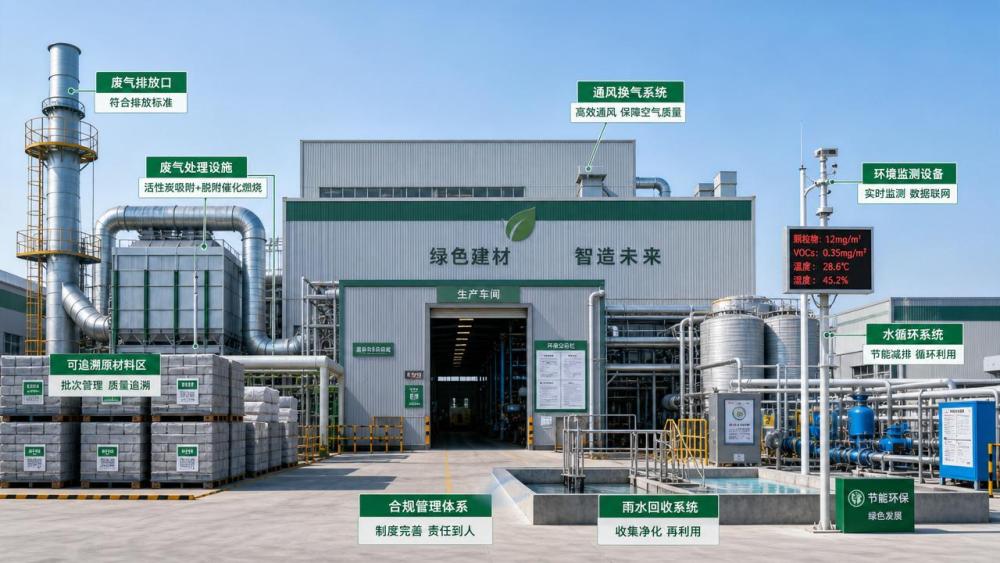
Industrial green building certification is more complex than office or retail certification. Heavy material production involves combustion systems, dust collection, thermal equipment, high-load motors, water circulation, and raw material streams that carry both environmental and quality implications.
A cement grinding line, PV glass furnace, ceramic kiln, or stone CNC workshop may all pursue greener project credentials. Yet each one carries different compliance evidence, different operating risks, and different data quality challenges.
This is where early screening creates value. Before a project is locked, teams need to confirm whether the certification path matches the real process conditions, local rules, utility profile, and supplier readiness.
Platforms such as NMBS are useful because they connect process equipment knowledge with commercial and regulatory context. That matters when energy-saving claims, dust-control performance, kiln heat recovery, or low-carbon upgrades must stand up to both procurement review and compliance review.
What industrial green building certification really examines
At a basic level, industrial green building certification evaluates whether a facility is designed, built, and operated to reduce environmental burden while maintaining functional performance. For industrial assets, that evaluation usually touches several layers at once.
It is not only about materials
Low-carbon concrete, recycled glass content, or engineered panels may support the rating. But certifications also review ventilation design, water reuse, hazardous storage controls, metering, waste handling, and indoor exposure conditions around production zones.
It is not only about energy labels
A plant can buy efficient motors and still miss targets if process integration is weak. Fans may be oversized, compressed air may leak, waste heat may remain unused, or actual load factors may differ from the design assumptions used in the certification model.
It is also about evidence quality
Certification bodies want traceable proof. That includes source declarations, emissions reports, commissioning records, test certificates, maintenance plans, and sometimes digital monitoring logs. Weak evidence often fails faster than weak performance.
The compliance risks that deserve attention at the start
Most industrial green building certification problems appear long before the audit. They usually begin in early design, vendor selection, or document control.
These risk areas apply across many NMBS-covered sectors. A glass processor may struggle with furnace energy documentation. A refractory plant may face material declaration issues. A stone line may have dust and water recycling gaps. The pattern is different, but the logic is the same.
Five checks that prevent expensive surprises
1. Validate supplier evidence before purchase orders
Do not assume every efficient machine is certification-ready. Request environmental declarations, energy consumption data, emissions test references, safety compliance records, and commissioning support details before final selection.
2. Match process reality with design assumptions
Industrial green building certification often relies on modeled performance. If shift patterns, raw material moisture, furnace loads, or dust collection duty cycles differ from the model, the promised result can quickly collapse.
3. Check traceability at batch and system level
Traceability should not stop at a material name. It should link product batch, origin, composition, transport records, and where relevant, recycled content proof. The same principle applies to key system components.
4. Review site controls as part of certification planning
Construction dust, runoff, chemical storage, noise, and worker exposure controls can affect both compliance and audit confidence. Site discipline is often treated as temporary, but it leaves permanent certification consequences.
5. Confirm local rule alignment early
A global certification target may still be constrained by local emissions permits, water discharge rules, fire safety requirements, or carbon reporting obligations. Early alignment avoids contradictory specifications.
Where industrial projects usually lose certification value
The most common failure is chasing points instead of building a coherent compliance case. A project may add efficient lighting and smart metering, yet ignore the dominant impacts from kiln heat loss, bag filter leakage, or unstable recycled input quality.
Another weak point is fragmented responsibility. Design consultants may handle the rating framework, while equipment suppliers manage process data, and contractors manage site execution. Without one evidence structure, gaps are inevitable.
Industrial green building certification also loses value when teams rely on generic supplier claims. In sectors covered by NMBS, equipment performance depends heavily on feed characteristics, operating temperature, automation logic, maintenance discipline, and local utilities.
- A vertical mill may achieve strong efficiency in one grinding circuit and disappoint in another.
- A tempering furnace may look efficient on paper but create reject losses that raise total energy per usable square meter.
- A dust-control retrofit may satisfy one standard yet miss the monitoring depth needed for broader green compliance.
That is why technical intelligence matters. Reliable certification planning depends on understanding how process systems perform in real industrial conditions, not only in product brochures.
A practical review framework for early-stage decisions
A simple early review can reduce risk without slowing the project.
Start with four evidence groups
- Design basis: process flow, load assumptions, utilities, layout, ventilation, and drainage logic.
- Supplier compliance: declarations, test data, safety documentation, and operating limits.
- Construction controls: waste handling, storage rules, spill prevention, dust suppression, and change records.
- Operational proof: commissioning data, metering, maintenance plans, and emissions monitoring.
Then ask two commercial questions
First, does the certification path support market access, tender scoring, investor confidence, or export readiness? Second, is the evidence burden realistic for the actual project team and supplier chain?
If either answer is weak, the target may need adjustment. A realistic industrial green building certification strategy is more valuable than an ambitious one that cannot be defended.
What to do next before the audit phase begins
Before any formal submission, build a gap map that compares certification requirements with available evidence, real process conditions, and site execution plans. This should be done before major equipment and construction decisions become expensive to reverse.
It also helps to benchmark similar systems across cement, glass, ceramics, AAC, refractory, and stone applications. Cross-sector insight often reveals where claimed low-carbon performance is credible, where it is conditional, and where hidden compliance costs usually appear.
Industrial green building certification works best when it is treated as a disciplined decision framework. The strongest projects check documents early, test assumptions against operating reality, and keep every environmental claim connected to verifiable process evidence.
The next sensible step is to review current projects through that lens: trace the biggest compliance risks, compare them with equipment and material data already in hand, and identify which gaps should be closed before design freeze or procurement release.
Related News
- Can EU ETS compliance software reduce errors in emissions reporting?Author :Dr. Alaric Vance

- How to verify a green building certification agency before hiringAuthor :Dr. Alaric Vance

- What do BREEAM material standards require from construction products?Author :Dr. Alaric Vance

- When does a hydrogen fuel kiln reduce emissions in ceramic firing?Author :Dr. Alaric Vance

- What counts in carbon emissions reporting under today’s ESG rulesAuthor :Dr. Alaric Vance

- How to verify whether a green building certification company is credibleAuthor :Dr. Alaric Vance

- How to verify carbon compliance in building materials before project approvalAuthor :Dr. Alaric Vance

- ISO 50100:2026 Reshapes Decarbonization ComplianceAuthor :Dr. Alaric Vance

- How to Measure Building Material Emissions Reduction for ESG ReportingAuthor :Dr. Alaric Vance

- How to Evaluate EU ETS Compliance Software for Audit Readiness and Data AccuracyAuthor :Dr. Alaric Vance

- What Green Material Certification Means for ESG Compliance in ManufacturingAuthor :Dr. Alaric Vance

- How Green Building Material Manufacturing Supports ESG Compliance and Cost ControlAuthor :Dr. Alaric Vance

- EU Extends CBAM Transition, Adds August Carbon Filing RuleAuthor :Dr. Alaric Vance

- EU CBAM Phase Three Reaches Equipment ExportersAuthor :Dr. Alaric Vance

- EU Tightens CE-EPD Rules for Glass MachineryAuthor :Dr. Alaric Vance

- Low-Carbon Cement Production System: Cost, ROI, and Compliance BasicsAuthor :Dr. Alaric Vance

- EU Carbon Compliance Materials: 2026 Rule Changes That Affect SourcingAuthor :Dr. Alaric Vance

- Decarbonization in Building Materials: 5 Cost Drivers to Watch in 2026Author :Dr. Alaric Vance

- Tailings Recycling Technology Trends Shaping ESG Compliance in 2026Author :Dr. Alaric Vance

- Green Building Certification Criteria That Matter in Material SelectionAuthor :Dr. Alaric Vance

- EU Carbon Compliance Materials: Key Rules and Cost Risks in 2026Author :Dr. Alaric Vance

- Tailings Recycling China: Policy and Project Outlook 2026Author :Dr. Alaric Vance

- EU Sets CBAM Trial Rules for Glass and CeramicsAuthor :Dr. Alaric Vance

- Carbon Reduction Roadmap: 5 Cost Levers That Matter in 2026Author :Dr. Alaric Vance

- EU CBAM Extends to Glass and Ceramics in 2026Author :Dr. Alaric Vance

- Green Building Certification Rating: What Changes Project Value in 2026Author :Dr. Alaric Vance

- Cement Dust Emission Control Options Under New ESG Compliance PressureAuthor :Dr. Alaric Vance

- Industrial Dust Emission Control for Material Handling Compliance GuideAuthor :Dr. Alaric Vance

- EU CBAM Extends to Glass and Ceramic EquipmentAuthor :Dr. Alaric Vance

- Cement Plant Dust Control Options Compared for Compliance and Operating CostAuthor :Dr. Alaric Vance

- Low-Carbon Cement Materials in 2026: Cost, Carbon Rules, and Supply RisksAuthor :Dr. Alaric Vance

- Fly Ash Cement Applications: Best Uses and Performance LimitsAuthor :Dr. Alaric Vance

- Dust Free Production: Key Process Controls That Actually WorkAuthor :Dr. Alaric Vance

- EU REACH Update Raises Export Compliance Bar for Glass and Quartz LinesAuthor :Dr. Alaric Vance

- EU CBAM Guidance Brings Grid Carbon Factors Into Export FilingsAuthor :Dr. Alaric Vance

- Carbon Reduction in Cement Plants: Practical Routes and Trade-OffsAuthor :Dr. Alaric Vance