



Search News
Industry Portal
Popular Tags
All categories
EU Extends CBAM Transition, Adds August Carbon Filing Rule




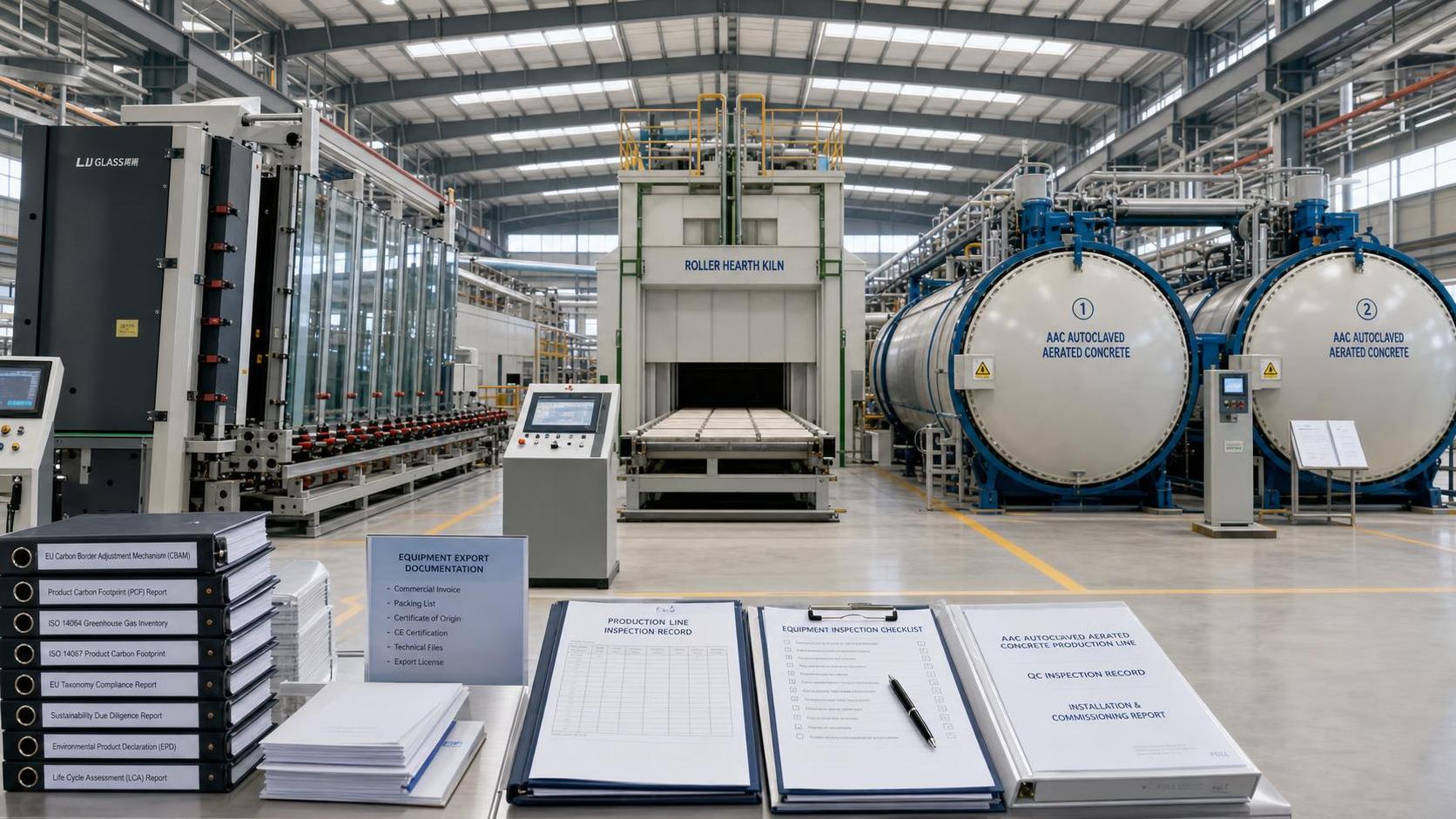
On July 29, 2026, the European Commission issued amendment COM(2026) 412 final, extending the CBAM transition period to December 31, 2026, while also bringing forward a more immediate compliance step for certain equipment imports. From August 1, 2026, importers bringing glass deep-processing equipment, refractory material forming presses, and roller hearth kiln systems into the EU must submit pre-certified carbon data through the CBAM portal. For buyers, distributors, and supply chain teams, the significance lies in the split timeline: the overall transition window is longer, but documentation duties begin much sooner and may affect customs timing and order execution.

A Longer Transition Period With an Earlier Filing Obligation
According to the information provided, the European Commission released an official amendment on July 29, 2026, identified as COM(2026) 412 final. The amendment extends the CBAM transition period from the previously scheduled end date of August 31, 2026, to December 31, 2026.
The same amendment also states that, starting on August 1, 2026, all imports into the EU of glass deep-processing equipment, refractory material forming presses, and roller hearth kiln systems must submit pre-certified carbon data through the CBAM portal.
The provided information further indicates that this adjustment directly affects customs clearance timing and the compliance preparation window for overseas buyers, with particular urgency for distributors in the Middle East and Southeast Asia planning to place orders in the third quarter.
Where the Pressure Will Likely Be Felt First
Import-side purchasing decisions face a narrower practical window
From an industry perspective, importers and overseas procurement teams are likely to feel the impact first because the policy change separates legal timing from operational timing. The transition period is longer on paper, but the August 1 carbon data filing requirement creates an earlier action point for any covered equipment moving toward EU entry. What deserves closer attention is whether purchasing teams treat the extension as extra flexibility when, in practice, customs-related preparation may now need to be completed before shipment or contract execution milestones.
Distributors may need to adjust order sequencing and delivery commitments
For channel distributors, especially those planning third-quarter orders, the main exposure is likely to sit in delivery scheduling and customer commitment management. Analysis shows that if carbon data registration is not ready in time, the issue may not be the transaction itself but the pace of customs handling and the reliability of promised delivery dates. This is particularly relevant to the Middle East and Southeast Asia distributors mentioned in the provided information.
Equipment suppliers and documentation teams move closer to the compliance front line
Manufacturers and export-side commercial teams may also be affected because the new requirement concerns product-linked carbon information submitted through the CBAM portal. Observably, this pushes technical documentation, transaction paperwork, and buyer-seller coordination into a more time-sensitive role. Even where the legal importer bears the formal filing responsibility, suppliers may still become central to how quickly the required data package can be prepared.
Logistics and customs support providers may see execution risk increase
Supply chain service providers, including customs-facing coordination teams, are likely to encounter the practical consequences during shipment handling. The provided information specifically highlights customs clearance timeliness, which suggests that compliance readiness may become part of shipment release planning. The operational issue to watch is not only whether a filing exists, but whether it is completed early enough to avoid disruption at the clearance stage.
What Companies Should Put on Their Immediate Agenda
Separate the extension date from the August compliance trigger
Analysis shows that one of the clearest near-term priorities is internal communication. Companies involved in covered equipment transactions should distinguish between the extension of the CBAM transition period to December 31, 2026 and the start of the pre-certified carbon data submission requirement on August 1, 2026. Treating these two dates as the same compliance milestone could create avoidable execution delays.
Review whether current orders fall within the named equipment categories
What deserves closer attention is product scope at the order level. Businesses handling glass deep-processing equipment, refractory material forming presses, or roller hearth kiln systems should check ongoing quotations, pending contracts, and third-quarter shipment plans against the categories named in the provided information. The practical question is whether a transaction expected to enter the EU after August 1 will require pre-certified carbon data readiness before customs processing.
Test document readiness before shipment milestones are fixed
From an operational perspective, companies should focus on document timing rather than only policy timing. Procurement teams, suppliers, and customs-facing coordinators may need to confirm in advance whether the required carbon data can be prepared and submitted through the CBAM portal before dispatch, border arrival, or customs declaration steps become time-critical. This is especially relevant where delivery promises have already been communicated downstream.
Keep customer and supplier communication narrowly tied to confirmed facts
Because the provided information confirms both an extension and an earlier filing duty, counterpart communication should stay precise. Businesses may need to explain that the rule change does not simply postpone CBAM-related action; instead, it extends the transition period while introducing a defined documentation requirement from August 1 for the listed equipment categories. That distinction matters for lead-time planning, contract coordination, and order expectations.
Why This Reads as a Timing Signal, Not a Relaxation
Observably, this update is better understood as a timing and execution signal than as a broad easing of compliance pressure. The extension to December 31, 2026 gives the market a longer formal transition period, but the August 1 portal filing requirement for specified equipment means operational discipline now matters more, not less. Analysis shows that the real issue is the compression of preparation work into an earlier import stage.
It is more appropriate to understand this as a policy development that already has practical consequences, while still requiring continued observation. The confirmed facts point to immediate compliance relevance for named equipment categories, but the broader business effect will depend on how consistently importers, suppliers, and customs-facing teams translate the rule into day-to-day transaction workflows.
How the Market Is Most Reasonably Likely to Read It
The industry significance of this update lies in the mismatch between headline timing and operational timing. A longer transition period may appear to create breathing room, yet the earlier carbon data registration requirement means affected import transactions may face tighter preparation discipline from August onward. For businesses active in EU-bound equipment trade, the more balanced reading is that this is neither a purely short-term administrative adjustment nor a final indicator of all future CBAM practice. It is a concrete compliance development with immediate workflow implications and a clear need for continued monitoring.
Basis of This Article and What Still Needs Verification
This article is based on the user-provided news title, event date of July 29, 2026, and event summary describing the European Commission amendment COM(2026) 412 final, the extension of the CBAM transition period, and the August 1, 2026 pre-certified carbon data filing requirement for specified equipment imports.
For this type of industry update, source categories that are commonly relevant include official government or regulatory announcements, company disclosures, industry association updates, authoritative media coverage, and standard-setting or policy documents. The specific official source link was not provided in the input, so ongoing verification is still necessary before using the information for legal, customs, or contractual decisions.
What remains worth watching is whether subsequent official wording, implementation guidance, or trade-facing clarification further defines filing practice, product scope interpretation, or execution timing for affected import transactions.
Related News
- Can EU ETS compliance software reduce errors in emissions reporting?Author :Dr. Alaric Vance

- How to verify a green building certification agency before hiringAuthor :Dr. Alaric Vance

- What do BREEAM material standards require from construction products?Author :Dr. Alaric Vance

- When does a hydrogen fuel kiln reduce emissions in ceramic firing?Author :Dr. Alaric Vance

- What counts in carbon emissions reporting under today’s ESG rulesAuthor :Dr. Alaric Vance

- How to verify whether a green building certification company is credibleAuthor :Dr. Alaric Vance

- How to verify carbon compliance in building materials before project approvalAuthor :Dr. Alaric Vance

- ISO 50100:2026 Reshapes Decarbonization ComplianceAuthor :Dr. Alaric Vance

- How to Measure Building Material Emissions Reduction for ESG ReportingAuthor :Dr. Alaric Vance

- How to Evaluate EU ETS Compliance Software for Audit Readiness and Data AccuracyAuthor :Dr. Alaric Vance

- What Green Material Certification Means for ESG Compliance in ManufacturingAuthor :Dr. Alaric Vance

- How Green Building Material Manufacturing Supports ESG Compliance and Cost ControlAuthor :Dr. Alaric Vance

- EU Extends CBAM Transition, Adds August Carbon Filing RuleAuthor :Dr. Alaric Vance

- EU CBAM Phase Three Reaches Equipment ExportersAuthor :Dr. Alaric Vance

- EU Tightens CE-EPD Rules for Glass MachineryAuthor :Dr. Alaric Vance

- Low-Carbon Cement Production System: Cost, ROI, and Compliance BasicsAuthor :Dr. Alaric Vance

- EU Carbon Compliance Materials: 2026 Rule Changes That Affect SourcingAuthor :Dr. Alaric Vance

- Decarbonization in Building Materials: 5 Cost Drivers to Watch in 2026Author :Dr. Alaric Vance

- Tailings Recycling Technology Trends Shaping ESG Compliance in 2026Author :Dr. Alaric Vance

- Green Building Certification Criteria That Matter in Material SelectionAuthor :Dr. Alaric Vance

- EU Carbon Compliance Materials: Key Rules and Cost Risks in 2026Author :Dr. Alaric Vance

- Tailings Recycling China: Policy and Project Outlook 2026Author :Dr. Alaric Vance

- EU Sets CBAM Trial Rules for Glass and CeramicsAuthor :Dr. Alaric Vance

- Carbon Reduction Roadmap: 5 Cost Levers That Matter in 2026Author :Dr. Alaric Vance

- EU CBAM Extends to Glass and Ceramics in 2026Author :Dr. Alaric Vance

- Green Building Certification Rating: What Changes Project Value in 2026Author :Dr. Alaric Vance

- Cement Dust Emission Control Options Under New ESG Compliance PressureAuthor :Dr. Alaric Vance

- Industrial Dust Emission Control for Material Handling Compliance GuideAuthor :Dr. Alaric Vance

- EU CBAM Extends to Glass and Ceramic EquipmentAuthor :Dr. Alaric Vance

- Cement Plant Dust Control Options Compared for Compliance and Operating CostAuthor :Dr. Alaric Vance

- Low-Carbon Cement Materials in 2026: Cost, Carbon Rules, and Supply RisksAuthor :Dr. Alaric Vance

- Fly Ash Cement Applications: Best Uses and Performance LimitsAuthor :Dr. Alaric Vance

- Dust Free Production: Key Process Controls That Actually WorkAuthor :Dr. Alaric Vance

- EU REACH Update Raises Export Compliance Bar for Glass and Quartz LinesAuthor :Dr. Alaric Vance

- EU CBAM Guidance Brings Grid Carbon Factors Into Export FilingsAuthor :Dr. Alaric Vance

- Carbon Reduction in Cement Plants: Practical Routes and Trade-OffsAuthor :Dr. Alaric Vance