



Search News
Industry Portal
Popular Tags
All categories
EU CBAM Phase Three Reaches Equipment Exporters




On July 27, 2026, the EU's Carbon Border Adjustment Mechanism (CBAM) entered its third implementation phase and extended reporting requirements to selected non-metallic material production equipment, including glass processing equipment, refractory brick presses, roller kiln systems, and AAC autoclaves. For equipment manufacturers exporting to the EU, this is not just a procedural update: it directly affects quarterly carbon data reporting, verifier-certified documentation, and how overseas buyers assess supplier compliance, bidding eligibility, and long-term market access.
What the New Reporting Scope Covers
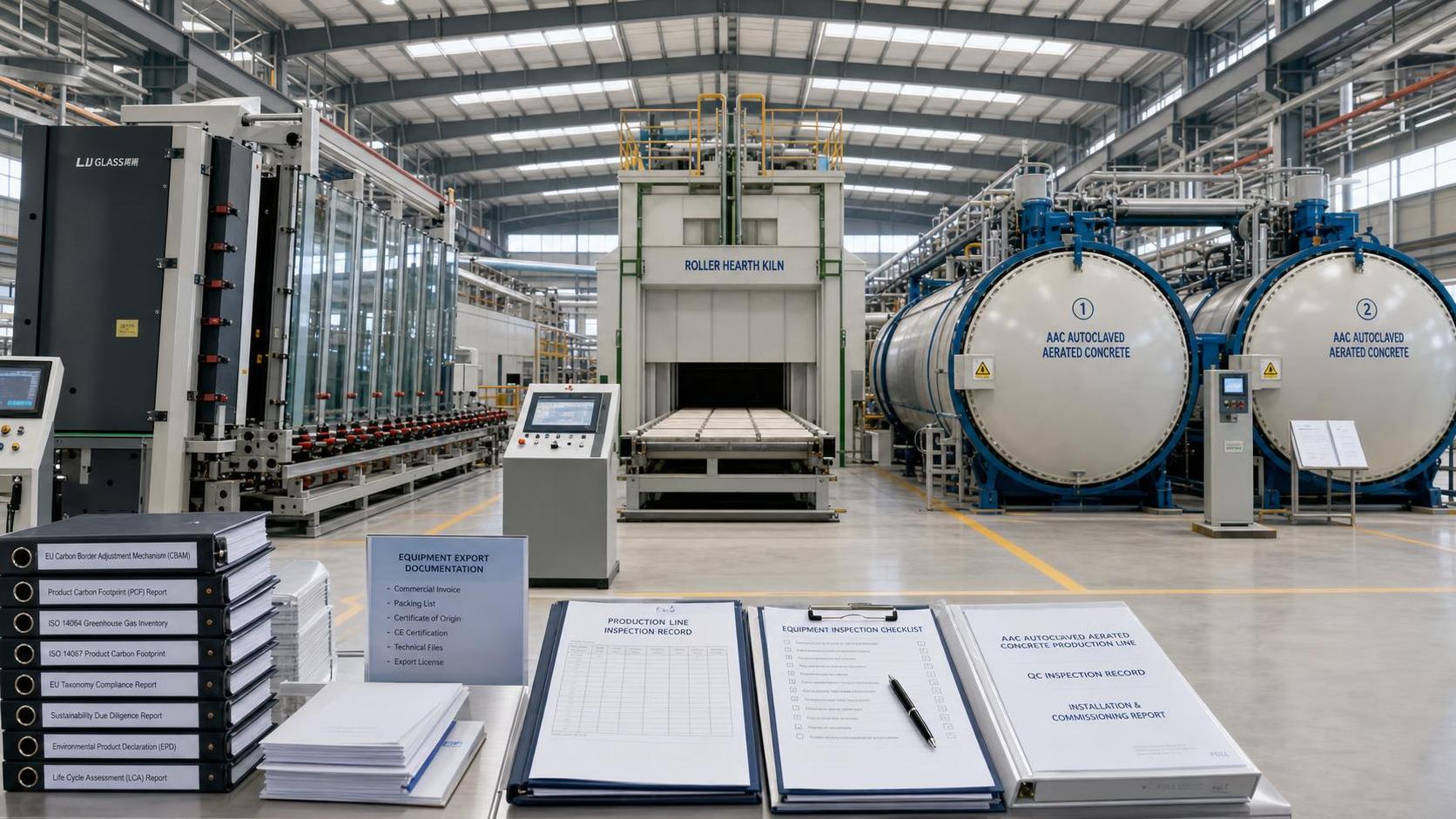
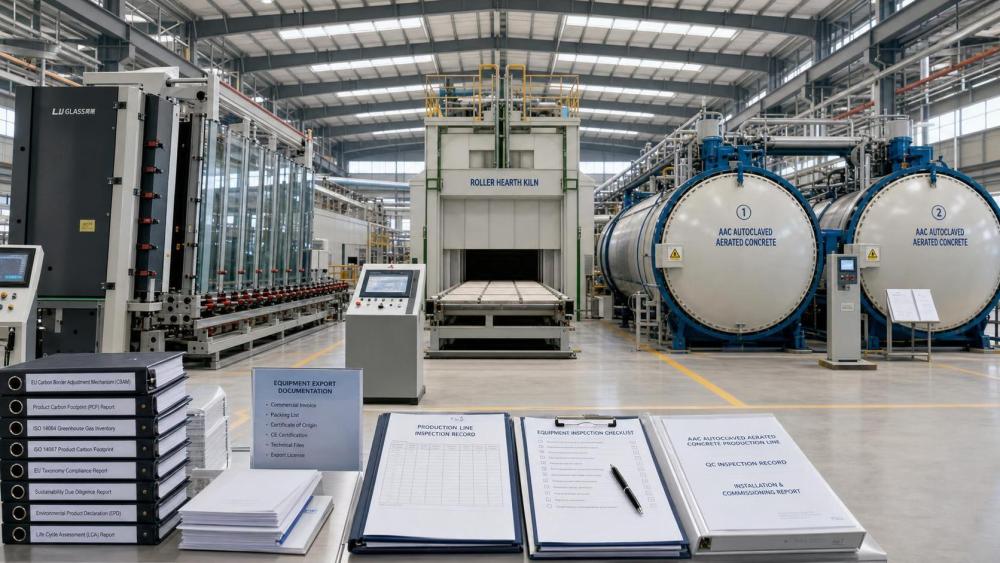
According to the provided information, CBAM phase three took effect on July 27, 2026. In this phase, non-metallic material production equipment was brought into the reporting scope for the first time. The products specifically mentioned are glass deep-processing equipment, refractory brick presses, roller kiln systems, and AAC autoclaves.
The same information states that manufacturers exporting these types of equipment to the EU must submit the embedded carbon emission intensity of the corresponding production lines by the end of each quarter. The required reporting units are given as kg CO2e/kW·h or kg CO2e/ton. The submitted data must be certified by an EU-accredited verifier.
The provided summary also makes clear that this requirement has a direct bearing on how overseas buyers evaluate the compliance credentials of Chinese suppliers, as well as their qualification for project tenders and admission to long-term cooperation arrangements.
Where the Immediate Pressure Is Likely to Appear
Export equipment manufacturers face a new compliance threshold
From an industry perspective, the first and most direct impact falls on manufacturers of the covered equipment categories that ship to the EU market. The pressure is likely to appear in reporting preparation, internal data collection, and verification readiness, because quarterly submission is now tied to product lines rather than only to general corporate statements.
Overseas buyers may tighten supplier screening
Analysis shows that EU-facing buyers and project owners are likely to pay closer attention to whether suppliers can provide verifier-certified embedded carbon data on time. The effect is likely to be felt in supplier prequalification, tender participation, and longer-term procurement decisions, especially where compliance documents are reviewed alongside technical and commercial offers.
Project bidding and delivery coordination could become more document-driven
Observably, the requirement may also affect business roles involved in bid support, contract execution, and cross-border delivery coordination. Even where equipment demand remains unchanged, the ability to align production-line data, verification documents, and submission timing may become a practical factor in whether a transaction proceeds smoothly.
What Companies Should Watch Now
Quarter-end reporting discipline
What deserves closer attention is the quarterly submission deadline. For companies already selling the covered equipment into the EU, the reporting calendar itself becomes an operational issue. The key practical question is whether internal teams can produce production-line carbon intensity data in a form that is ready for external verification before each quarter closes.
Verification readiness, not just raw data availability
The requirement is not limited to collecting numbers. The provided information specifies that the data must be certified by an EU-accredited verifier. In practice, companies should distinguish between having internal figures and having figures that are organized, documented, and supportable in a verification process.
Customer communication around qualification and tender access
For sales teams and account managers, this development should also be read as a customer-facing issue. Since the requirement directly affects buyer assessments of compliance qualifications and bidding eligibility, suppliers may need to prepare clearer communication on what data can be provided, in what format, and within what timeframe.
Product lines and markets that now carry higher documentation sensitivity
Companies involved in glass, ceramics, refractory, and AAC-related equipment exports should pay particular attention to whether specific product lines are now subject to closer documentation checks in EU business discussions. The policy signal and the commercial response from buyers are related, but they are not identical, so both sides of that equation deserve monitoring.
Why This Looks Like More Than a Technical Filing Change
Analysis shows that this development is better understood as a market access signal rather than a narrow administrative update. The confirmed fact is the reporting obligation and verifier requirement. The broader implication, which still needs continued observation, is that compliance documentation may increasingly influence commercial trust, procurement qualification, and continuity of cooperation in covered equipment categories.
It is also more appropriate to understand this as an early operating reality for affected exporters, while still treating the full market response as something that requires further observation. The rule has already defined a reporting requirement, but how different buyers, tenders, and supplier reviews apply that requirement in practice may vary over time.
How to Read the Signal at This Stage
At this stage, the most balanced reading is that CBAM phase three has created a concrete compliance task for certain equipment exporters and a new screening reference for EU-facing buyers. The confirmed change is immediate in reporting terms, while the broader commercial impact should be viewed as a developing industry dynamic rather than a fixed end result. For companies in the affected segments, the near-term priority is documentation credibility and reporting readiness.
Basis of This Article
This article is based on the user-provided news title, event date, and event summary regarding the July 27, 2026 launch of CBAM phase three and its application to selected non-metallic material production equipment. No specific official source link was provided in the input, so the exact official reference still requires ongoing verification.
For this type of development, commonly relevant source categories may include official notices, company disclosures, industry association updates, authoritative media reporting, and standard-related documents. Continued attention should be paid to any follow-up clarifications on reporting scope, verifier-related implementation details, and how procurement and tender practices respond in the affected export segments.
Related News
- Can EU ETS compliance software reduce errors in emissions reporting?Author :Dr. Alaric Vance

- How to verify a green building certification agency before hiringAuthor :Dr. Alaric Vance

- What do BREEAM material standards require from construction products?Author :Dr. Alaric Vance

- When does a hydrogen fuel kiln reduce emissions in ceramic firing?Author :Dr. Alaric Vance

- What counts in carbon emissions reporting under today’s ESG rulesAuthor :Dr. Alaric Vance

- How to verify whether a green building certification company is credibleAuthor :Dr. Alaric Vance

- How to verify carbon compliance in building materials before project approvalAuthor :Dr. Alaric Vance

- ISO 50100:2026 Reshapes Decarbonization ComplianceAuthor :Dr. Alaric Vance

- How to Measure Building Material Emissions Reduction for ESG ReportingAuthor :Dr. Alaric Vance

- How to Evaluate EU ETS Compliance Software for Audit Readiness and Data AccuracyAuthor :Dr. Alaric Vance

- What Green Material Certification Means for ESG Compliance in ManufacturingAuthor :Dr. Alaric Vance

- How Green Building Material Manufacturing Supports ESG Compliance and Cost ControlAuthor :Dr. Alaric Vance

- EU Extends CBAM Transition, Adds August Carbon Filing RuleAuthor :Dr. Alaric Vance

- EU CBAM Phase Three Reaches Equipment ExportersAuthor :Dr. Alaric Vance

- EU Tightens CE-EPD Rules for Glass MachineryAuthor :Dr. Alaric Vance

- Low-Carbon Cement Production System: Cost, ROI, and Compliance BasicsAuthor :Dr. Alaric Vance

- EU Carbon Compliance Materials: 2026 Rule Changes That Affect SourcingAuthor :Dr. Alaric Vance

- Decarbonization in Building Materials: 5 Cost Drivers to Watch in 2026Author :Dr. Alaric Vance

- Tailings Recycling Technology Trends Shaping ESG Compliance in 2026Author :Dr. Alaric Vance

- Green Building Certification Criteria That Matter in Material SelectionAuthor :Dr. Alaric Vance

- EU Carbon Compliance Materials: Key Rules and Cost Risks in 2026Author :Dr. Alaric Vance

- Tailings Recycling China: Policy and Project Outlook 2026Author :Dr. Alaric Vance

- EU Sets CBAM Trial Rules for Glass and CeramicsAuthor :Dr. Alaric Vance

- Carbon Reduction Roadmap: 5 Cost Levers That Matter in 2026Author :Dr. Alaric Vance

- EU CBAM Extends to Glass and Ceramics in 2026Author :Dr. Alaric Vance

- Green Building Certification Rating: What Changes Project Value in 2026Author :Dr. Alaric Vance

- Cement Dust Emission Control Options Under New ESG Compliance PressureAuthor :Dr. Alaric Vance

- Industrial Dust Emission Control for Material Handling Compliance GuideAuthor :Dr. Alaric Vance

- EU CBAM Extends to Glass and Ceramic EquipmentAuthor :Dr. Alaric Vance

- Cement Plant Dust Control Options Compared for Compliance and Operating CostAuthor :Dr. Alaric Vance

- Low-Carbon Cement Materials in 2026: Cost, Carbon Rules, and Supply RisksAuthor :Dr. Alaric Vance

- Fly Ash Cement Applications: Best Uses and Performance LimitsAuthor :Dr. Alaric Vance

- Dust Free Production: Key Process Controls That Actually WorkAuthor :Dr. Alaric Vance

- EU REACH Update Raises Export Compliance Bar for Glass and Quartz LinesAuthor :Dr. Alaric Vance

- EU CBAM Guidance Brings Grid Carbon Factors Into Export FilingsAuthor :Dr. Alaric Vance

- Carbon Reduction in Cement Plants: Practical Routes and Trade-OffsAuthor :Dr. Alaric Vance