



Search News
Industry Portal
Popular Tags
All categories
How to verify low-carbon building materials in Europe




A low-carbon claim is only useful when it can be traced to a defined product, a declared lifecycle boundary, and evidence that the material remains fit for its intended construction use. For low-carbon building materials in Europe, technical verification should therefore begin with documents and comparability, not with a supplier’s sustainability wording, recycled-content percentage, or a single carbon figure on a brochure.
The practical question is not simply whether a concrete mix, insulation board, glazing unit, ceramic tile, AAC block, or stone panel has a lower footprint. It is whether its environmental data can be compared fairly with alternatives while its structural, fire, durability, moisture, thermal, and installation requirements remain satisfied. A material with a lower reported production-stage impact may still be the wrong choice if it creates replacement risk, requires unusual site controls, or does not meet the applicable product requirements.
Start with an Environmental Product Declaration
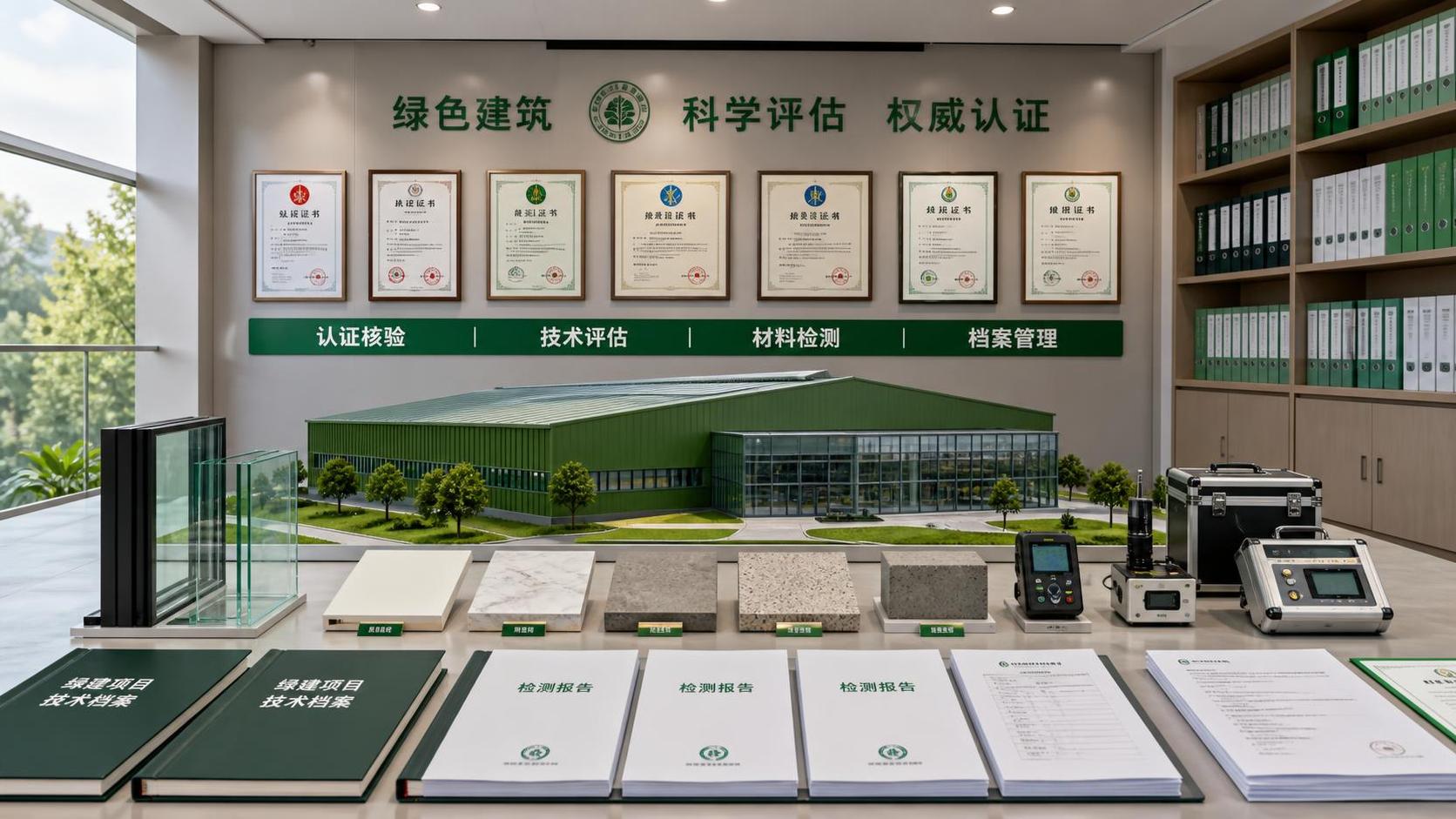
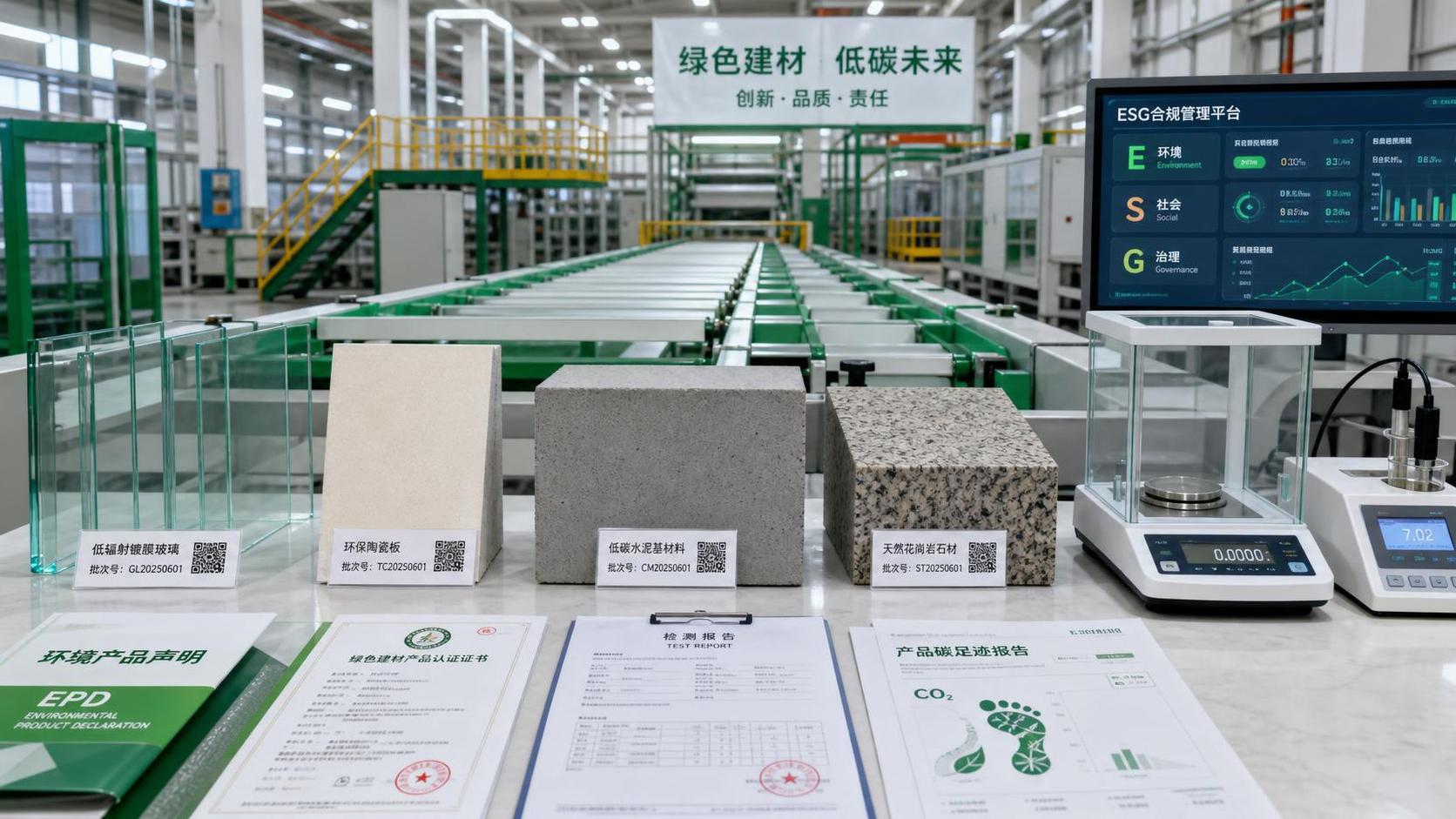
An Environmental Product Declaration (EPD) is usually the strongest starting point because it presents environmental impacts through a defined lifecycle assessment method. It does not, by itself, certify that a product is “green” or guarantee that one product is better than another. Its value is that it makes the basis of the claim visible.
Ask for the full EPD rather than a marketing summary. A credible document should identify the exact product or product family, the declared unit, the lifecycle modules covered, the manufacturing location or representative production scope, and the period for which the data applies. It should also show whether the EPD is independently verified and published through an established programme operator.
The declared unit is often where comparisons fail. Carbon data may be reported per kilogram, cubic metre, square metre, piece, or another functional unit. Comparing one tonne of cementitious material with one square metre of façade panel says little unless the assemblies perform the same function. For a building decision, convert products to the required functional basis: for example, the quantity needed to deliver a specified wall area, thermal resistance, loading capacity, fire classification, or design service life.
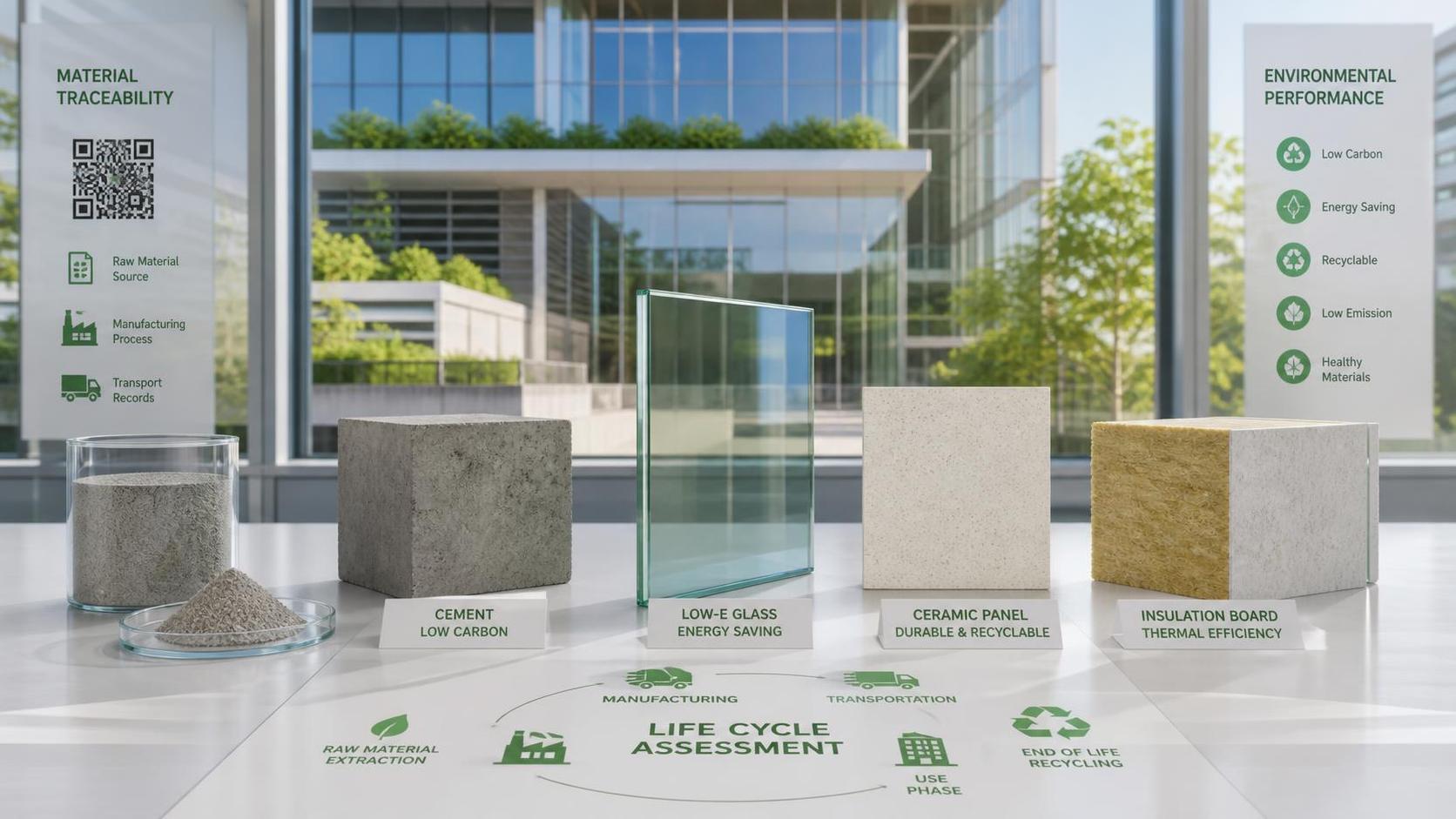
Also read the lifecycle modules. Production-stage impacts are commonly reported separately from transport, installation, use, repair, replacement, demolition, and end-of-life treatment. A low value at the factory gate can be relevant for procurement, but it is not a whole-building result. Where a project assessment includes downstream stages, the same stages must be used for every candidate material.

Do not compare carbon figures until the scope matches
Two EPDs can both appear valid while remaining unsuitable for direct comparison. Technical evaluators should align four conditions before ranking suppliers: product function, declared unit, lifecycle boundary, and data basis.
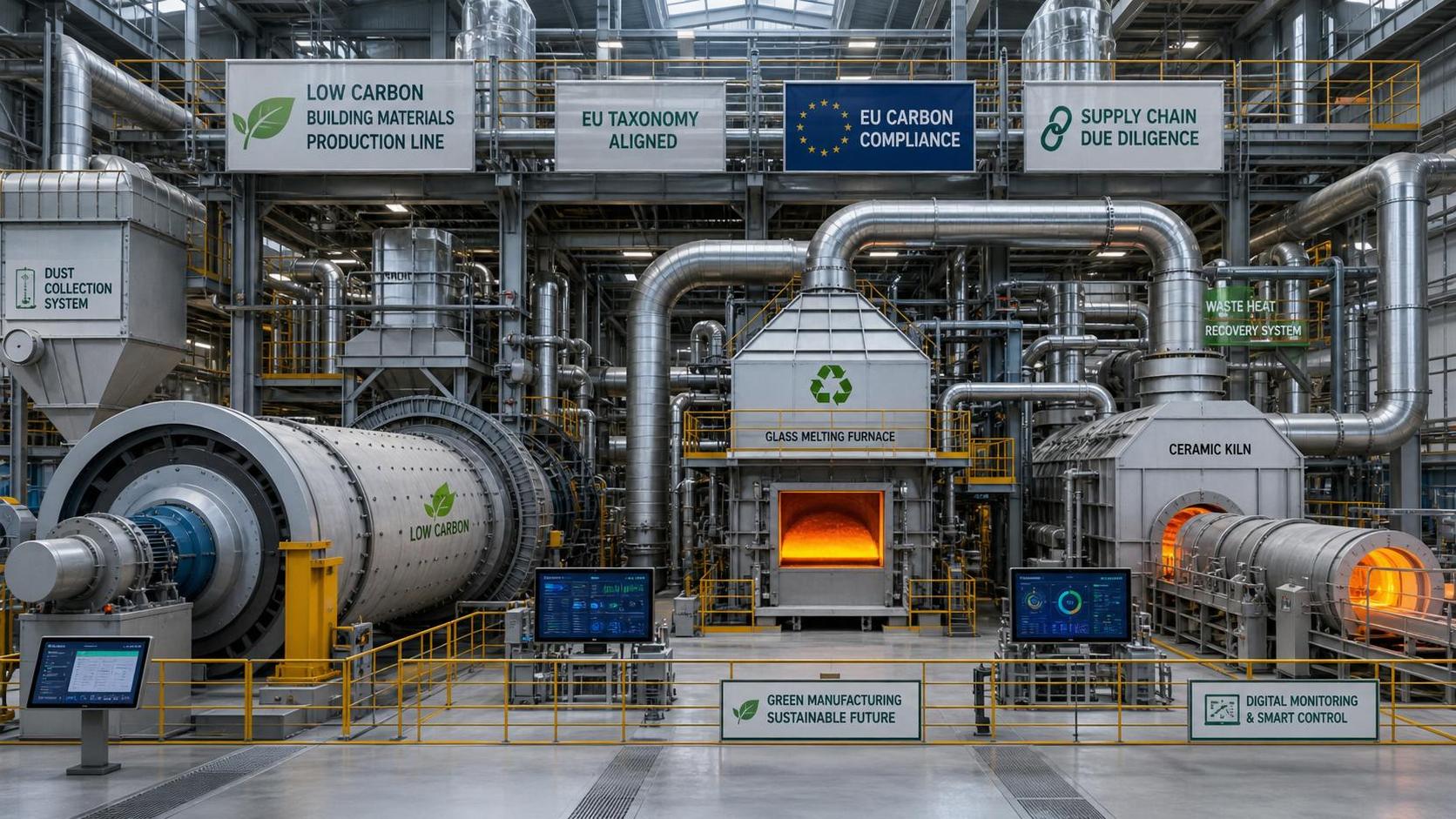
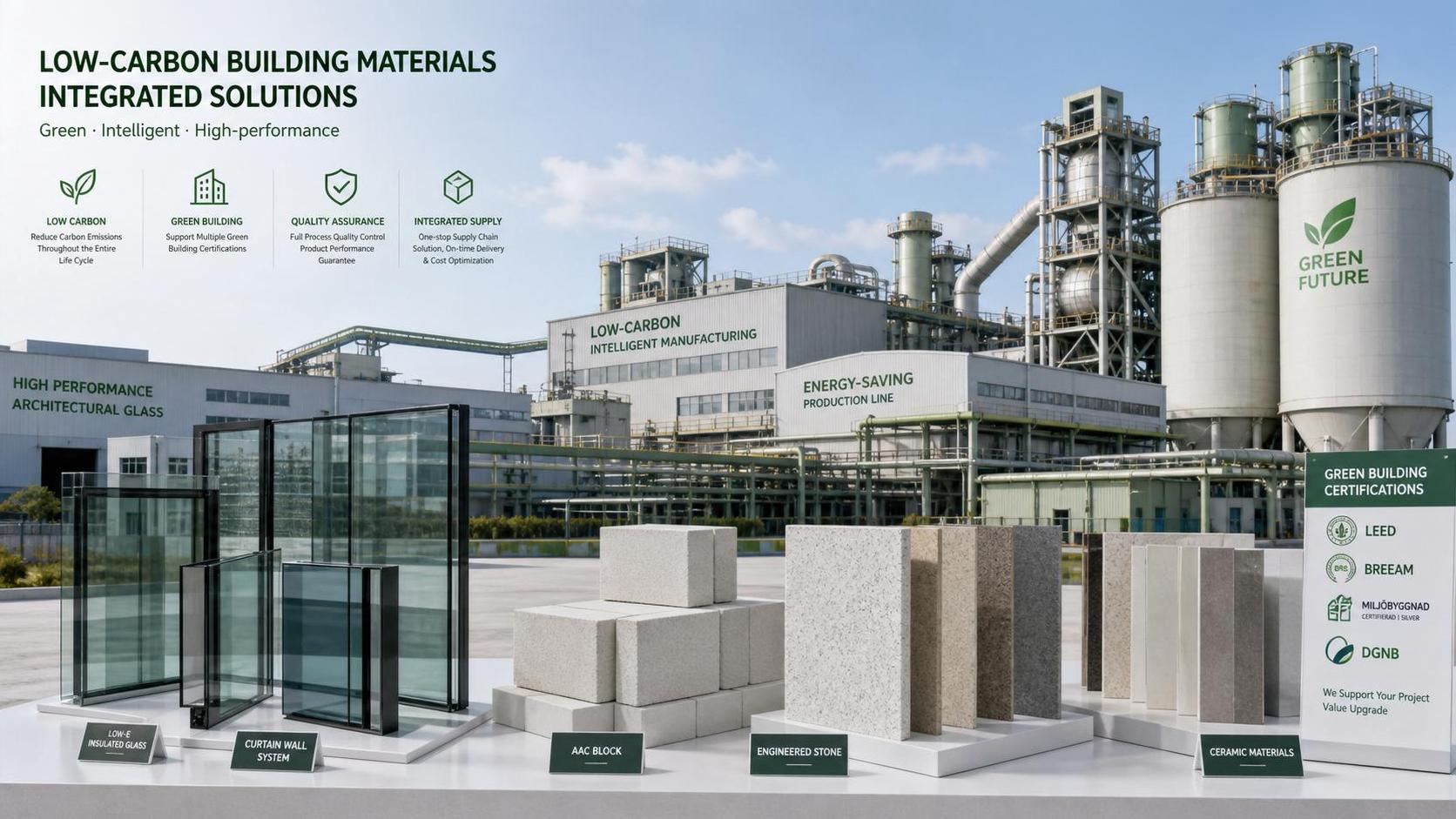
For cement, concrete, glass, ceramics, and engineered mineral products, the production route deserves particular attention. Lower clinker content, supplementary mineral additions, cullet use, electrified heating, waste-heat recovery, renewable electricity procurement, and alternative fuels can each affect the footprint. They do not have the same implications for consistency, availability, or performance. The correct test is whether the EPD represents the route used for the material actually offered to the project.
Factory-specific EPDs are generally more useful for a defined procurement package than broad industry-average declarations. Industry data can still help at early design stage, when the design team is comparing material categories rather than selecting a manufacturer. The distinction should remain clear in the specification and carbon model.
Separate environmental evidence from market-access evidence
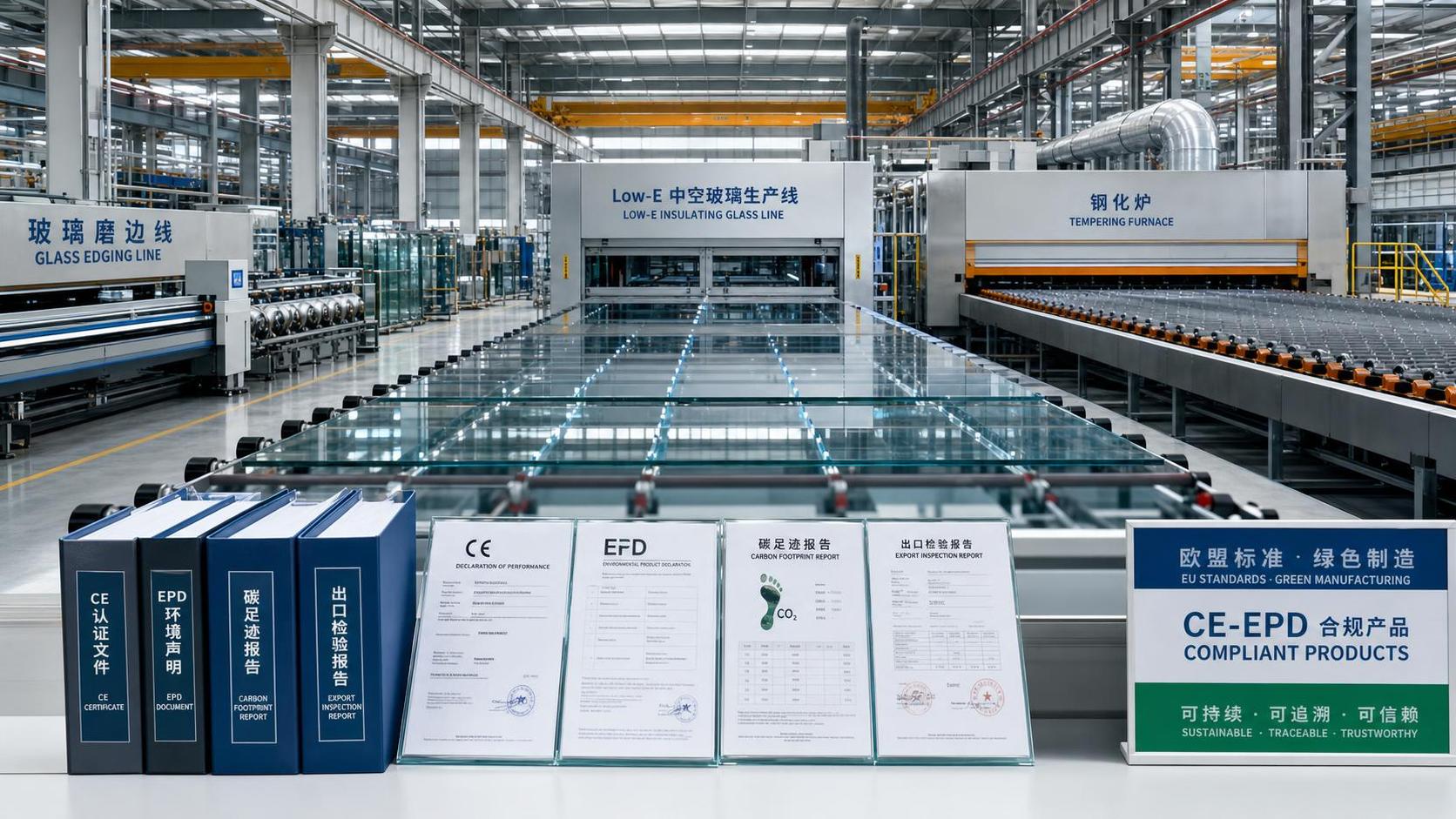
CE marking and an EPD serve different purposes. CE marking is linked to the product’s declared performance and its route to the European market under the relevant construction-product framework. An EPD communicates environmental information using lifecycle assessment rules. Neither document replaces the other.
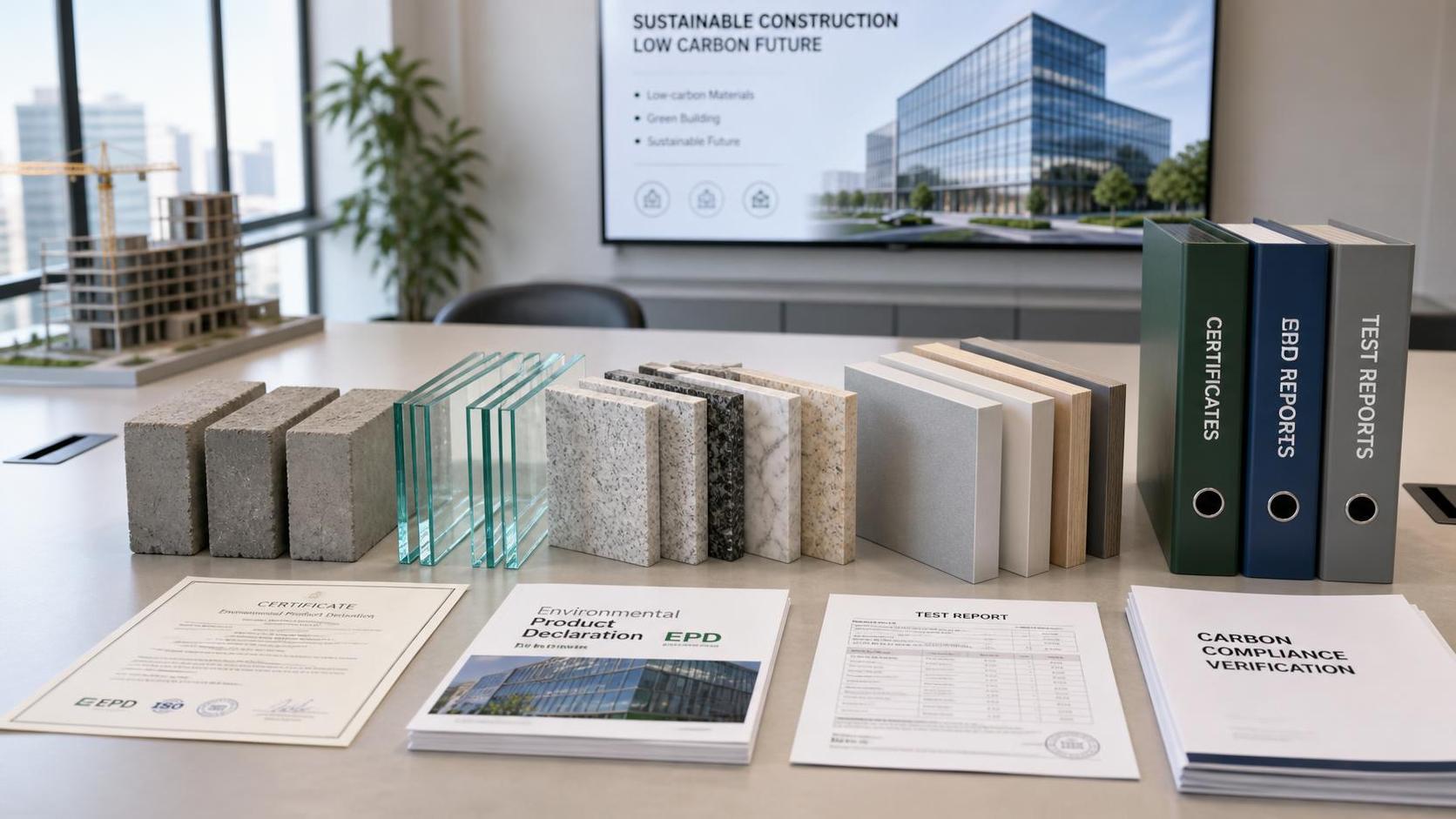
A supplier can provide an EPD yet fail to demonstrate that the product satisfies the applicable technical requirements for its intended use. Equally, a CE-marked product may be technically compliant but provide no meaningful carbon evidence beyond a general claim. The evaluation file should keep these streams separate:
- Environmental file: EPD, lifecycle calculation basis, raw-material and energy information where relevant, recycled-content evidence, and product-specific transport assumptions.
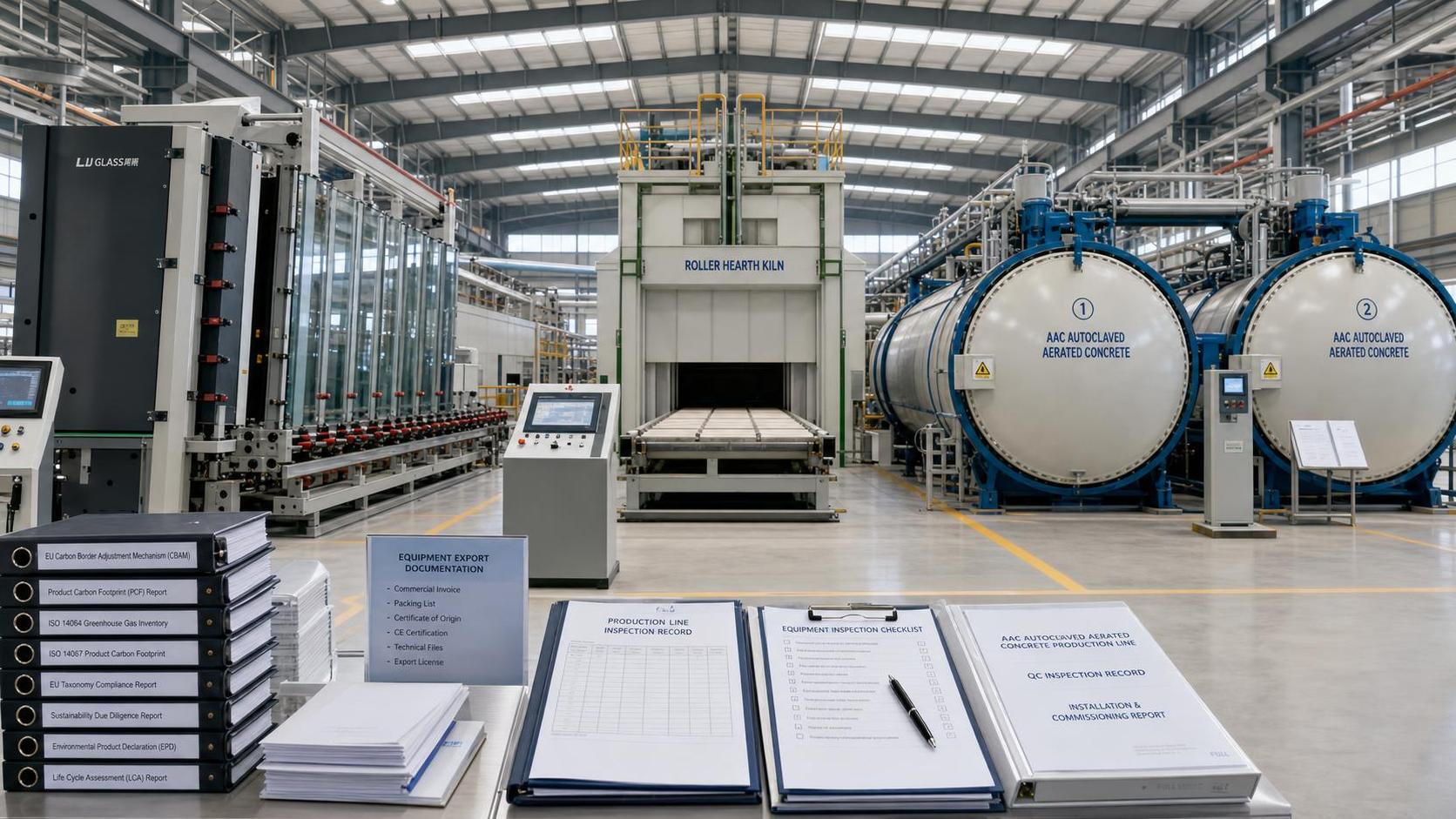
- Technical compliance file: declaration of performance where applicable, CE-related documentation, test reports, classification evidence, installation instructions, quality-control records, and project-specific approvals where required.
- Supply file: manufacturing site, production capacity, batch traceability, logistics route, substitution controls, and change-notification obligations.
This separation prevents a common error: allowing a low-carbon declaration to override performance review. A façade glass product, for example, must still meet the required safety, optical, thermal, dimensional, and processing conditions. A low-clinker binder must still be assessed for the exposure class, curing regime, strength development, and compatibility with admixtures and reinforcement. Low-carbon verification is part of material qualification, not a shortcut around it.
Check whether the carbon reduction is real, relevant, and durable
Recycled content is often presented as decisive evidence. It can reduce demand for virgin raw materials and may lower certain lifecycle impacts, but it is not a universal carbon measure. The result depends on the allocation method used in the lifecycle assessment, the energy required for collection and reprocessing, and whether the recycled feedstock changes product quality or manufacturing yield.
For glass, cullet availability, contamination control, furnace conditions, and optical specifications can affect the feasible recycled-content level. For cementitious materials, the availability and quality of supplementary materials can vary by region, while changes to mix design can affect curing and early-age behaviour. For ceramic and refractory products, recycled mineral inputs may be useful but must not compromise thermal stability, dimensional control, or service conditions. The evaluation should focus on the declared product result, not a single input attribute.
Energy claims require similar discipline. “Made with renewable energy” is not sufficiently precise for a technical comparison unless the EPD or supporting evidence explains how energy was accounted for. A plant may have electrified equipment, but the overall footprint can still depend on thermal energy, upstream raw-material processing, or the electricity accounting method. For energy-intensive products, ask which process stages are affected: grinding, drying, calcination, melting, firing, tempering, autoclaving, or finishing. This connects a claim to an actual production system.
Use a staged verification workflow
Trying to obtain every document at the first enquiry can slow down a project. A staged approach is more effective because it filters unsupported claims early and reserves detailed review for technically viable options.
- Define the building function. Set the performance conditions before requesting environmental data: loading, exposure, fire, acoustic or thermal target, geometry, service life, finish, and installation method.
- Set the comparison basis. Specify the functional unit and lifecycle stages required by the project. State whether transport, installation waste, replacement, and end-of-life assumptions will be included.
- Request the evidence pack. Obtain the EPD, technical performance documentation, manufacturing location, product identification, and a clear statement of what supplied product the evidence represents.
- Screen for comparability. Remove options that cannot demonstrate an equivalent function or that rely on incomparable boundaries, generic claims, or unclear product coverage.
- Review technical trade-offs. Assess strength, density, moisture response, fire behaviour, chemical resistance, tolerances, processing requirements, and interface compatibility with the wider system.
- Verify procurement controls. Include the approved plant, product formulation, and documentation requirements in the procurement record. Require notice before material or production-route substitution.
The final point is often underestimated. A carbon calculation may be prepared using an approved material, then undermined by a later substitution to a different plant, binder blend, glass thickness, insulation formulation, or transport route. Traceability is what keeps environmental verification connected to delivered construction.
Where material categories need different scrutiny
Low-carbon material assessment cannot be identical across product groups. Cementitious products should be examined for binder composition, curing assumptions, structural performance, and exposure suitability. In concrete procurement, the same nominal strength class does not automatically mean equal durability or equal cement content. The project team should review the complete mix and the requirements of the intended element.
For architectural and photovoltaic glass, carbon data should be read alongside thickness, coating, tempering or heat-treatment route, optical properties, breakage controls, and fabrication yield. A lower-impact sheet is not necessarily suitable for a safety-critical glazing assembly or a performance-sensitive photovoltaic application.
For AAC, masonry, ceramic, and refractory systems, performance depends not only on the material itself but also on joints, mortars, anchors, coatings, firing or autoclaving quality, and installation conditions. A product-level EPD does not represent the complete wall, kiln lining, or façade system unless the assessment uses the correct installation scenario.
Natural stone and engineered panels add another issue: fabrication yield. Quarry extraction, slab thickness, CNC cutting losses, surface treatment, reinforcement, and offcut management can all influence the delivered result. A procurement comparison based only on the raw slab can miss the carbon and cost consequences of the finished geometry.
Common verification failures
The most frequent failure is treating any EPD as proof of the lowest-carbon option. An EPD is evidence, not a ranking. The second is comparing materials by mass when the building requires equivalent performance. The third is using a product declaration to justify a whole assembly without accounting for fixings, adhesives, wastage, replacement, or construction method.
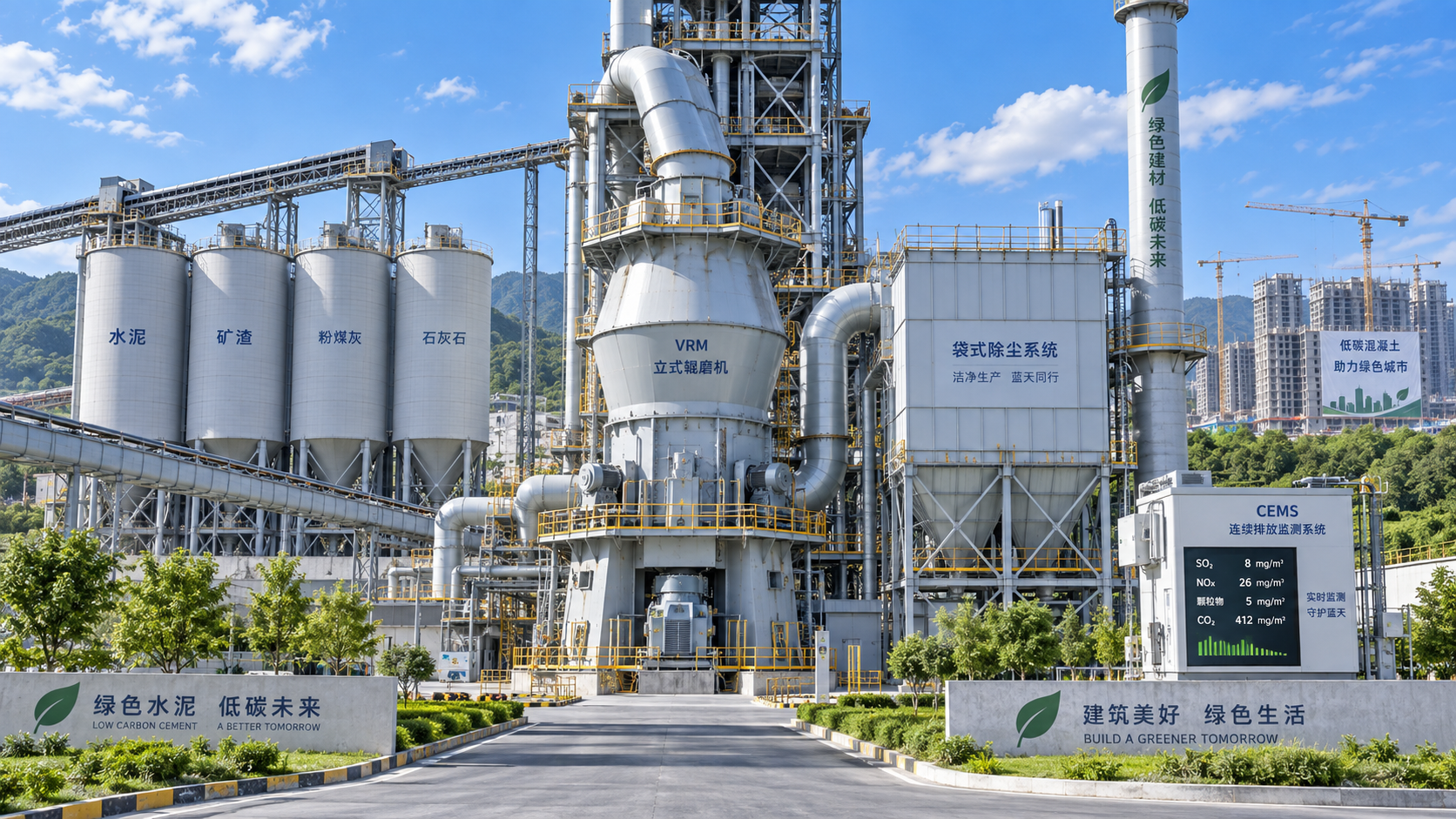
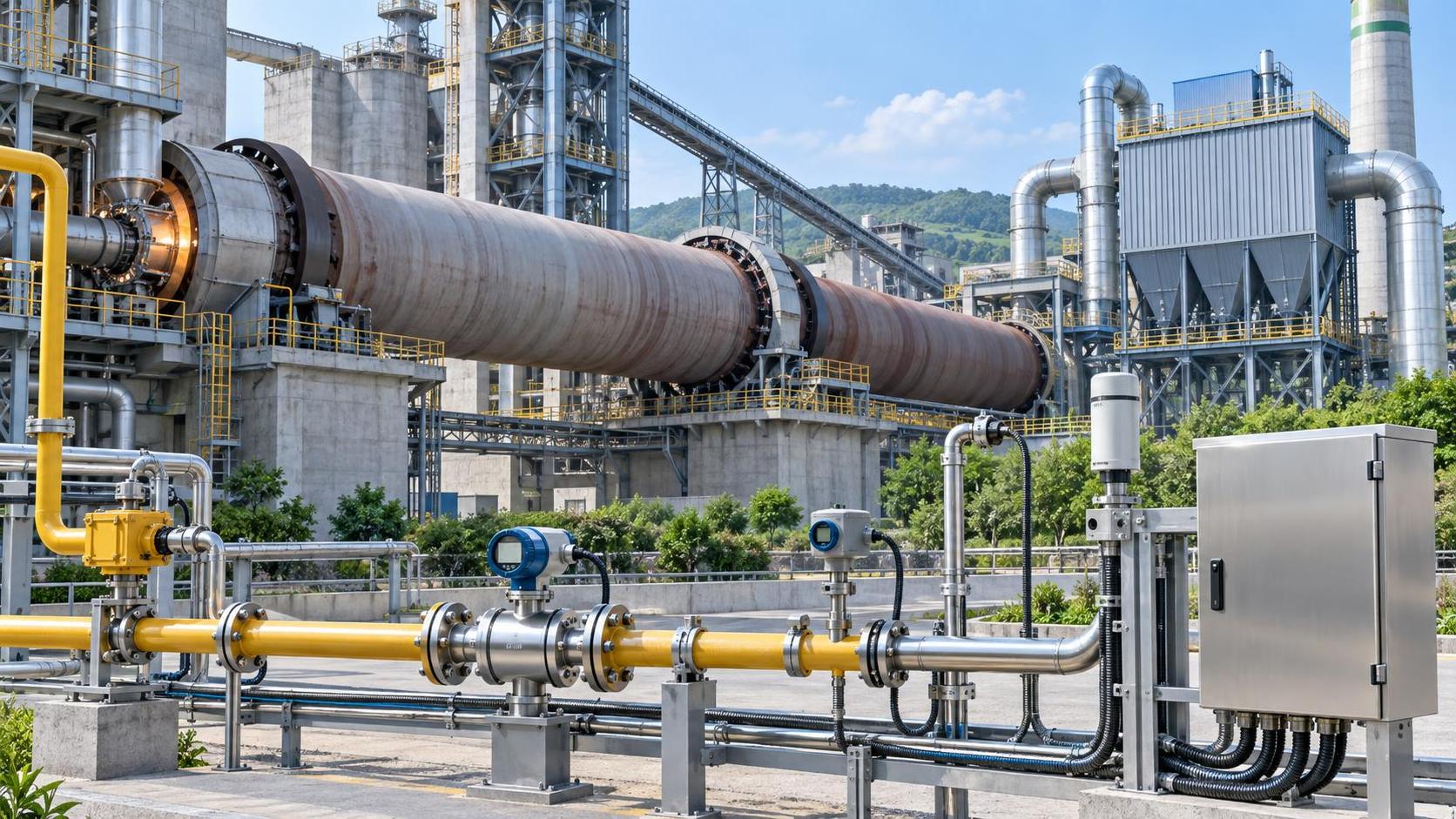
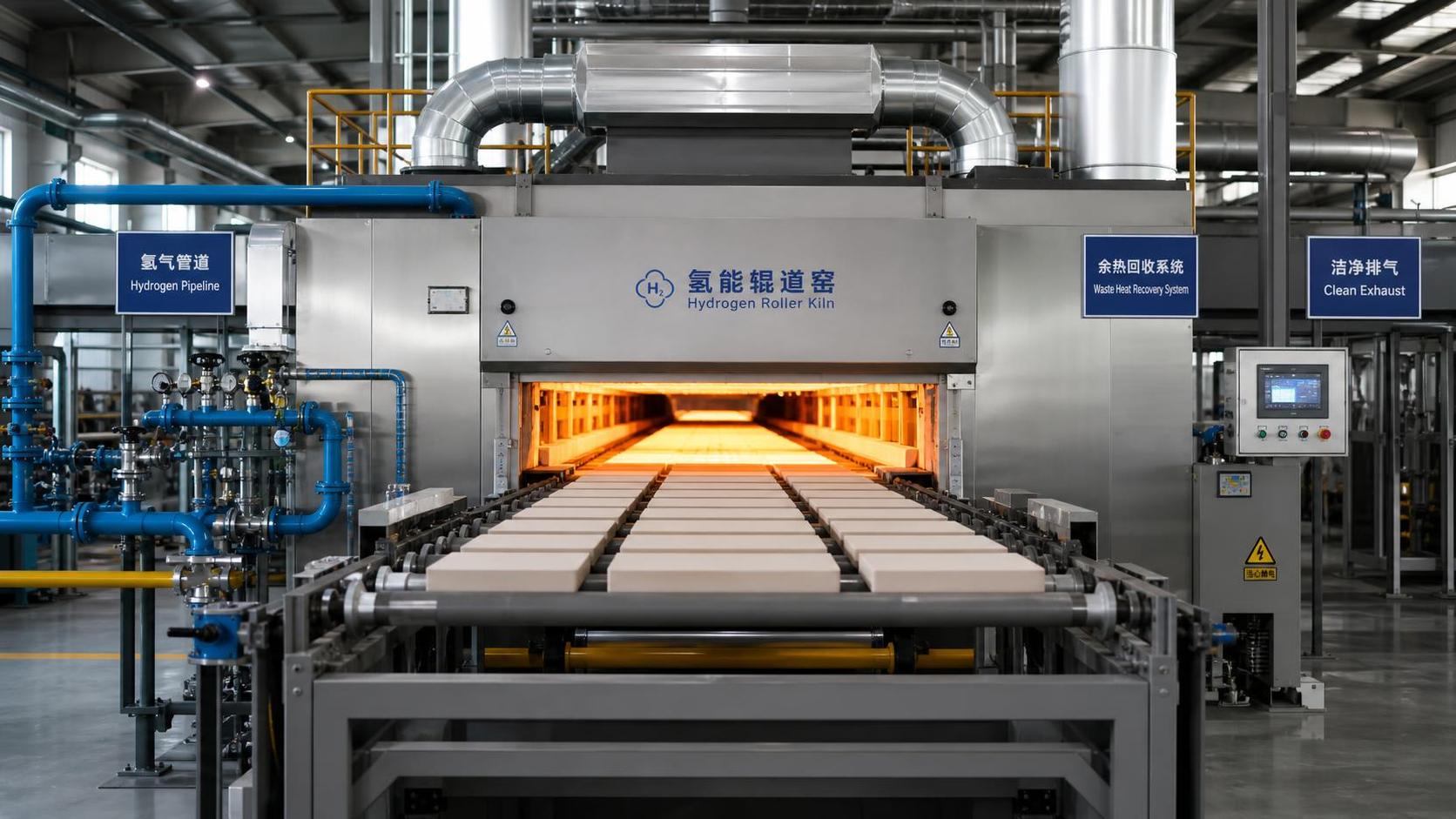
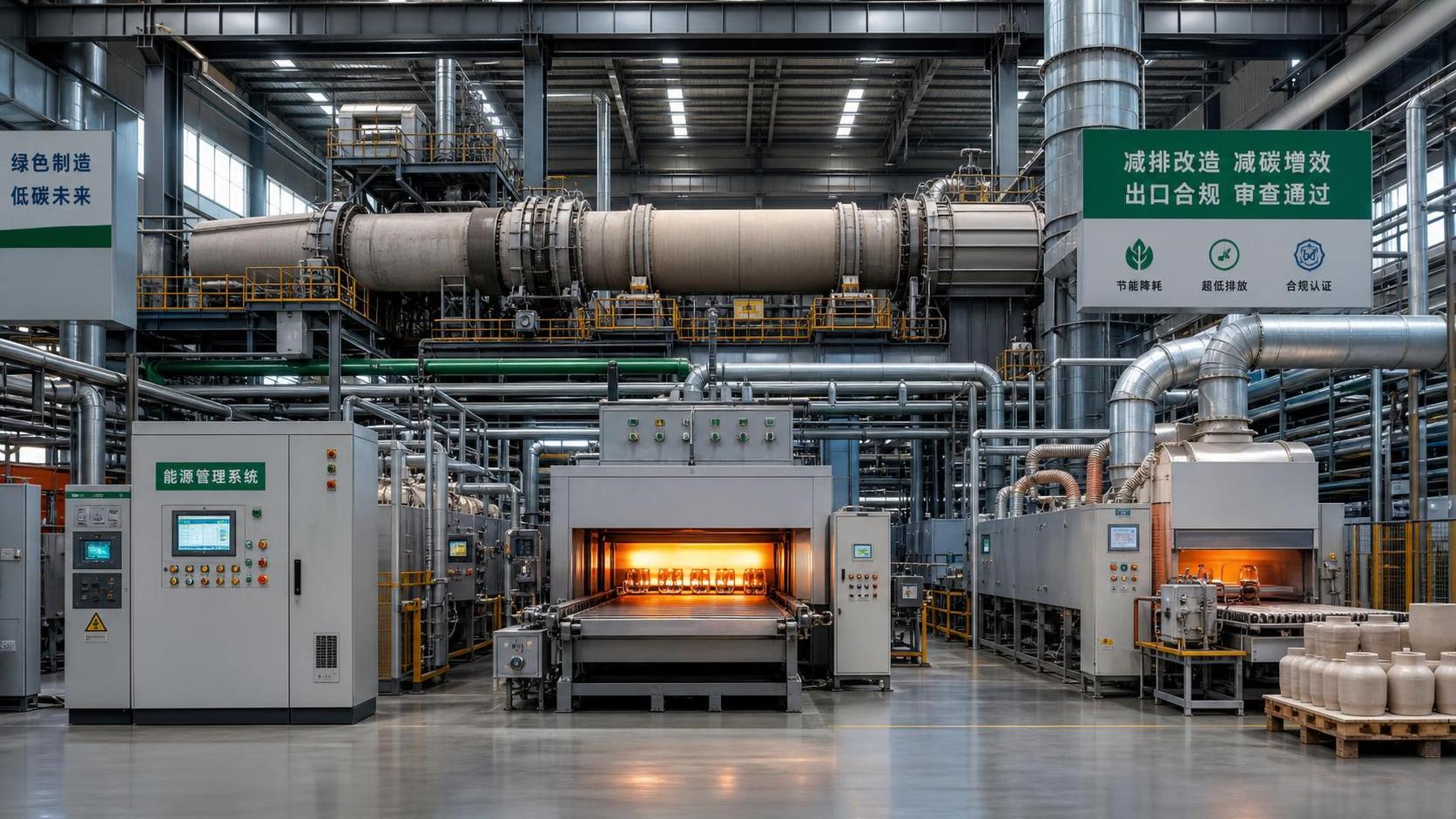
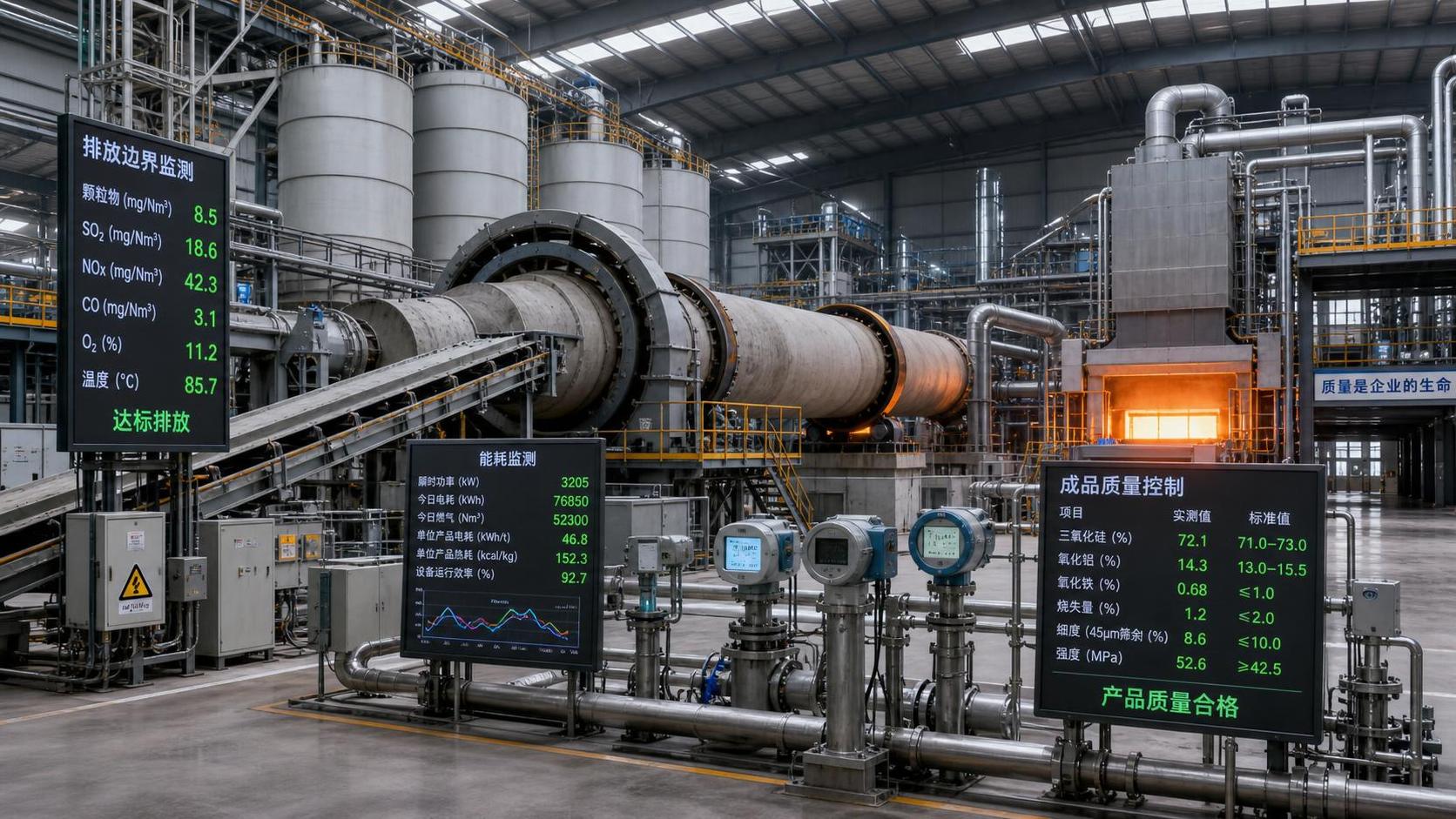
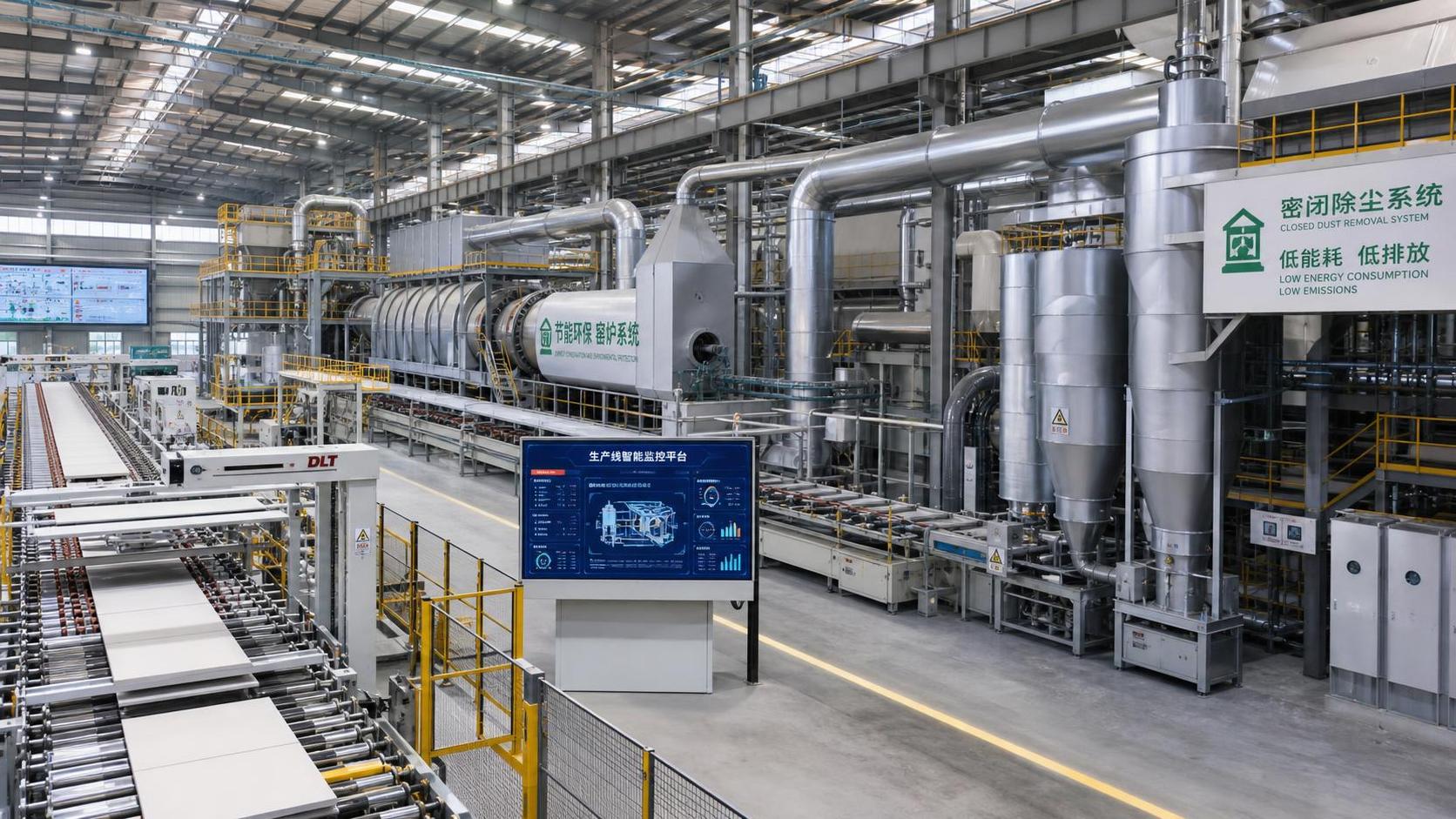
Another weak practice is accepting a supplier’s target or roadmap as if it described current delivered material. Process upgrades such as efficient grinding, kiln heat recovery, alternative-fuel systems, electric furnaces, dust-control improvements, and digital energy monitoring can be relevant indicators of production capability. They should not replace product-specific lifecycle evidence.
For evaluators working across cement, glass, ceramics, refractory materials, stone, and production equipment, platforms such as Global Non-metallic Materials & Building Systems can be useful for understanding how process choices affect material quality, energy demand, and carbon exposure. That process context helps teams ask better questions of suppliers, especially when an EPD alone does not explain why one plant’s result differs from another’s.
Make the procurement decision auditable
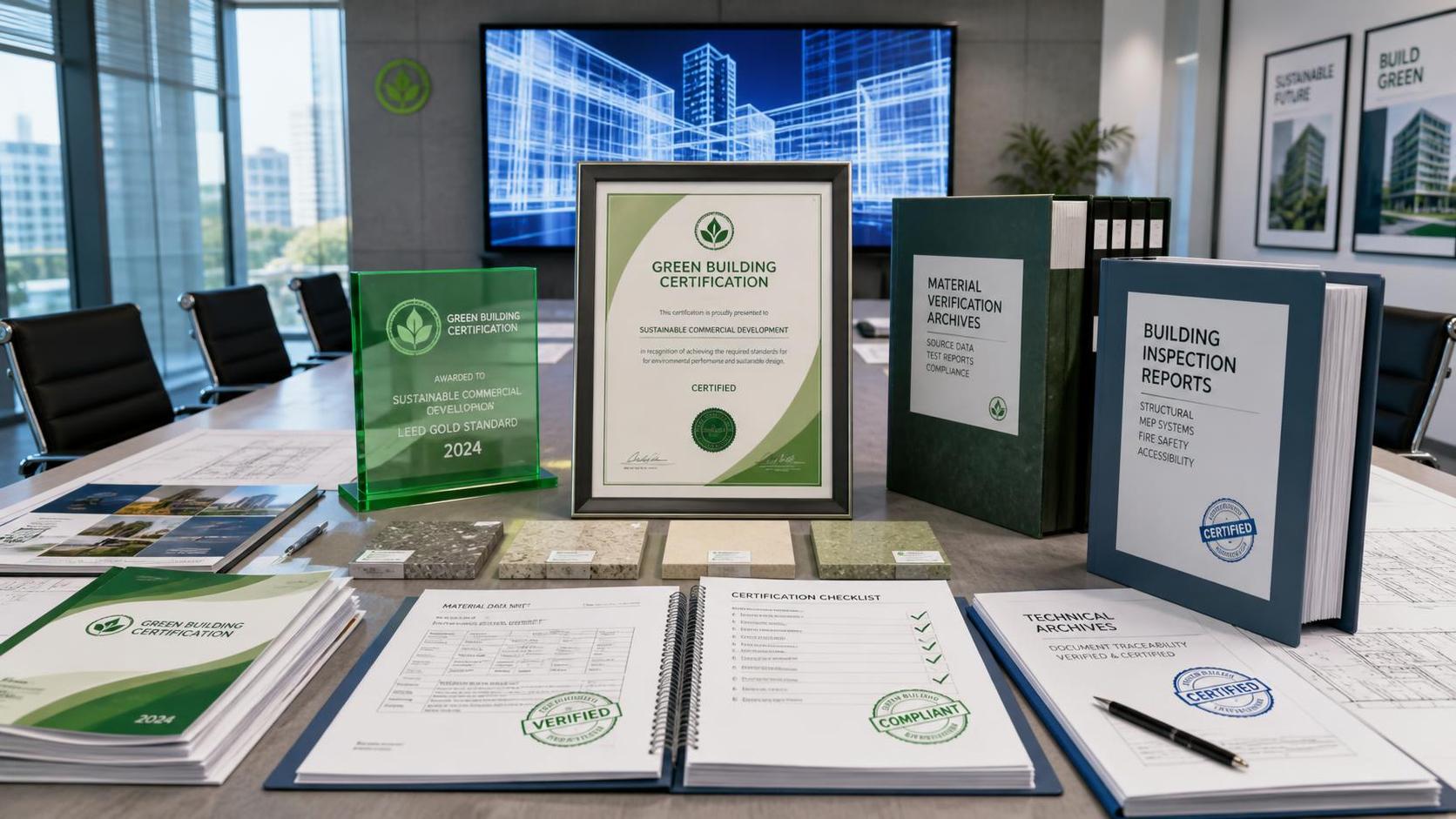
A defensible decision record should show the required function, shortlisted alternatives, EPD comparison basis, technical acceptance criteria, and the assumptions used for logistics and installation. It should also identify which evidence is product-specific and which is generic or design-stage data. This is more valuable than a simple “green material approved” label because it allows later reviewers to understand the decision without reconstructing the entire tender process.
In practice, the strongest choice is rarely the material with the lowest isolated number. It is the option that provides comparable lifecycle evidence, meets the specified technical function, can be supplied from the declared production route, and remains controllable through fabrication and installation. That is the standard low-carbon building material verification should meet in a European project.
Related News
- Can low-carbon technology supply high-temperature heat in heavy industry?Author :Dr. Alaric Vance

- What to verify before choosing an industrial dust emission control manufacturer in IndiaAuthor :Dr. Alaric Vance

- How EU ETS carbon costs are reshaping cement production decisionsAuthor :Dr. Alaric Vance

- How to verify low-carbon building materials in EuropeAuthor :Dr. Alaric Vance

- Using QC Intelligence to Assess CBAM, EU ETS, and Carbon-Pricing ExposureAuthor :Dr. Alaric Vance

- What Should Importers Check When Appointing a CBAM Verifier?Author :Dr. Alaric Vance

- EU ETS Allowance Planning: What Industrial Operators Need to Budget ForAuthor :Dr. Alaric Vance

- Are Green Building Certifications Relevant to Cement Plant Upgrades?Author :Dr. Alaric Vance

- Can EU ETS compliance software reduce errors in emissions reporting?Author :Dr. Alaric Vance

- How to verify a green building certification agency before hiringAuthor :Dr. Alaric Vance

- What do BREEAM material standards require from construction products?Author :Dr. Alaric Vance

- When does a hydrogen fuel kiln reduce emissions in ceramic firing?Author :Dr. Alaric Vance

- What counts in carbon emissions reporting under today’s ESG rulesAuthor :Dr. Alaric Vance

- How to verify whether a green building certification company is credibleAuthor :Dr. Alaric Vance

- How to verify carbon compliance in building materials before project approvalAuthor :Dr. Alaric Vance

- ISO 50100:2026 Reshapes Decarbonization ComplianceAuthor :Dr. Alaric Vance

- How to Measure Building Material Emissions Reduction for ESG ReportingAuthor :Dr. Alaric Vance

- How to Evaluate EU ETS Compliance Software for Audit Readiness and Data AccuracyAuthor :Dr. Alaric Vance

- What Green Material Certification Means for ESG Compliance in ManufacturingAuthor :Dr. Alaric Vance

- How Green Building Material Manufacturing Supports ESG Compliance and Cost ControlAuthor :Dr. Alaric Vance

- EU Extends CBAM Transition, Adds August Carbon Filing RuleAuthor :Dr. Alaric Vance

- EU CBAM Phase Three Reaches Equipment ExportersAuthor :Dr. Alaric Vance

- EU Tightens CE-EPD Rules for Glass MachineryAuthor :Dr. Alaric Vance

- Low-Carbon Cement Production System: Cost, ROI, and Compliance BasicsAuthor :Dr. Alaric Vance

- EU Carbon Compliance Materials: 2026 Rule Changes That Affect SourcingAuthor :Dr. Alaric Vance

- Decarbonization in Building Materials: 5 Cost Drivers to Watch in 2026Author :Dr. Alaric Vance

- Tailings Recycling Technology Trends Shaping ESG Compliance in 2026Author :Dr. Alaric Vance

- Green Building Certification Criteria That Matter in Material SelectionAuthor :Dr. Alaric Vance

- EU Carbon Compliance Materials: Key Rules and Cost Risks in 2026Author :Dr. Alaric Vance

- Tailings Recycling China: Policy and Project Outlook 2026Author :Dr. Alaric Vance

- EU Sets CBAM Trial Rules for Glass and CeramicsAuthor :Dr. Alaric Vance

- Carbon Reduction Roadmap: 5 Cost Levers That Matter in 2026Author :Dr. Alaric Vance

- EU CBAM Extends to Glass and Ceramics in 2026Author :Dr. Alaric Vance

- Green Building Certification Rating: What Changes Project Value in 2026Author :Dr. Alaric Vance

- Cement Dust Emission Control Options Under New ESG Compliance PressureAuthor :Dr. Alaric Vance

- Industrial Dust Emission Control for Material Handling Compliance GuideAuthor :Dr. Alaric Vance