



Search News
Industry Portal
Popular Tags
All categories
US Finalizes China Fiberglass Door Panel Duties




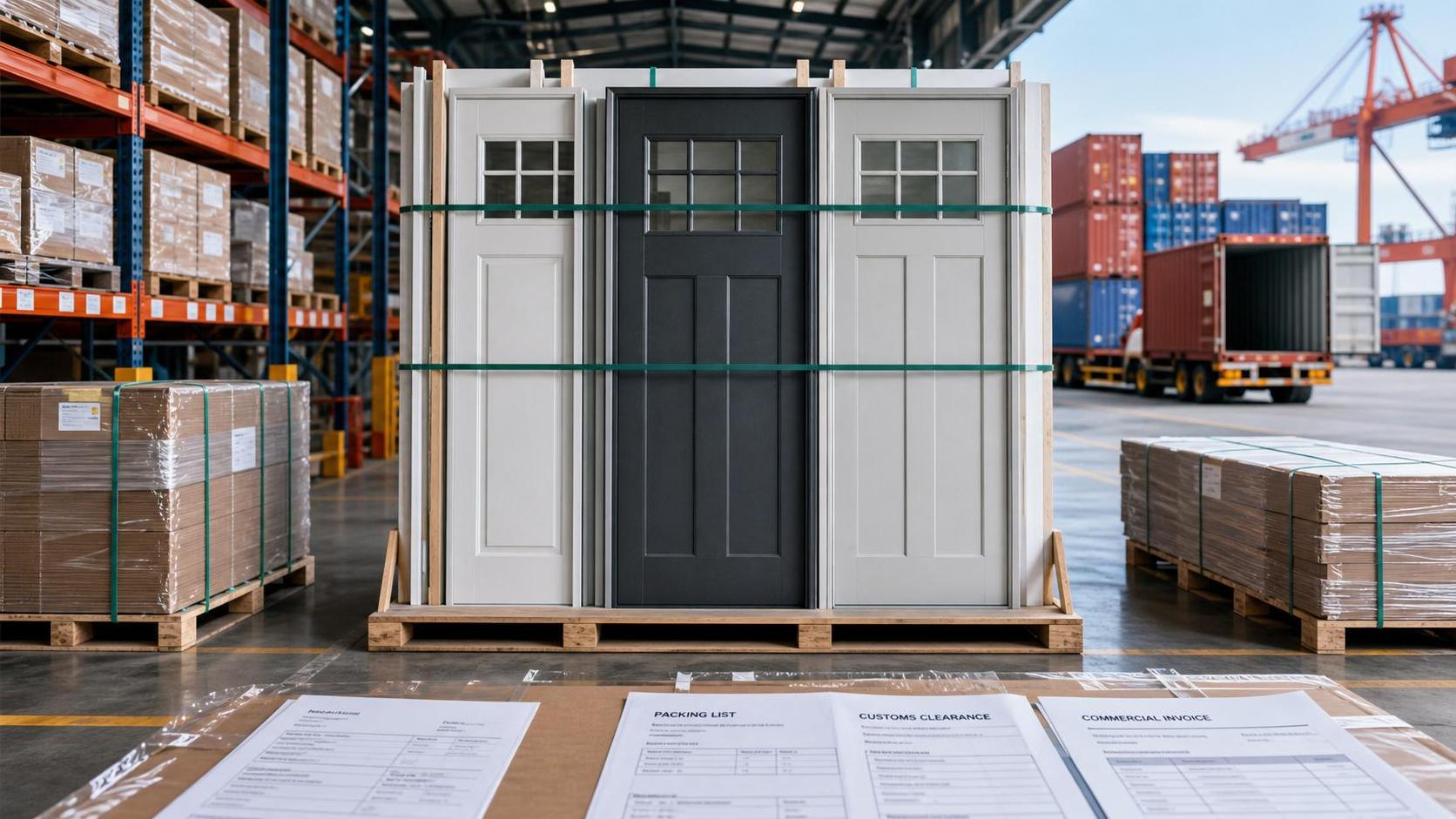
On June 10, 2026, the U.S. Department of Commerce issued final anti-dumping and countervailing duty determinations on fiberglass door panels under HTS 3925.20.0010, imposing anti-dumping rates ranging from 41.79% to 147.85% and a countervailing duty rate of 186.46% on multiple Chinese companies. For manufacturers, exporters, project suppliers, and downstream buyers linked to building envelope systems, low-energy door and window assemblies, and prefabricated construction modules, this development matters not only as a trade ruling on one product category, but also as a practical cost and delivery issue that can affect customs clearance and overseas project support.
What the final ruling confirms
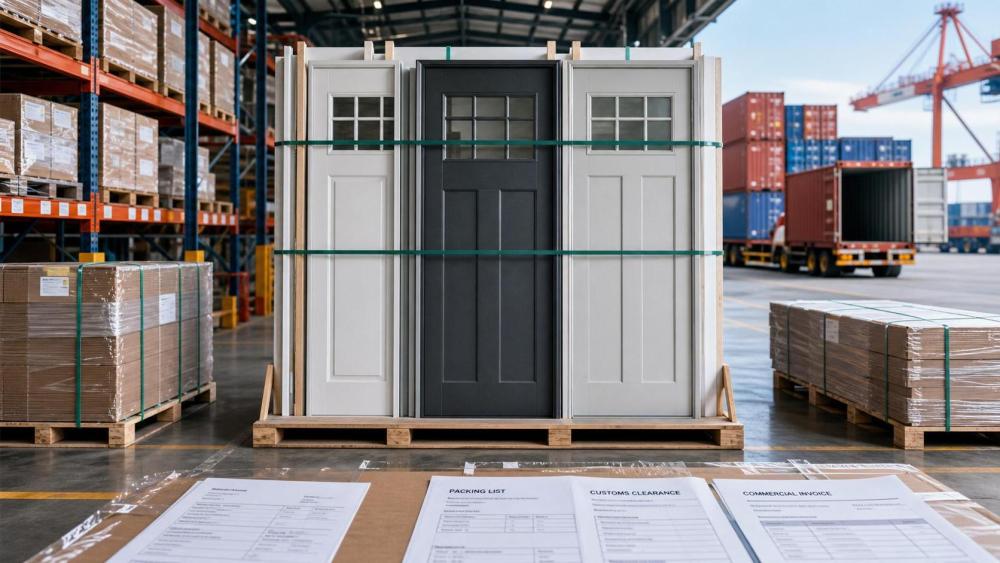
The confirmed facts are limited but commercially significant. The product covered is fiberglass door panels classified under HTS 3925.20.0010. The U.S. Department of Commerce released its final anti-dumping and countervailing duty results on June 10, 2026. According to the information provided, multiple Chinese companies were assigned anti-dumping duties between 41.79% and 147.85%, while the countervailing duty level reached 186.46%.
The product is widely used in building envelope systems, supporting applications for low-energy doors and windows, and prefabricated building modules. The same information also indicates that the ruling directly affects the overseas project support capability of Chinese exporters of related production equipment, including Continuous Panel Presses and Low-E/IGU Production Lines, as well as the customs clearance costs faced by end customers.
Where the pressure is likely to appear first
Direct exporters of the covered product face immediate cost exposure
From an industry perspective, the most immediate impact falls on companies directly shipping fiberglass door panels to the U.S. market. The reason is straightforward: the final duty outcome changes the landed-cost structure and can alter transaction feasibility at the point of customs entry. What deserves closer attention is not only the headline tariff level, but also how existing shipments, quotations, and delivery commitments may be reassessed in light of the final ruling.
Equipment suppliers may feel the effect through project linkage
Observably, the impact is not limited to the door panel trade itself. Chinese exporters of related equipment such as Continuous Panel Presses and Low-E/IGU Production Lines may be affected where their overseas projects are tied to fiberglass door panel manufacturing or integrated building component supply. In practical terms, the issue is less about the equipment category being named in the ruling and more about whether downstream project economics, installation schedules, or customer procurement decisions are disrupted by higher import-related costs.
Downstream buyers and project owners must watch clearance and budgeting
For downstream customers using fiberglass door panels in building envelope systems, energy-efficient door and window packages, or prefabricated modules, the main concern is likely to be the added burden at customs and the effect on procurement budgets. Analysis shows that any increase in import-related cost can feed into project planning, supplier selection, and delivery coordination, especially where the covered product is part of a larger assembled system rather than a standalone purchase.
What companies should monitor now
Separate confirmed tariff facts from broader business assumptions
Companies should first distinguish the confirmed scope of the ruling from broader commercial interpretations. The confirmed facts concern the final anti-dumping and countervailing duty treatment of fiberglass door panels under the specified HTS code. Whether that translates into contract revisions, delayed purchasing, or shifts in project execution is a business consequence that still requires case-by-case review.
Review product classification, documentation, and shipment timing
For businesses engaged in exports, imports, or related supply-chain services, close attention should be paid to product classification, commercial documentation, and shipment status. This is particularly relevant where customs treatment, customer declarations, or project materials depend on precise product descriptions and timing of entry.
Reassess overseas project packages tied to covered door panel demand
Companies supplying production equipment or bundled industrial solutions should examine whether active or planned overseas projects depend on fiberglass door panel demand in the U.S. market. What deserves closer attention is the linkage between the duty outcome and customer willingness to proceed with equipment purchases, line expansion, or integrated factory planning.
Prepare customer communication around cost and delivery risk
For sales, project, and supply-chain teams, practical preparation now includes clarifying cost responsibilities, customs-related risk points, and expected delivery implications with customers. Analysis shows that early communication is especially important where the covered product is part of a multi-stage building or manufacturing project, because the tariff result may affect not just price, but also scheduling and commercial expectations.
How this development is best understood at this stage
As an editorial observation, this development is more appropriately understood as both a confirmed trade result on a defined product and a broader signal that downstream project economics can be affected even when the direct ruling targets only one component category. The final determination itself is already a settled event within the information provided, but its full business effect across equipment exports, project support, and end-customer purchasing still needs continued observation.
Observably, the industry significance lies in the connection between trade remedies and integrated supply chains. When a product used in building envelope systems and prefabricated modules becomes subject to high duty levels, the commercial impact may extend beyond the immediate exporter to equipment suppliers, system integrators, and project-side buyers.
A short-term cost issue with longer-term signal value
Based on the information available, the most rational reading is that this is first a concrete cost and customs issue, and second a policy signal worth monitoring in related cross-border building product businesses. It is not yet a basis for broad conclusions about every linked market segment, but it clearly warrants attention from companies whose products, projects, or customers are connected to fiberglass door panels and associated manufacturing lines.
Basis of this article and what still needs verification
This article is generated from the user-provided news title, event date, and event summary. The discussion is based on the stated final U.S. anti-dumping and countervailing duty determinations, the specified HTS classification, the listed duty ranges, and the described downstream application and equipment linkage.
Typical source types for this kind of industry update may include official government notices, company disclosures, industry association information, authoritative media reporting, and relevant standards or classification documents. However, a specific official source link was not provided in the input, so the exact underlying publication should continue to be verified. Follow-up attention should remain on any later official wording, implementation details affecting customs treatment, and practical changes in project execution or customer procurement behavior.
Related News
- Automatic Hydraulic Press Sizing: Output, Pressure, and Downtime Trade-OffsAuthor :Super-hard Machining Strategist

- Ceramic Press India: How to Compare Capacity, Automation, and ROIAuthor :Super-hard Machining Strategist

- IQSA Issues 2026 Energy Rating Standard for Continuous Panel PressesAuthor :Super-hard Machining Strategist

- Vietnam Tightens Quartz Press Import RequirementsAuthor :Super-hard Machining Strategist

- M6TC Audit Rule Tightens Quartz Press ImportsAuthor :Super-hard Machining Strategist

- Gulf Six Tighten Energy Audit Rule for Quartz Press ImportsAuthor :Super-hard Machining Strategist

- IQSA: Continuous Quartz Press Demand Jumps 42%Author :Super-hard Machining Strategist
![]()
- Ceramic Molding Technology for Tiles: Common Cracking Causes and FixesAuthor :Super-hard Machining Strategist

- Vietnam to Require Local Testing for Quartz Press ImportsAuthor :Super-hard Machining Strategist

- Vietnam Tightens Quartz Press Imports Under QCVN 172:2026Author :Super-hard Machining Strategist

- Vietnam Tightens Testing for Imported Quartz Slab PressesAuthor :Super-hard Machining Strategist

- Vietnam Requires Dual Certification for Quartz Stone Press ImportsAuthor :Super-hard Machining Strategist

- Advanced ceramic body forming: key defects to avoidAuthor :Super-hard Machining Strategist

- US Finalizes China Fiberglass Door Panel DutiesAuthor :Super-hard Machining Strategist

- How to Evaluate a Vibration Compression Press for Stable DensityAuthor :Super-hard Machining Strategist

- How a Warpage Control System Improves Panel FlatnessAuthor :Super-hard Machining Strategist

- EuroBLECH 2026 Highlights Low-Carbon Sheet ProcessingAuthor :Super-hard Machining Strategist