



Search News
Industry Portal
Popular Tags
All categories
Indonesia Tariff on Chinese Polypropylene Raises AAC Input Costs




On June 2, 2026, Indonesia’s anti-dumping authority issued a final ruling on polypropylene homopolymer from China under HS code 3902.10.40, imposing duties on other Chinese producers and exporters for five years. For the AAC block industry, the issue is not limited to a trade measure itself: this material is a key base input for foaming stabilizers and modification additives, so the decision is likely to draw immediate attention from Southeast Asian AAC plants, raw material buyers, and Chinese suppliers involved in equipment-related technical service and consumables cooperation.
The ruling and the product scope now confirmed
The confirmed information shows that Indonesia made a final anti-dumping decision on June 2, 2026 covering polypropylene homopolymer from China under tariff code 3902.10.40. The measure applies to other Chinese producers and exporters at an ad valorem rate of 18.01% together with a specific duty of USD 0.179 per kilogram, and the measure is set for a five-year period.
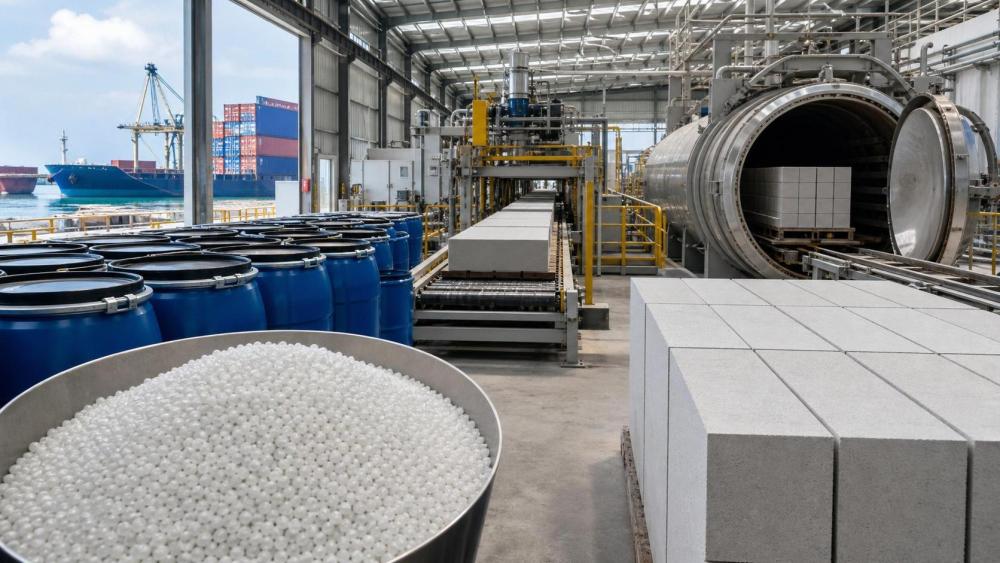
The same confirmed information also indicates that this material serves as a key base raw material for foaming stabilizers and modification additives used in AAC block production. Based on the event summary provided, the increase in import cost is expected to directly raise raw material procurement spending for local AAC factories in Southeast Asia and put upward pressure on downstream quotations.
Where the pressure is most likely to appear first
Procurement teams will face a more expensive input structure
From an industry perspective, raw material purchasing functions are the first point of impact because the measure directly changes the landed cost of the relevant polypropylene homopolymer. What deserves closer attention is whether procurement budgets, quotation cycles, and order timing for related additive formulations need adjustment once the higher import burden is reflected in actual transactions.
AAC manufacturers may see cost pass-through pressure
For AAC block plants in Southeast Asia, the main concern is the cost of inputs tied to foaming stabilizers and modification additives. Analysis shows that the direct effect is likely to appear in raw material spending first, while the next issue is whether higher input costs can be passed through into finished product pricing without disrupting existing customer negotiations.
Equipment-linked service and consumables cooperation may need recalibration
The provided information also points to a knock-on effect for Chinese AAC Block Plants exporters involved in bundled technical service and consumables supply. Observably, when a key chemical input becomes more expensive in the destination market, cooperation models tied to ongoing consumables support, formulation guidance, or service delivery may require commercial and operational reassessment.
What companies should monitor in current operations
Watch for any further official clarification
Analysis shows that companies should separate the confirmed ruling from any later implementation details that may affect execution in practice. The ruling itself is clear in rate, product code, and duration, but businesses still need to track whether any subsequent official wording changes how the measure is applied in contracts, declarations, or supply arrangements.
Review exposure in affected product and service links
What deserves closer attention is not only direct shipments of the taxed material, but also business links built around it. AAC producers, additive-related buyers, and service providers should map where this polypropylene homopolymer sits in their procurement and delivery chain, especially where pricing commitments or support packages depend on imported consumables.
Recheck documentation and delivery assumptions
For companies already trading into or serving the Indonesian market, current attention should go to product classification, supporting documents, and delivery-cycle assumptions tied to affected orders. This is particularly relevant where supplier credentials, shipment documents, and customer-facing quotations must remain aligned with the new duty environment.
Prepare customer communication around pricing changes
Observably, the practical challenge may not be the policy text alone but how quickly it translates into revised offers and project discussions. Businesses connected to AAC production, equipment support, and consumables supply should be ready to explain cost changes clearly and distinguish between immediate pricing effects and longer-term cooperation adjustments.
Why this looks like more than a short-lived pricing issue
Analysis shows that this development should be read first as a confirmed cost event, because the anti-dumping decision, rates, and five-year duration are already defined in the provided information. At the same time, it is more appropriate to understand the broader industry effect as an evolving business signal rather than a fully settled market outcome, since the real impact will depend on how procurement, quotations, and service arrangements adjust in practice.
From an industry perspective, the reason continued attention is warranted is that the affected material sits upstream of AAC-related additive use rather than at the finished-equipment level alone. That means the pressure may spread through several commercial links at once, including materials purchasing, factory cost control, and equipment-export cooperation built around ongoing technical support and consumables supply.
How this news is best understood for now
At this stage, the most balanced reading is that Indonesia’s duty on Chinese polypropylene homopolymer creates a clear and immediate cost variable for AAC-related supply chains connected to Southeast Asia. The confirmed facts already point to higher import costs and likely pressure on procurement spending and quotations, but the scale of commercial adjustment still needs to be observed in actual transactions and customer responses.
It is more appropriate to understand this as both a short-term operating change and a longer-term signal. In the short term, businesses need to manage procurement, pricing, and communication. In the longer term, the ruling suggests that companies involved in AAC materials, plant operations, and equipment-linked services should pay closer attention to how trade measures can reshape cooperation models around recurring consumables and technical support.
Basis of this article and follow-up checks
This article is based on the user-provided news title, event date, and event summary. The analysis is limited to the confirmed information provided: the June 2, 2026 final anti-dumping ruling in Indonesia, the covered product and tariff code, the duty rates, the five-year term, and the stated relevance of the material to AAC block production and related service cooperation.
For this type of industry update, commonly relevant source categories may include official government announcements, company disclosures, industry association information, authoritative media reports, and standard-setting or trade-related documents. A specific official source link was not provided in the input, so further verification remains necessary. Follow-up attention should focus on any later official clarification, practical implementation details, and how affected pricing and supply arrangements develop in the AAC-related market.
Related News
- When does heavy building material equipment make sense for AAC block plants?Author :Masonry Automation Architect

- What Determines the ROI of AAC Block Equipment in a New Plant Setup?Author :Masonry Automation Architect

- CBP Requires LCA Declarations for Imported AAC LinesAuthor :Masonry Automation Architect

- AAC Block Manufacturing Cost Breakdown and Line Selection GuideAuthor :Masonry Automation Architect

- Vietnam sets Q3 filing deadline for AAC plant IoT modulesAuthor :Masonry Automation Architect

- Vietnam Rule Adds IoT Module to AAC Plant ImportsAuthor :Masonry Automation Architect

- Vietnam Opens Fast-Track VIEP Review for AAC PlantsAuthor :Masonry Automation Architect

- Vietnam Requires VIEP Certification for Imported AAC Block PlantsAuthor :Masonry Automation Architect

- AAC Block Equipment: Common Selection Mistakes That Raise Operating CostsAuthor :Masonry Automation Architect
![]()
- Steam Curing AAC: How It Affects Strength, Cycle Time, and Energy UseAuthor :Masonry Automation Architect
![]()
- AAC Block Production Line Cost Drivers and Output BenchmarksAuthor :Masonry Automation Architect

- Vietnam Enforces 28.3% Temporary Duty on China Block EquipmentAuthor :Masonry Automation Architect

- Vietnam Imposes Temporary AD Duty on Chinese Block MachineryAuthor :Masonry Automation Architect

- Autoclaved aerated concrete USA: plant selection guideAuthor :Masonry Automation Architect

- AAC Block Production Cost Breakdown: What Impacts Plant ProfitabilityAuthor :Masonry Automation Architect

- Anhui Conch Cement Buyout Sharpens EPC Export ReadinessAuthor :Masonry Automation Architect

- Indonesia Tariff on Chinese Polypropylene Raises AAC Input CostsAuthor :Masonry Automation Architect

- India’s Parboiled Rice Duty Pressures AAC Raw Material CostsAuthor :Masonry Automation Architect

- Middle East AAC Rules Lift China Plant Exports 41%Author :Masonry Automation Architect

- Vietnam Requires ESG Labels for Imported Green Building MaterialsAuthor :Masonry Automation Architect

- Insulated Prefabricated Wall Materials: Key Performance Checks Before Specifying a SystemAuthor :Masonry Automation Architect

- AAC Block Plant Equipment Checklist Before Final SelectionAuthor :Masonry Automation Architect

- China Building Materials Hits Carbon PeakAuthor :Masonry Automation Architect

- Fly Ash AAC Blocks: Key Cost Drivers, Strength Limits, and Best-Fit Building ApplicationsAuthor :Masonry Automation Architect

- Autoclaved AAC Block System: Key Factors for Plant SelectionAuthor :Masonry Automation Architect

- AAC Block Factory Setup: Key Line Choices and Capacity Trade-OffsAuthor :Masonry Automation Architect

- NHTSA Proposes Ending Light-Vehicle Fuel Economy Credit Trading by 2028Author :Masonry Automation Architect

- Jiangsu Launches First Fully Electric AAC Autoclave LineAuthor :Masonry Automation Architect

- AAC Block Production: Output, Steam Use, and Payback BasicsAuthor :Masonry Automation Architect

- AAC Block Production Problems Caused by Poor Curing ControlAuthor :Masonry Automation Architect