



Search News
Industry Portal
Popular Tags
All categories
AAC Block Manufacturing Cost Breakdown and Line Selection Guide




Why does AAC block manufacturing cost differ so much from one project to another?
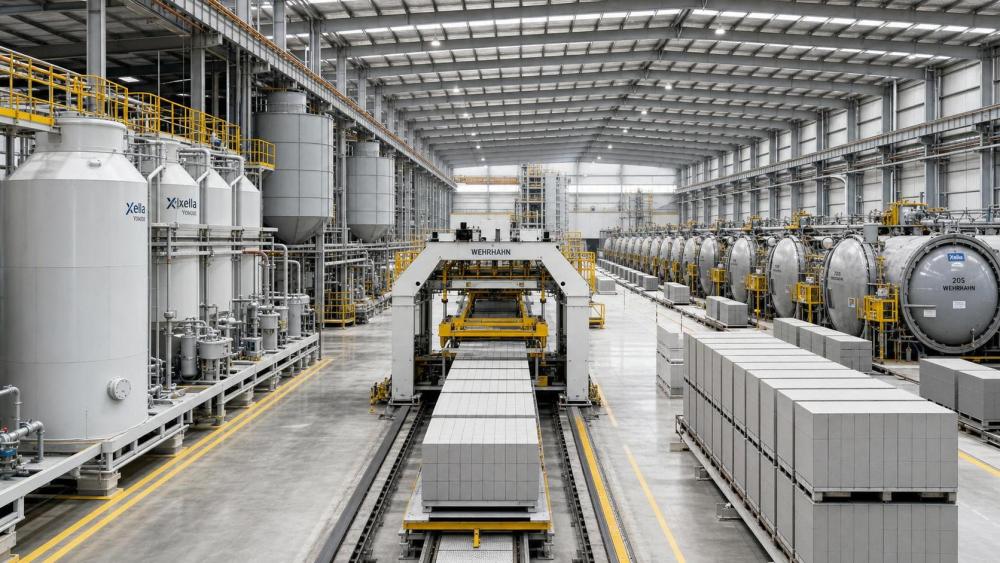
AAC block manufacturing rarely follows a single price logic.
Two lines may look similar on paper, yet their real investment profile can be very different.
The main reason is simple: cost is shaped by process depth, not only by rated capacity.
A line using fly ash slurry, precise batching, efficient autoclaves, and higher automation will cost more upfront.
However, it may reduce steam loss, labor exposure, breakage, and dimensional variation over time.
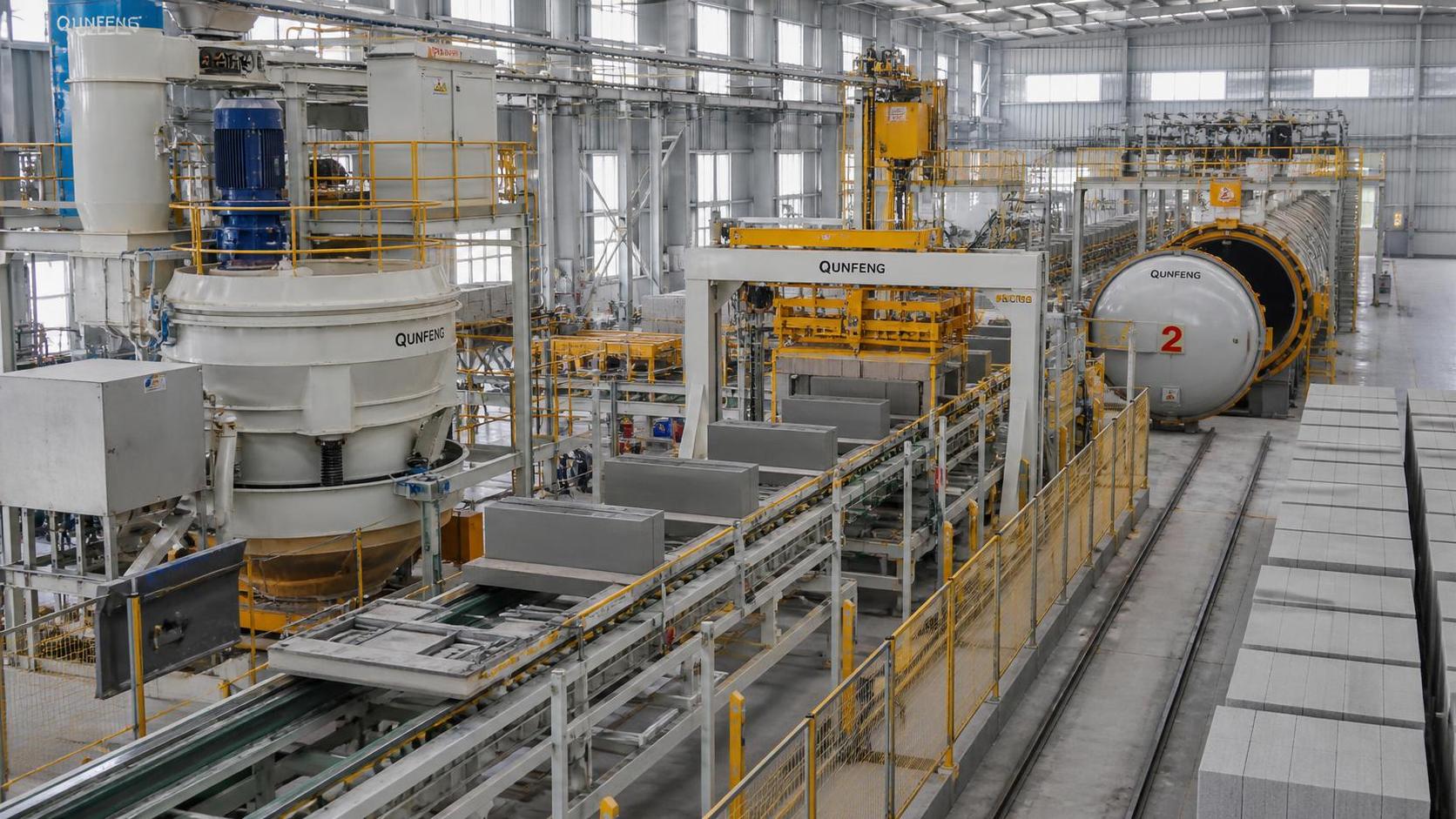
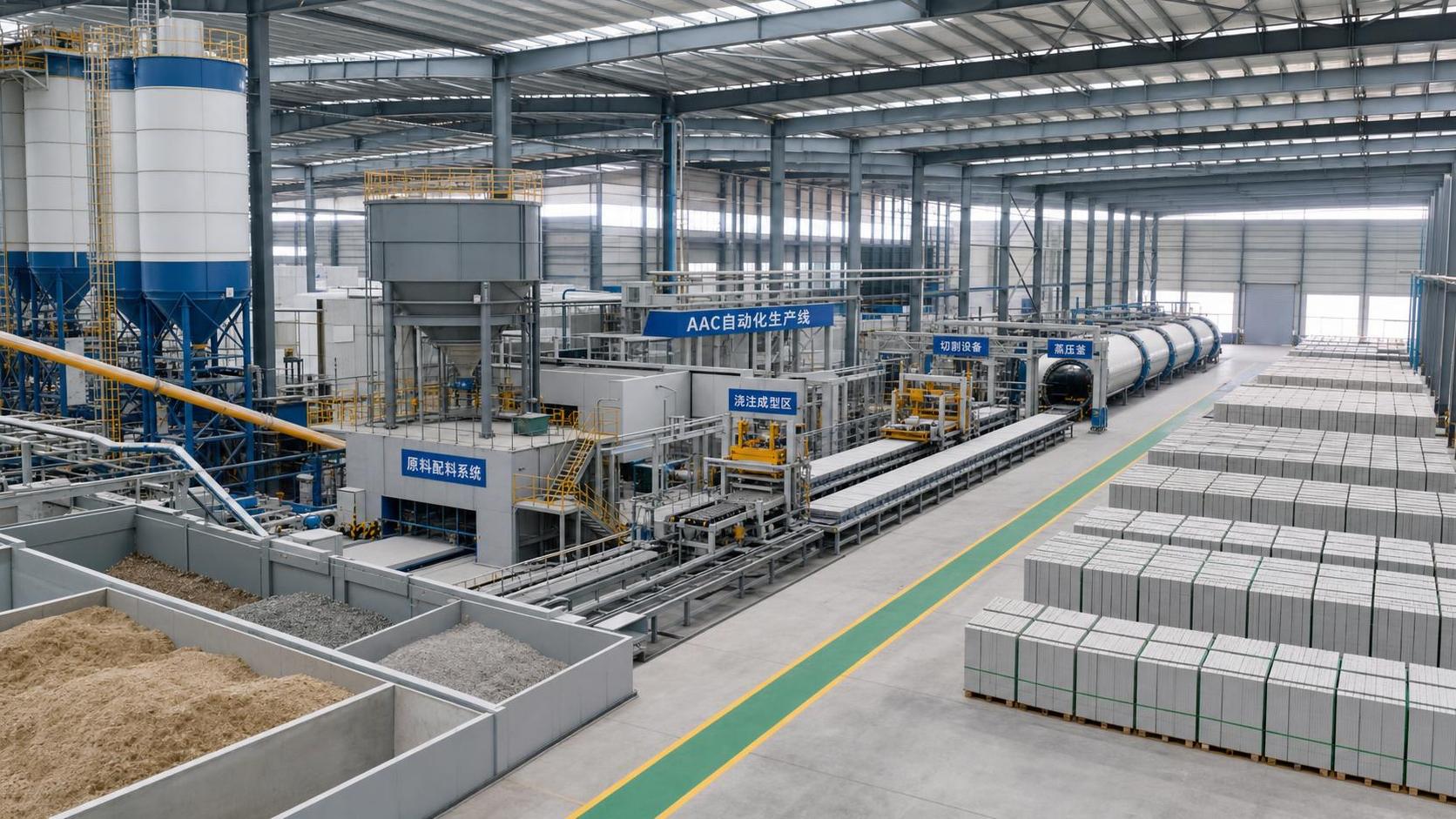
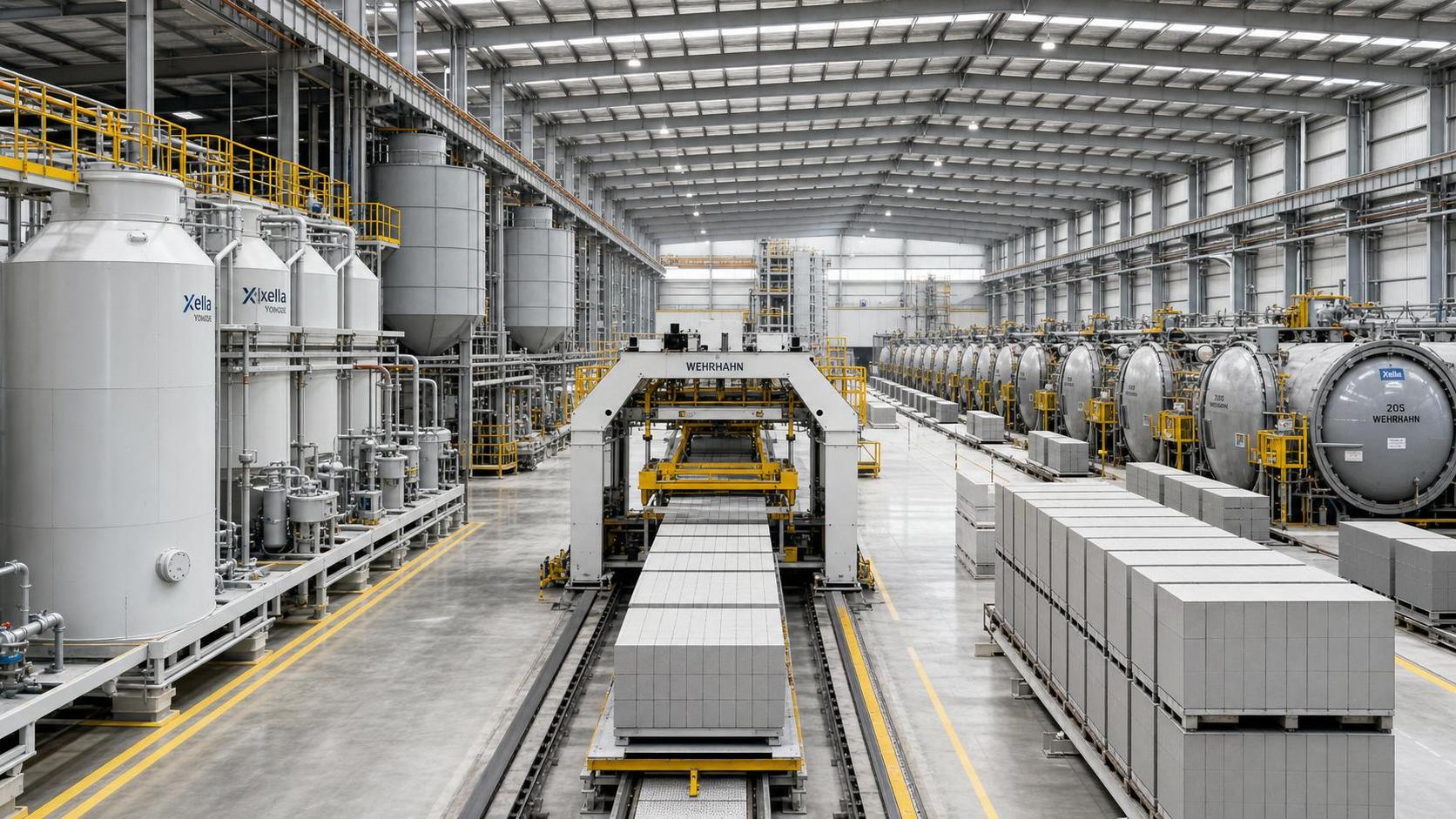
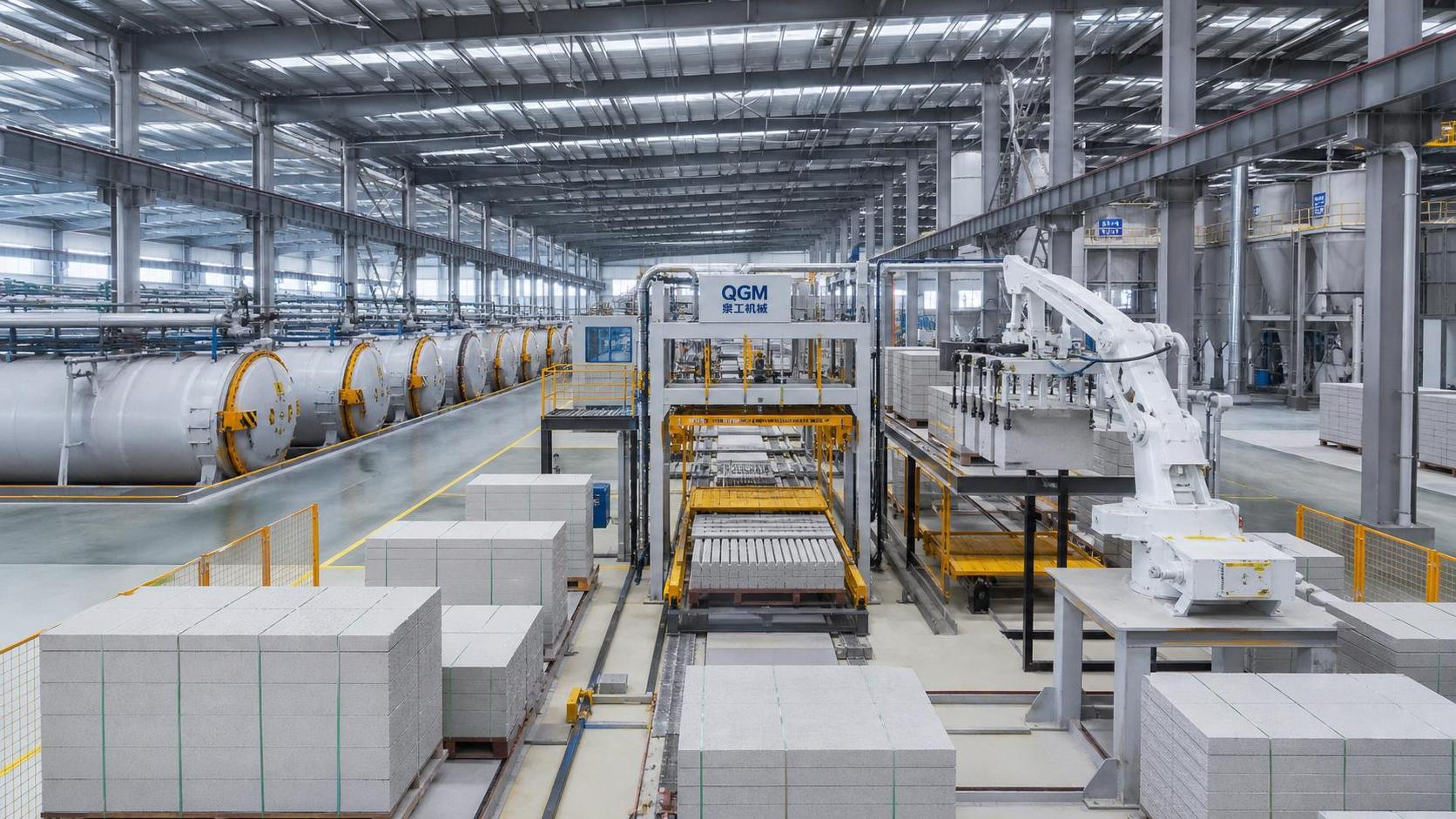
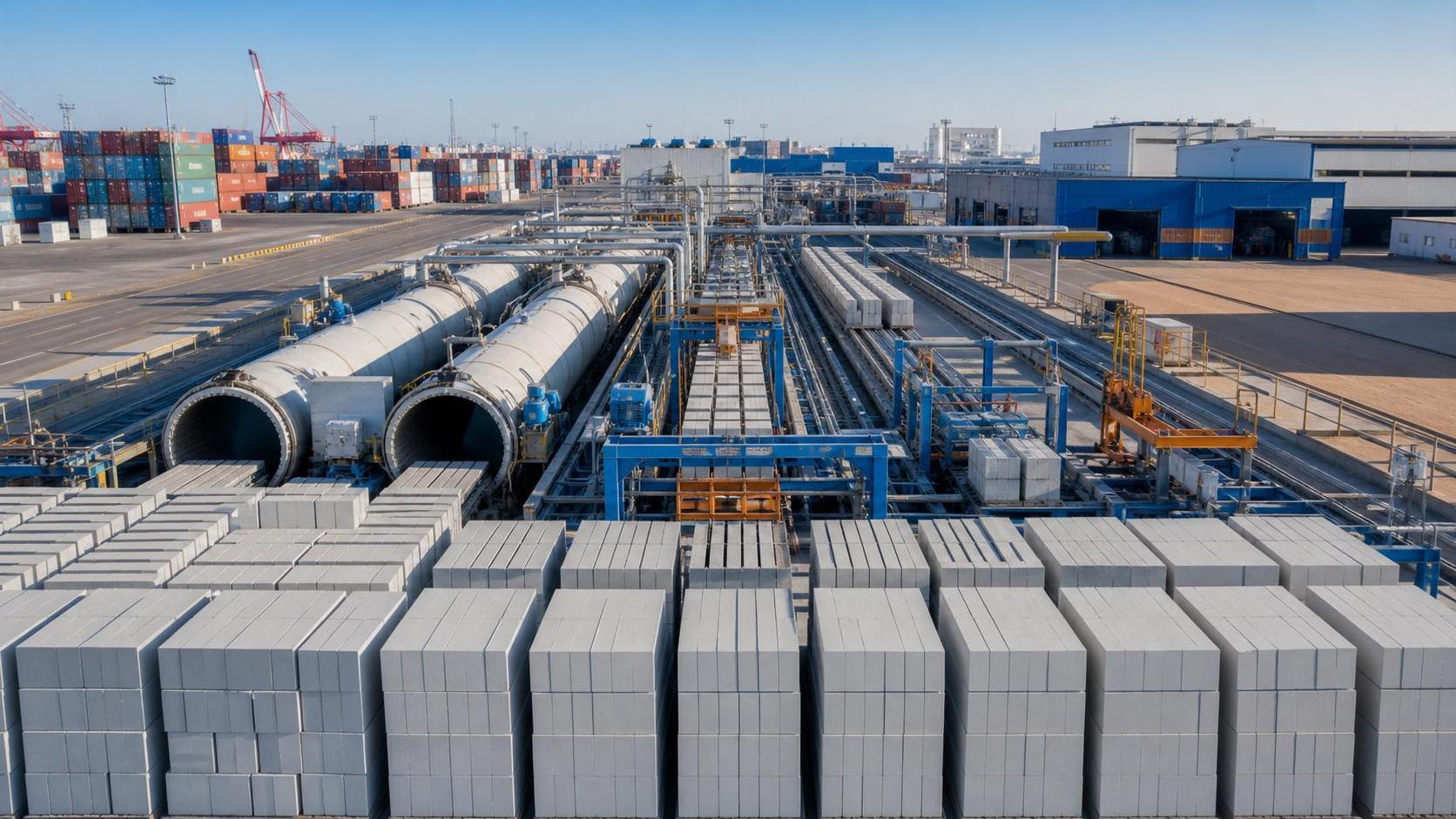
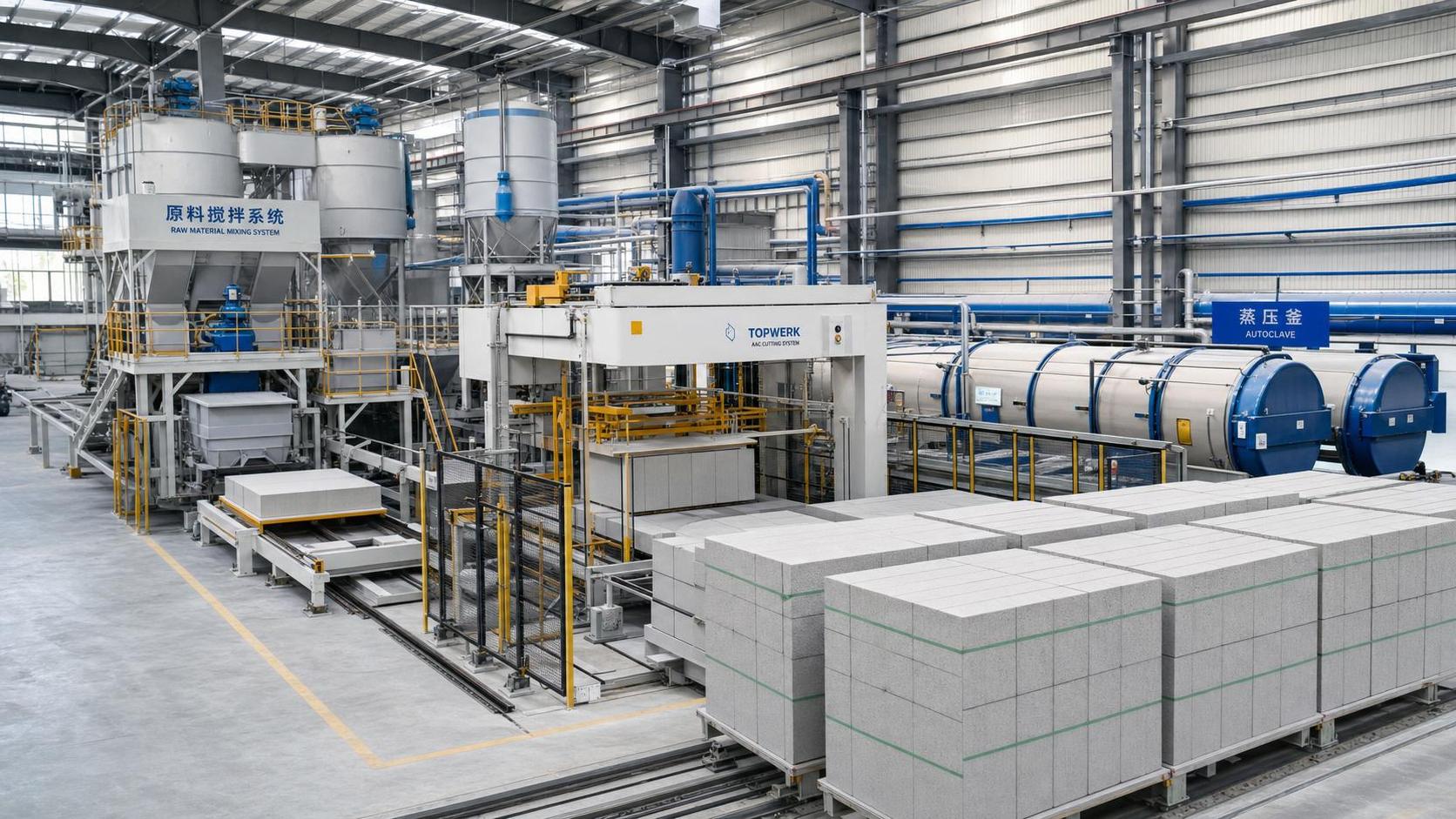
In practical evaluation, AAC block manufacturing should be treated as a full production system.
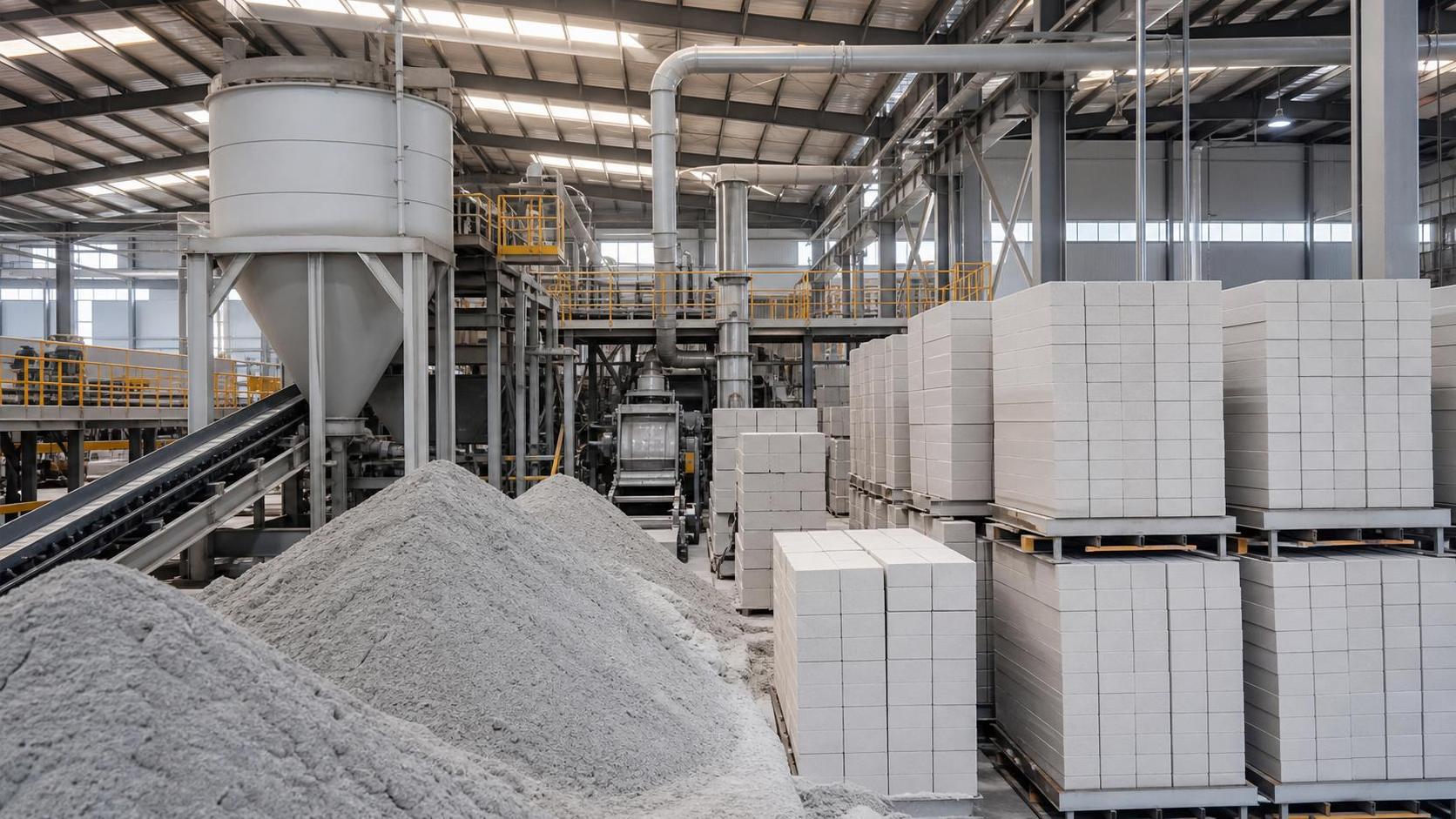
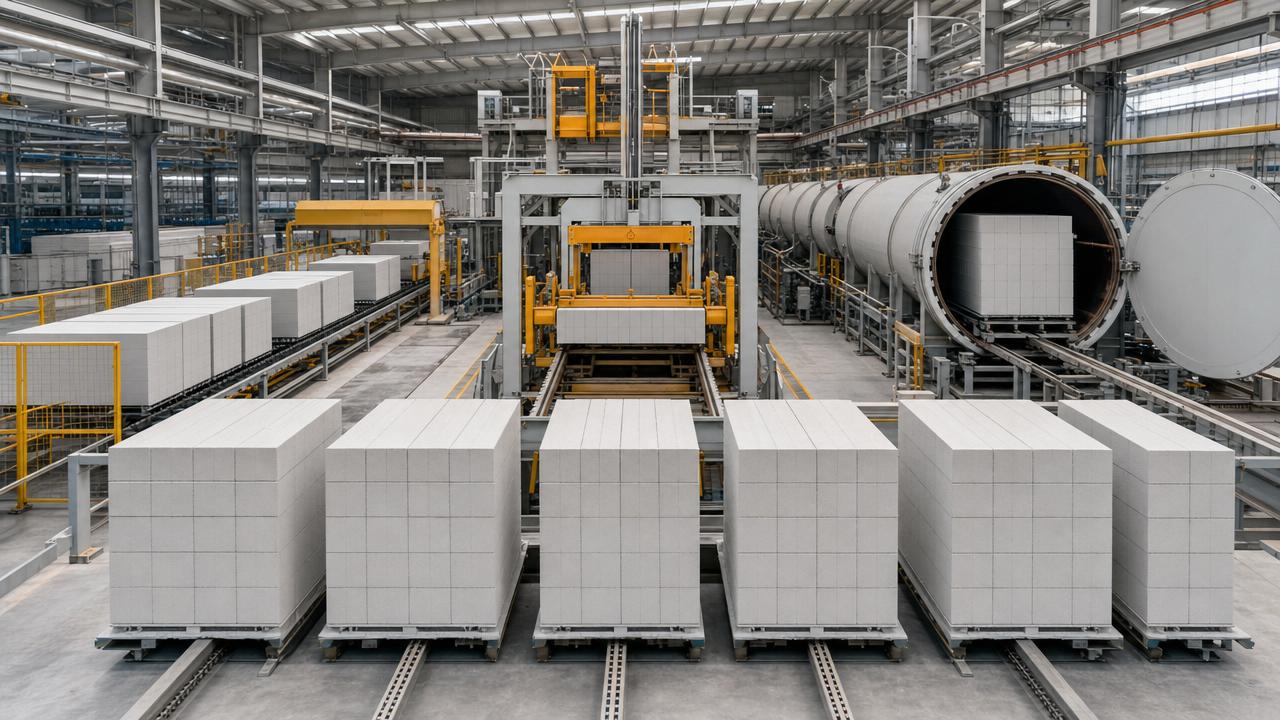
That system starts with raw material preparation and ends with finished block packing and yard flow.
This is also how NMBS typically frames equipment decisions across building material industries.
Instead of isolating machine price, the better question is how equipment affects output, energy, compliance, and return.
For AAC block manufacturing, that wider view matters because raw materials, steam, curing, and cutting accuracy all interact.
A lower initial quotation can become expensive if it creates unstable density, poor edge quality, or long commissioning delays.
Where does the money actually go in an AAC block manufacturing line?
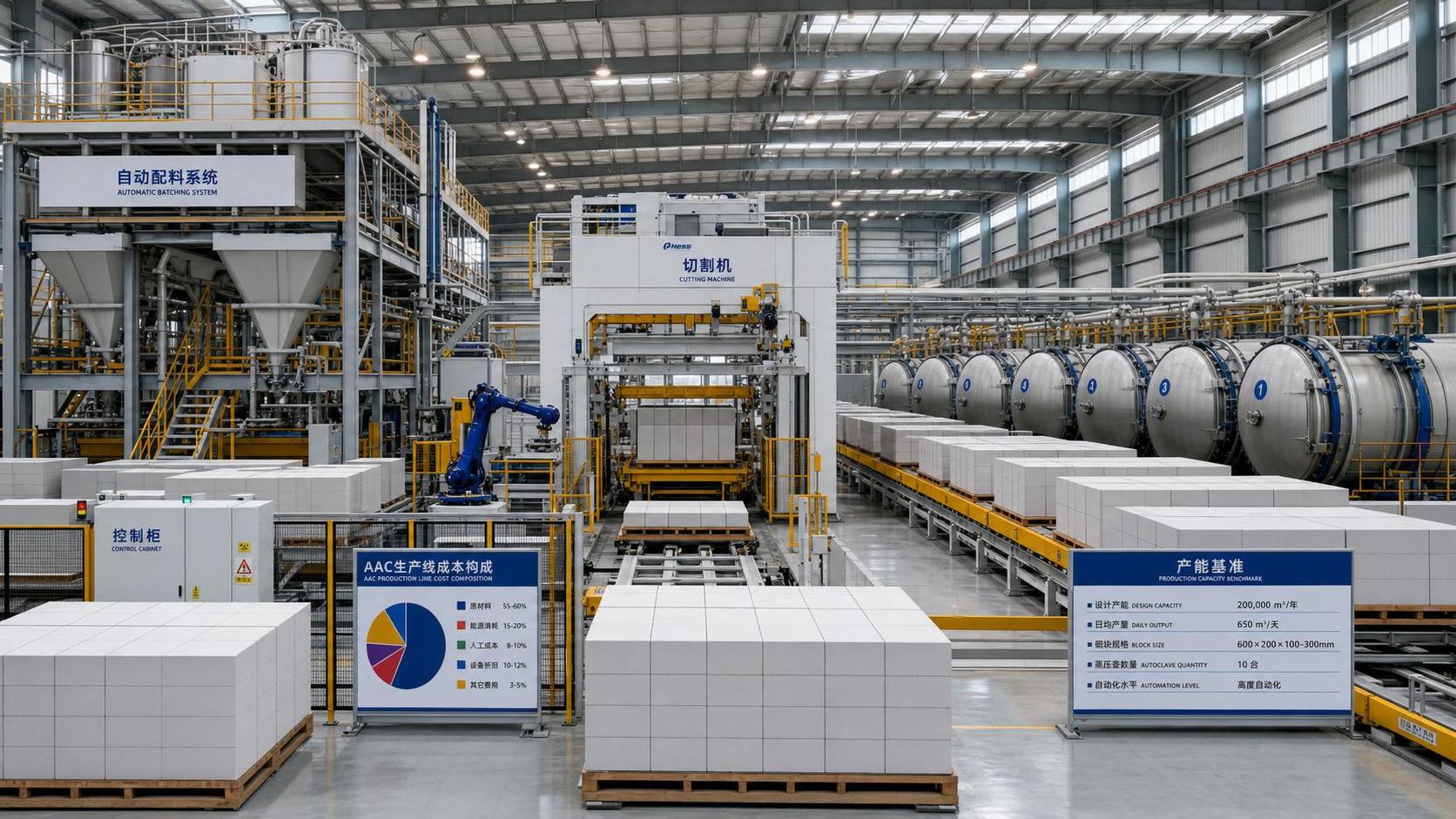
Most budgets are divided across six cost blocks.
Understanding them makes supplier comparison much easier.
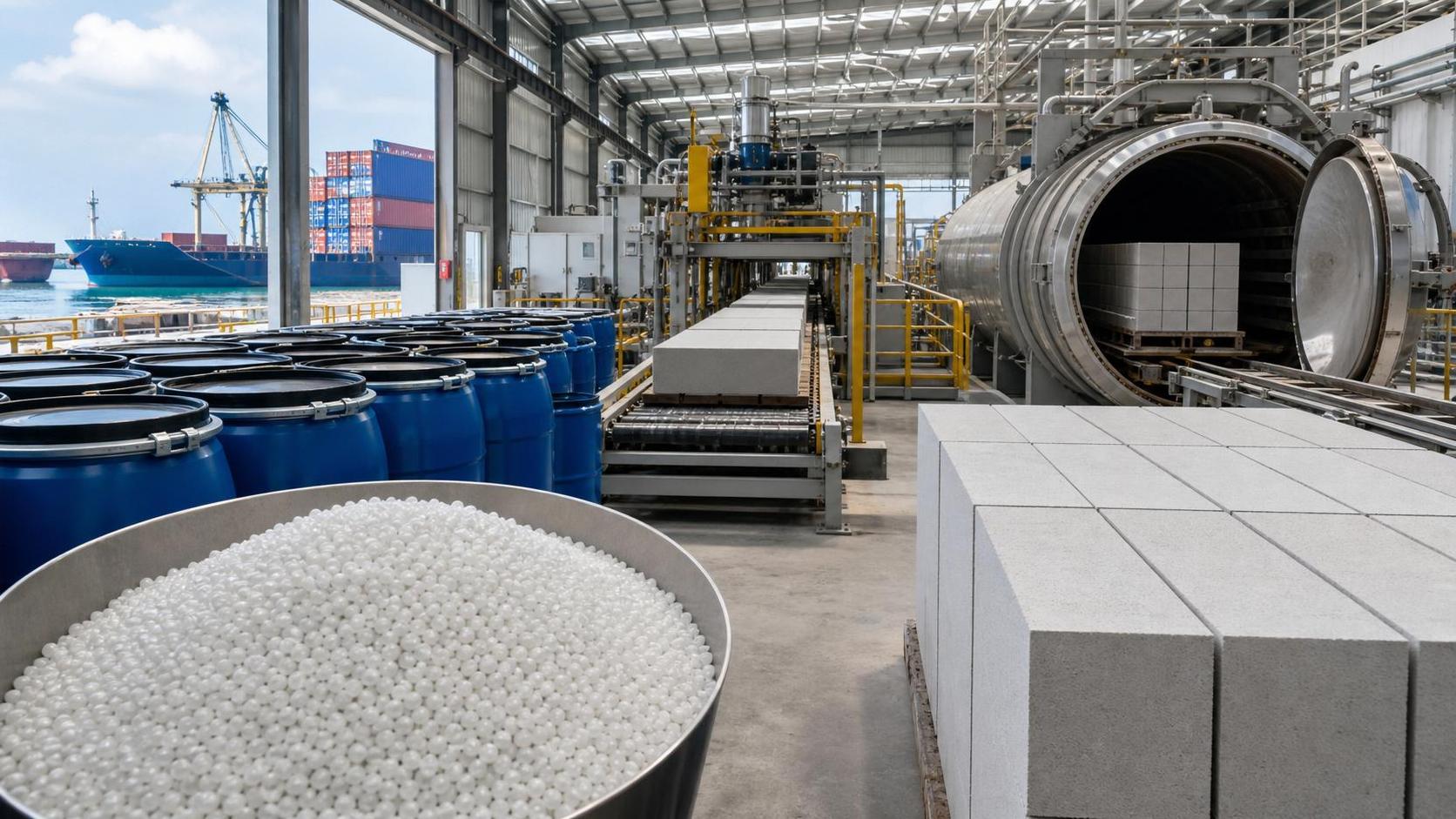
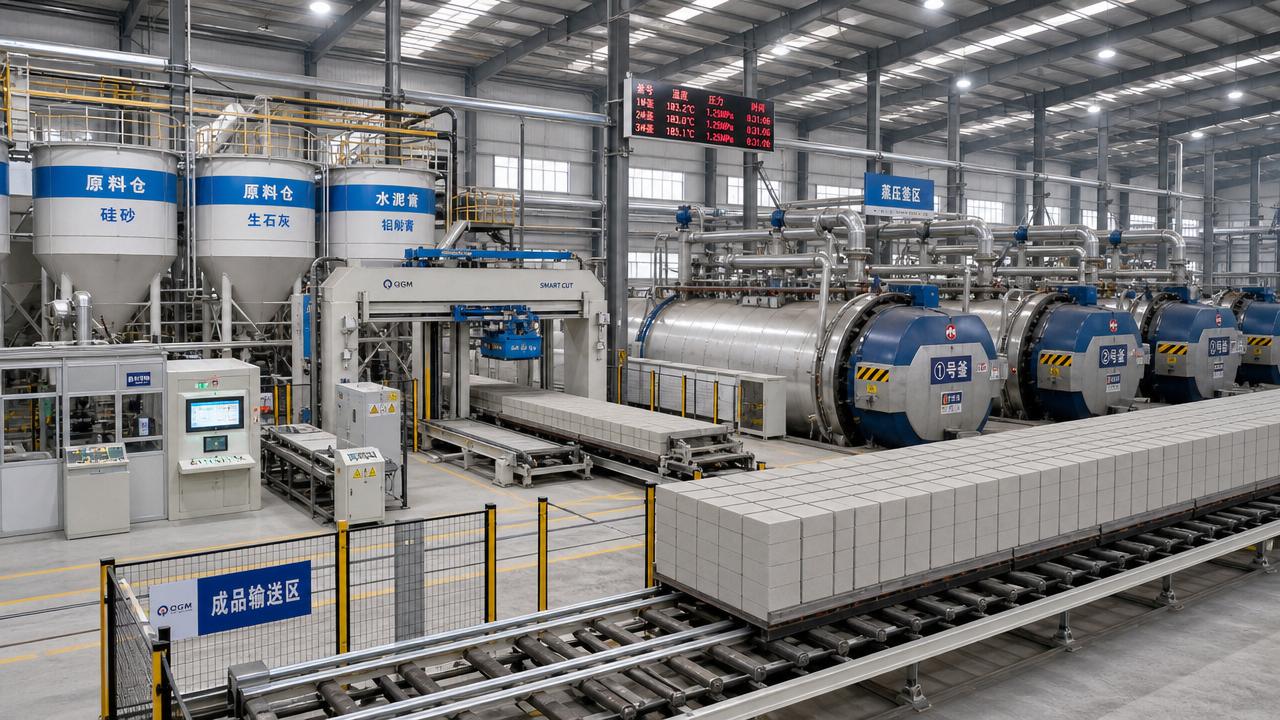
In many cases, the autoclaving section and raw material preparation consume the largest share.
That is especially true when the project targets stable density classes and higher annual output.
Another hidden driver is civil interface.
If the line layout forces long rail transfer, oversized slurry circulation, or poor material flow, operating cost rises quietly.
So when reviewing AAC block manufacturing cost, separate machine supply from total installed cost.
Is a higher-capacity AAC block manufacturing line always more economical?
Not always, and this is where many line selections drift off course.
A larger line can reduce unit cost only when market demand, raw material supply, and steam support are all reliable.
If one of those conditions is weak, utilization falls and cost per cubic meter climbs.
More common trouble appears in projects that buy for nameplate output rather than actual daily rhythm.
AAC block manufacturing depends on synchronized batching, pre-curing, cutting, and autoclave turnaround.
When one section becomes the bottleneck, excess equipment elsewhere sits idle.
A practical comparison usually focuses on these questions:
- Can local fly ash, sand, or tailings maintain stable chemistry and fineness?
- Is the steam source sized for continuous autoclave cycling, not just peak start-up?
- Does the market absorb the full block mix, including less popular sizes?
- Will labor, maintenance, and spare parts support three-shift operation?
If the answer is uncertain, a medium-capacity line with tighter process control often performs better financially.
This is consistent with broader NMBS coverage of industrial systems.
Capacity only creates value when the process ecosystem can carry it.
Which line selection factors matter more than the initial quotation?
Shortlists become clearer when the decision moves from headline price to operating reality.
Several factors deserve more weight than many first-time evaluations give them.
Raw material adaptability
AAC block manufacturing behaves differently with fly ash, sand, mixed silica, or industrial by-products.
The line should match local raw material reality, not a generic recipe.
Autoclave efficiency
Autoclave design affects steam consumption, cycle stability, and final strength consistency.
Valve response, insulation, and condensate recovery deserve close review.
Cutting accuracy and finished quality
Good AAC block manufacturing depends on clean edges, dimensional stability, and low crack rates.
Poor cutting systems create waste, complaints, and transport damage.
Control system depth
Recipe management, weighing accuracy, and traceable alarms reduce process drift.
That matters even more where environmental reporting or energy monitoring is tightening.
Supplier execution scope
A low machine quote may exclude key conveyors, molds, spare wire sets, or startup training.
The safer comparison is total scope versus guaranteed performance.
What are the most common mistakes when comparing AAC block manufacturing suppliers?
The usual mistakes are not dramatic.
They are small omissions that distort the real economics.
In actual sourcing, the strongest proposals usually explain process logic, not only machine lists.
That level of clarity is valuable across heavy material systems, from cement grinding to glass processing and AAC block manufacturing.
How should the final decision be made if ROI, quality, and compliance all matter?
The cleanest approach is to score options against a short list of operational outcomes.
That keeps attention on what the line must deliver after installation.
- Target output under realistic shift patterns, not brochure conditions.
- Product quality consistency across density classes and block sizes.
- Steam, electricity, and water consumption per cubic meter.
- Process flexibility for changing raw material sources.
- Environmental and safety readiness for current and expected regulations.
- Commissioning support, spare parts depth, and fault-response speed.
If two suppliers look close, the better choice is often the one with clearer assumptions and stronger process integration.
AAC block manufacturing becomes more bankable when technical risk is visible early.
That is also why industry intelligence platforms such as NMBS are useful in the background.
They help connect equipment choice with market conditions, low-carbon upgrades, and broader project economics.
Before moving forward, it is worth organizing local raw material data, utility conditions, target product mix, and required standards into one evaluation sheet.
That document usually reveals whether a lower quote is truly competitive or simply incomplete.
For any AAC block manufacturing investment, better decisions come from comparing systems, assumptions, and lifecycle cost together.
Related News
- When does heavy building material equipment make sense for AAC block plants?Author :Masonry Automation Architect

- What Determines the ROI of AAC Block Equipment in a New Plant Setup?Author :Masonry Automation Architect

- CBP Requires LCA Declarations for Imported AAC LinesAuthor :Masonry Automation Architect

- AAC Block Manufacturing Cost Breakdown and Line Selection GuideAuthor :Masonry Automation Architect

- Vietnam sets Q3 filing deadline for AAC plant IoT modulesAuthor :Masonry Automation Architect

- Vietnam Rule Adds IoT Module to AAC Plant ImportsAuthor :Masonry Automation Architect

- Vietnam Opens Fast-Track VIEP Review for AAC PlantsAuthor :Masonry Automation Architect

- Vietnam Requires VIEP Certification for Imported AAC Block PlantsAuthor :Masonry Automation Architect

- AAC Block Equipment: Common Selection Mistakes That Raise Operating CostsAuthor :Masonry Automation Architect
![]()
- Steam Curing AAC: How It Affects Strength, Cycle Time, and Energy UseAuthor :Masonry Automation Architect
![]()
- AAC Block Production Line Cost Drivers and Output BenchmarksAuthor :Masonry Automation Architect

- Vietnam Enforces 28.3% Temporary Duty on China Block EquipmentAuthor :Masonry Automation Architect

- Vietnam Imposes Temporary AD Duty on Chinese Block MachineryAuthor :Masonry Automation Architect

- Autoclaved aerated concrete USA: plant selection guideAuthor :Masonry Automation Architect

- AAC Block Production Cost Breakdown: What Impacts Plant ProfitabilityAuthor :Masonry Automation Architect

- Anhui Conch Cement Buyout Sharpens EPC Export ReadinessAuthor :Masonry Automation Architect

- Indonesia Tariff on Chinese Polypropylene Raises AAC Input CostsAuthor :Masonry Automation Architect

- India’s Parboiled Rice Duty Pressures AAC Raw Material CostsAuthor :Masonry Automation Architect

- Middle East AAC Rules Lift China Plant Exports 41%Author :Masonry Automation Architect

- Vietnam Requires ESG Labels for Imported Green Building MaterialsAuthor :Masonry Automation Architect

- Insulated Prefabricated Wall Materials: Key Performance Checks Before Specifying a SystemAuthor :Masonry Automation Architect

- AAC Block Plant Equipment Checklist Before Final SelectionAuthor :Masonry Automation Architect

- China Building Materials Hits Carbon PeakAuthor :Masonry Automation Architect

- Fly Ash AAC Blocks: Key Cost Drivers, Strength Limits, and Best-Fit Building ApplicationsAuthor :Masonry Automation Architect

- Autoclaved AAC Block System: Key Factors for Plant SelectionAuthor :Masonry Automation Architect

- AAC Block Factory Setup: Key Line Choices and Capacity Trade-OffsAuthor :Masonry Automation Architect

- NHTSA Proposes Ending Light-Vehicle Fuel Economy Credit Trading by 2028Author :Masonry Automation Architect

- Jiangsu Launches First Fully Electric AAC Autoclave LineAuthor :Masonry Automation Architect

- AAC Block Production: Output, Steam Use, and Payback BasicsAuthor :Masonry Automation Architect

- AAC Block Production Problems Caused by Poor Curing ControlAuthor :Masonry Automation Architect