



Search News
Industry Portal
Popular Tags
All categories
Zaozhuang Speeds Export Clearance for Equipment Makers




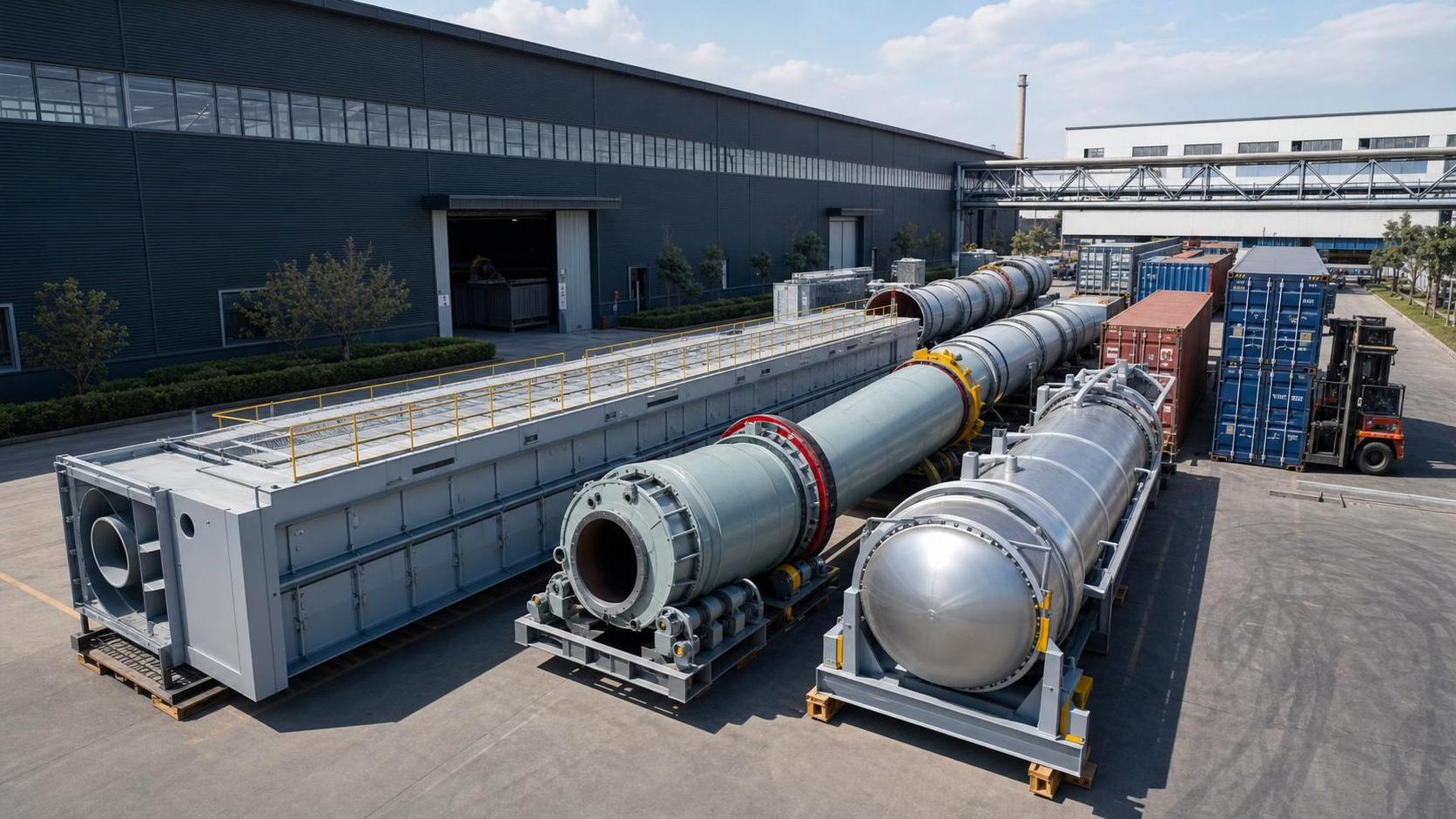
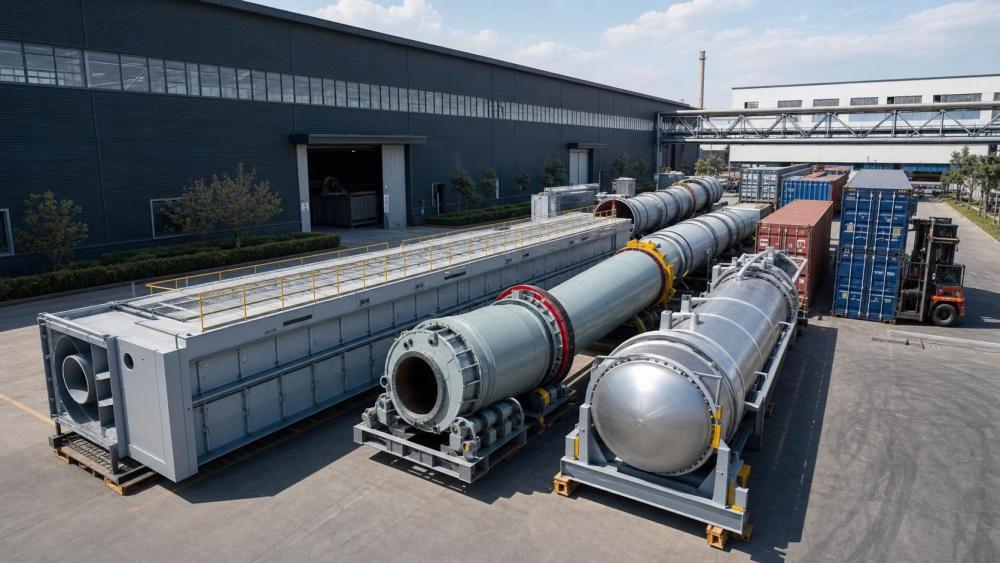
On June 1, 2026, Zaozhuang introduced a parallel review mechanism for export equipment tied to key sectors including lithium battery and low-altitude economy manufacturing, shortening the average customs clearance cycle from 22 days to 13 days. For exporters of complete equipment such as roller kilns, rotary kiln systems, quartz stone presses, and AAC autoclaves, the change is worth watching not only for its effect on shipment timing, but also for its link to faster tax rebate processing and more direct policy delivery through the Zaohuitong platform.
What the new approval arrangement changes
According to the provided event summary, starting in June 2026, Zaozhuang began applying a parallel handling model that allows the project initiation letter and export license to be processed at the same time for export equipment in key industries such as lithium battery and low-altitude economy.
The same summary states that the waiting period tied to prior environmental impact assessment and energy assessment procedures has been removed in this process. The policy applies to exports of complete equipment including roller kilns, rotary kiln systems, quartz stone presses, and AAC autoclaves.
The confirmed result in the provided information is that the average clearance cycle has been reduced from 22 days to 13 days, equivalent to a 40% improvement in timeliness. In addition, with policy delivery through the Zaohuitong platform, export tax rebates are said to arrive within five working days.
Where the operational impact is likely to be felt
Equipment exporters will see the clearest scheduling effect
From an industry perspective, exporters shipping complete equipment are the most directly affected because the policy targets the approval and licensing path that sits ahead of customs clearance. The main business impact is likely to appear in order scheduling, shipping coordination, and customer delivery commitments, especially for companies handling large, documentation-heavy equipment exports.
What deserves closer attention is whether internal document preparation can keep pace with the shorter official cycle. A faster external process does not automatically remove delays caused by incomplete product files, contract inconsistencies, or export paperwork gaps.
Manufacturers tied to project-based delivery may need tighter internal handoffs
Analysis shows that manufacturers of kiln systems, presses, and autoclaves may feel the impact through production-to-delivery coordination. When approval and licensing move faster, the pressure shifts toward factory release timing, packaging readiness, inspection alignment, and handover to logistics partners.
For these companies, the policy matters less as a headline timing gain and more as a test of whether internal fulfillment steps are organized to match the compressed export window.
Supply chain and service providers may need to adjust response times
Freight coordinators, customs-related service providers, and tax processing teams may also be affected because a shorter clearance cycle changes the rhythm of document submission and shipment preparation. Observably, the closer link between approval progress, customs timing, and tax rebate receipt could make service responsiveness more important in daily execution.
The practical issue to watch is not only speed, but also whether each service handoff remains accurate when the overall timeline is shortened.
What companies should monitor now
Watch for any refinement in implementation language
Analysis shows that companies should pay close attention to how the parallel handling mechanism is described in follow-up official wording. The headline change is clear, but actual execution often depends on detailed requirements for document order, submission format, and product scope.
Confirm whether shipments fit the covered equipment scope
Businesses exporting roller kilns, rotary kiln systems, quartz stone presses, AAC autoclaves, or related complete equipment should verify how their own products are classified within the applicable process. This matters because eligibility and document handling may determine whether the shorter cycle can be realized in practice.
Separate policy signal from execution readiness
What deserves closer attention is the difference between a formal process improvement and a guaranteed delivery outcome. Even with a reduction from 22 to 13 days in average clearance time, companies still need to review contract schedules, customer communication, and internal approval readiness so that promised lead times do not assume ideal execution in every case.
Prepare documentation and rebate workflows together
Because the provided information also points to export tax rebates arriving within five working days, firms may need to connect customs documentation, finance submission, and rebate follow-up more closely. The benefit is likely to be strongest where export, finance, and service teams are already aligned on timing and file accuracy.
Why this reads as more than a one-off administrative tweak
Observably, this development signals an effort to compress pre-export administrative sequencing for selected equipment categories rather than merely accelerate one isolated step. That matters because complete equipment exports often depend on coordination across approval, licensing, shipping, and payment recovery.
At the same time, it is more appropriate to understand this as a concrete local policy signal with confirmed process changes, not as proof of a broader industry-wide shift beyond the scope described in the provided information. Continued attention is warranted because the practical value of the measure will depend on how consistently it is implemented across actual export cases.
How the market may best read this update
For now, this update is best understood as a targeted efficiency gain for exporters serving lithium battery and low-altitude economy equipment demand in Zaozhuang. The confirmed facts point to shorter clearance timing and faster rebate receipt, while the broader business significance lies in whether companies can convert those changes into more reliable delivery planning and working-capital turnover.
A neutral reading is that the policy already shows a measurable administrative result, but its full industry meaning still depends on execution at the shipment level and on whether affected companies can adapt their internal processes accordingly.
Basis of this article and what still needs verification
This article is based on the user-provided news title, event date, and event summary. It has been written from those confirmed inputs only and does not add unverified data, institutions, company names, or policy references beyond the supplied material.
For this type of development, source types usually relevant for ongoing verification include official notices, company disclosures, industry association updates, authoritative media coverage, and standards or compliance-related documents. A specific official source link was not provided in the input, so further verification remains necessary.
Follow-up attention should focus on whether additional implementation details, product-scope clarifications, or updated procedural language are released after the initial announcement.
Related News
- How to Evaluate Refractory Kiln Technology in ChinaAuthor :Powder Comminution Scientist

- Material Handling Machinery for Cement Plants: What to Check Before SelectionAuthor :Powder Comminution Scientist

- How to Evaluate a Cement Plant EPC Contractor Beyond Bid PriceAuthor :Powder Comminution Scientist

- EPC Cement Plant Risks That Delay Budget and StartupAuthor :Powder Comminution Scientist

- Key Cost Drivers in Cement Plant EPC Projects Before Contract SigningAuthor :Powder Comminution Scientist

- Cement Production Technology: How to Cut Fuel Use Without Process InstabilityAuthor :Powder Comminution Scientist

- Zaozhuang Speeds Export Clearance for Equipment MakersAuthor :Powder Comminution Scientist

- Indonesia Coal Export Shift Pressures Kiln Fuel ChainsAuthor :Powder Comminution Scientist

- OPEC Cuts 2026 Oil Demand View, Easing Kiln Fuel SwingsAuthor :Powder Comminution Scientist

- IMO MEPC 84 Adopts MARPOL Annex VI Amendments Effective September 2027Author :Powder Comminution Scientist

- How to Compare Cement Kiln Systems for Fuel Efficiency and OutputAuthor :Powder Comminution Scientist