



Search News
Industry Portal
Popular Tags
All categories
How to Evaluate Refractory Kiln Technology in China




How to Evaluate Refractory Kiln Technology in China
Evaluating refractory kiln technology China requires more than comparing furnace types or supplier claims. Technical assessment teams must examine thermal efficiency, temperature uniformity, fuel flexibility, lining durability, automation capability, emission control, and lifecycle operating cost. This article outlines the key criteria, risk points, and practical evaluation methods that help buyers and project planners identify kiln solutions aligned with performance targets, compliance demands, and long-term return on investment.
If you are screening kiln suppliers in China, the fastest way to make a bad decision is to start with layout drawings and price. Start with the product you need to fire, the temperature window you cannot violate, the fuel reality at site, and the maintenance discipline your plant can actually sustain. Refractory kiln selection is usually lost in those four places, not in brochure language.
Start with the firing duty, not the kiln name
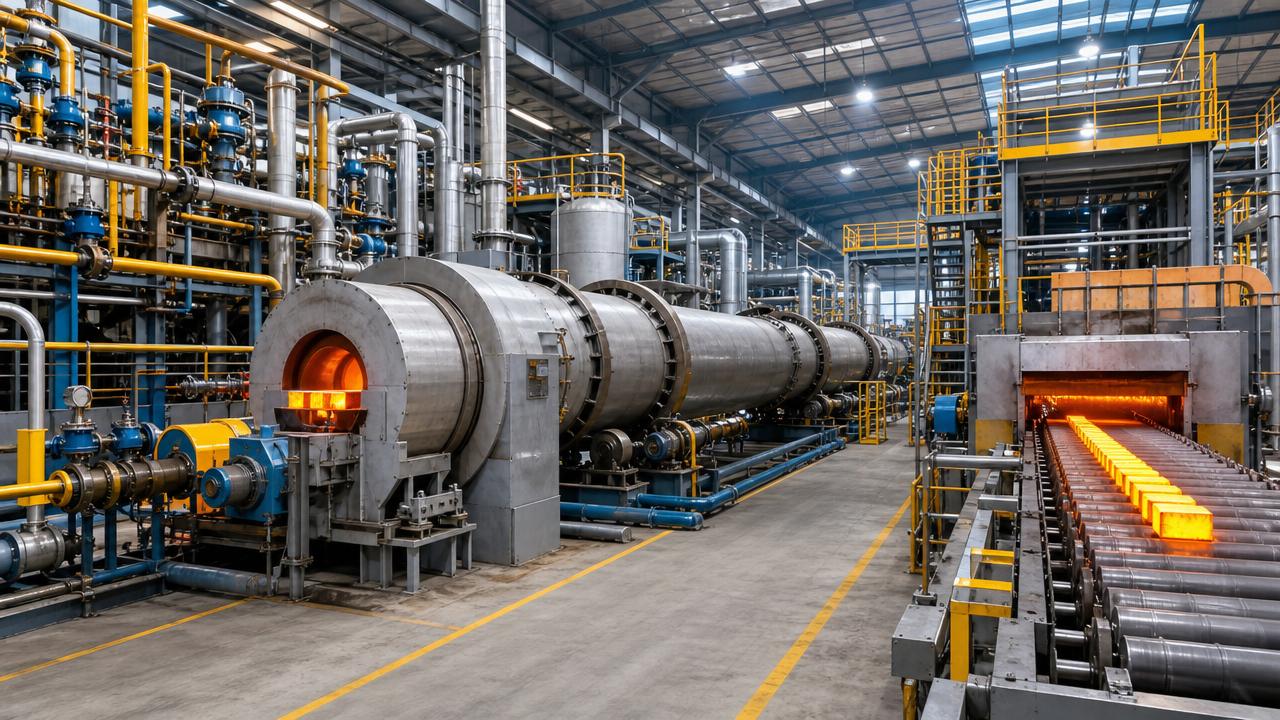
In China, you will see tunnel kilns, shuttle kilns, roller hearth kilns, rotary kilns, and various customized continuous systems proposed for refractory production. That list alone does not help much. What matters is whether the kiln matches the material family and the production rhythm.
- Dense shaped refractories usually push you toward stricter control of soaking time, peak temperature stability, and loading geometry.
- Insulating bricks may be more sensitive to overfiring, deformation, and local hot spots.
- Special products with narrow sintering windows often expose weak combustion control faster than standard alumina brick lines.
Ask the supplier to tie its kiln proposal to your target product mix, green body density range, required fired bulk density, apparent porosity, dimensional tolerance, and expected annual change in product structure. If they stay at the level of “suitable for refractory materials,” keep digging. That answer is too broad to support a capital decision.
Check temperature uniformity like a production risk, because it is
A kiln can hit the headline temperature and still perform badly. The real question is how evenly it heats the load across width, height, and kiln length. In refractory production, uneven temperature distribution shows up later as unstable cold crushing strength, variable permanent linear change, inconsistent thermal shock behavior, or avoidable sorting losses.
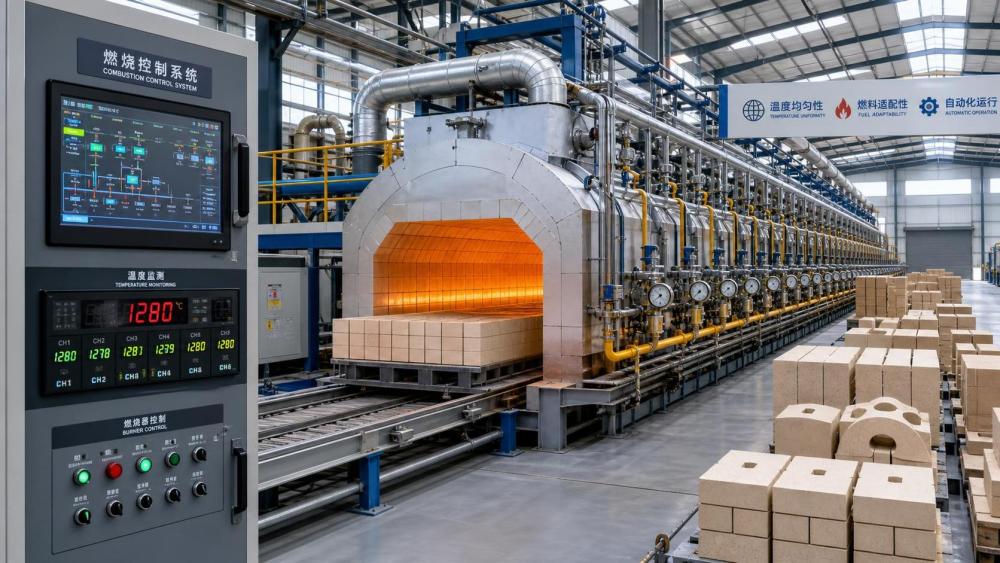
During evaluation, ask for measured temperature mapping results from comparable operating conditions, not just design targets. If a supplier only offers simulation screenshots, treat that as preliminary evidence, not proof. You also want to know where thermocouples are installed, how many control zones exist, how air-fuel ratio is managed in each zone, and whether the system compensates for changing kiln load.
A practical question that often reveals maturity: what happens to temperature consistency when production switches from one brick size to another, or when stacking density changes? Good suppliers have a clear answer. Weak ones retreat to ideal operating conditions.
Fuel flexibility is not a side topic
Many refractory kiln projects in China are still evaluated around natural gas, but that is only part of the picture. Some sites face unstable gas pressure, seasonal supply constraints, LPG backup requirements, or future pressure to adapt to lower-carbon fuel strategies. If your project will operate for years, this matters now.
Check these points carefully:
- What fuel is the burner system designed around, and what backup options are technically feasible?
- Will combustion stability hold under real site pressure fluctuations?
- Does fuel switching require hardware replacement, or only control adjustment and tuning?
- Has the supplier handled low-NOx burner integration where local permitting requires it? Requirements vary by jurisdiction, so site-specific review is necessary.
Do not accept “fuel adaptable” as a general phrase. Ask what that means in piping, burner nozzle design, control valves, flame supervision, and commissioning scope.
Look beyond energy consumption per ton
Suppliers like to present a clean thermal consumption number. Useful, but incomplete. When assessing refractory kiln technology China, the better question is how that number was obtained. Was it based on rated capacity, stable full-load operation, a narrow product range, or actual mixed production with starts, stops, and changeovers?
You should separate at least four things in the review: heat consumption under stable operation, warm-up time, heat loss during idle periods, and yield impact from process instability. A kiln with slightly higher nominal fuel use may still beat a cheaper design if it gives tighter quality consistency and fewer rejected batches.
Lining life deserves a harder review
Kiln lining discussions are often too generic. “High-quality refractory lining” tells you almost nothing. For technical evaluators, the real issue is expected wear mechanism and maintenance access. Is the weak point chemical attack, thermal cycling, mechanical abrasion, burner zone stress, car sealing area leakage, or structural distortion over time?
Ask for lining configuration by zone, expected maintenance interval, replacement method, and required shutdown window. If the supplier cannot explain why different areas use different materials or thicknesses, that is a warning sign. In practice, poor lining design does not only raise maintenance cost. It also drifts temperature control, increases shell heat loss, and creates a slow decline that operators often normalize until product complaints start appearing.
Automation quality matters more than screen count
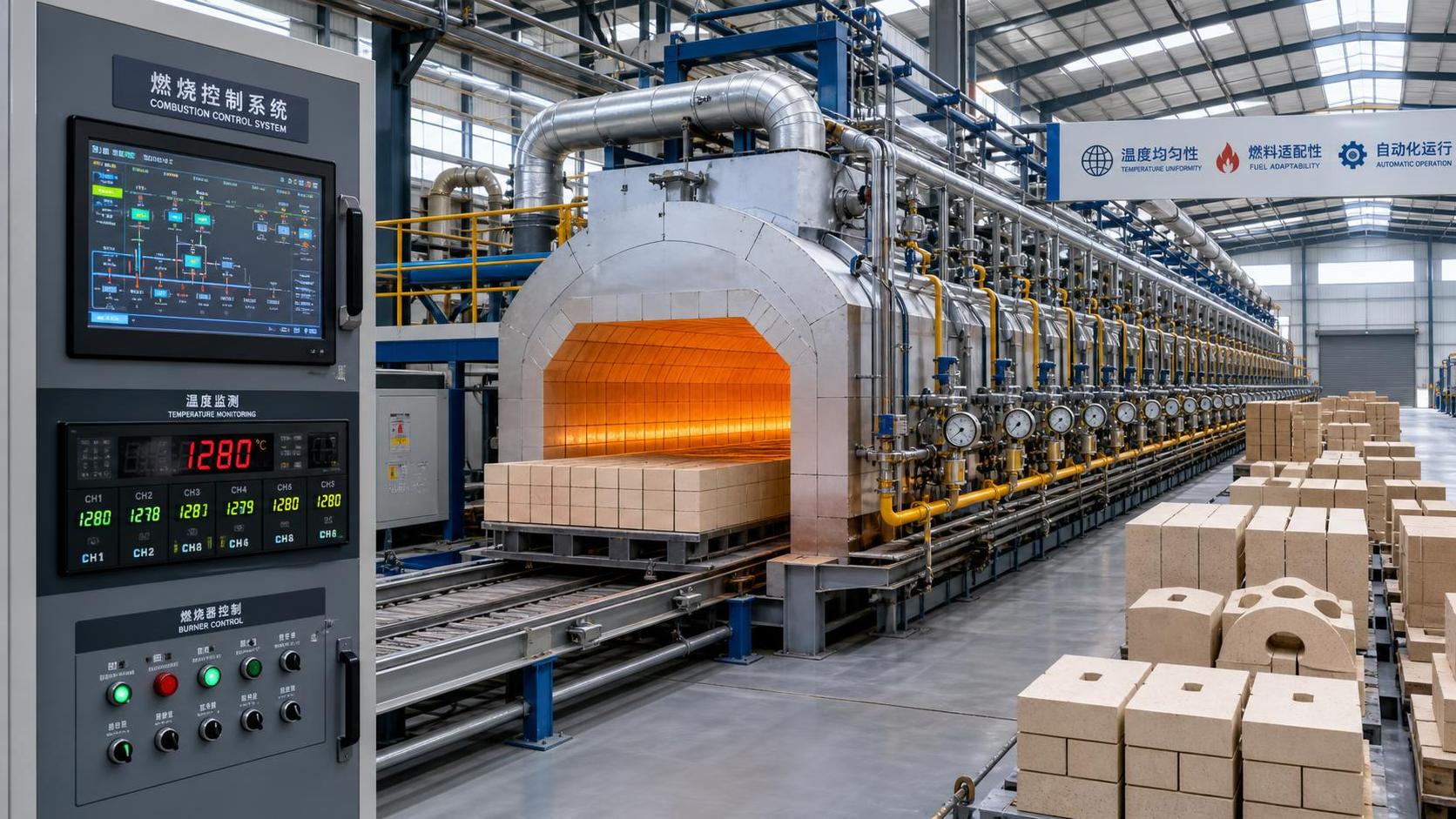
Some kiln proposals look advanced because the HMI is polished and the control cabinet is large. That is cosmetic. You need to know whether the automation package actually improves firing repeatability and troubleshooting speed.
- Can operators trend temperature, pressure, fuel flow, and alarm history by batch or production period?
- Is recipe management available for different refractory grades?
- How are burner faults isolated, and how quickly can the root cause be identified?
- Can the system interface with plant MES or SCADA if that is part of your digital plan?
For export projects or multinational buyers, also confirm controller brand, spare parts availability, language support, remote diagnostics policy, and cybersecurity requirements. Those are not procurement side notes. They can affect startup timing and long-term operability.
Emission compliance should be checked against the project location, not assumed from Chinese supply capability
Chinese kiln manufacturers may be fully capable of building to demanding environmental specifications, but that does not mean every standard configuration is ready for your local permit. Dust collection, NOx control, combustion tuning, flue gas temperature management, and monitoring provisions need project-level review.
Be careful with unverified statements about compliance with EU, GCC, Southeast Asian, or other regional requirements. Regulations and enforcement practices differ, and details change. Ask suppliers to identify exactly which emission-control components are included, what measurement basis they use, and which items must be confirmed by local engineering or permitting consultants【待核实】.
Visit references, but ask the right questions when you do
Reference checks are still one of the best filters, especially in refractory equipment. But a polished plant visit can mislead you if you only look at appearance and nameplate capacity. Speak to operators, maintenance staff, and production managers if access is possible.
Useful questions are usually very plain: how often does temperature drift require manual correction, which spare parts fail first, how long did commissioning actually take, what changed after the first six months, and whether the supplier stayed engaged once acceptance was signed. Those answers tend to tell you more than formal presentations.
Do not separate mechanical design from firing performance
Teams sometimes review kiln shell structure, cars, drives, seals, burners, and controls in separate workstreams. That is understandable, but risky. In actual operation, air leakage, car flatness, seal wear, drive stability, and burner positioning all feed back into firing quality.
A tunnel kiln with weak car sealing can quietly lose efficiency and temperature control. A shuttle kiln with awkward maintenance access may look acceptable on paper but become expensive in downtime. A rotary kiln can meet process expectations only if feed condition, residence time control, and thermal profile are properly integrated. Keep one review sheet that links process targets with mechanical features. That prevents siloed approvals.
A short decision checklist that actually helps
- Define the refractory products, firing curve sensitivity, and yearly product-mix variance before requesting quotations.
- Require comparable reference cases by product type and capacity range, not just by kiln category.
- Review measured temperature uniformity evidence and control-zone logic.
- Test every energy claim against operating assumptions, yield, and downtime behavior.
- Verify fuel adaptability in hardware terms.
- Map lining design, wear points, and maintenance intervals by zone.
- Check automation for repeatability, traceability, and troubleshooting value.
- Confirm emission-control scope against the actual destination market.
- Include commissioning support, operator training, and spare-parts readiness in the technical decision, not later in purchasing.
The best evaluation teams usually end up with fewer slogans and more operating questions. That is the right direction. Refractory kiln technology China can range from very capable standard platforms to highly engineered custom solutions, but the good decisions are usually made the same way: stay close to firing reality, verify what is measured, and force every supplier claim back to production consequences.
If a proposal still looks attractive after that level of review, you are no longer buying on optimism. You are making a technical decision with a workable risk picture, which is exactly where kiln selection should land.
Related News
- Which kiln upgrades cut fuel use in low-carbon cement production?Author :Powder Comminution Scientist

- When does a cement grinding machine become a bottleneck in clinker outputAuthor :Powder Comminution Scientist

- How to Evaluate Refractory Kiln Technology in ChinaAuthor :Powder Comminution Scientist

- Material Handling Machinery for Cement Plants: What to Check Before SelectionAuthor :Powder Comminution Scientist

- How to Evaluate a Cement Plant EPC Contractor Beyond Bid PriceAuthor :Powder Comminution Scientist

- EPC Cement Plant Risks That Delay Budget and StartupAuthor :Powder Comminution Scientist

- Key Cost Drivers in Cement Plant EPC Projects Before Contract SigningAuthor :Powder Comminution Scientist

- Cement Production Technology: How to Cut Fuel Use Without Process InstabilityAuthor :Powder Comminution Scientist

- Zaozhuang Speeds Export Clearance for Equipment MakersAuthor :Powder Comminution Scientist

- Indonesia Coal Export Shift Pressures Kiln Fuel ChainsAuthor :Powder Comminution Scientist

- OPEC Cuts 2026 Oil Demand View, Easing Kiln Fuel SwingsAuthor :Powder Comminution Scientist

- IMO MEPC 84 Adopts MARPOL Annex VI Amendments Effective September 2027Author :Powder Comminution Scientist

- How to Compare Cement Kiln Systems for Fuel Efficiency and OutputAuthor :Powder Comminution Scientist