



Search News
Industry Portal
Popular Tags
All categories
When does fine grinding technology require air classification?




When Does Fine Grinding Technology Require Air Classification?
Fine grinding technology requires air classification when the production target is not merely a smaller average particle size, but a controlled particle size distribution that remains stable from one operating shift to the next. This distinction matters in cement additives, silica flour, calcium carbonate, ceramic body materials, fly ash, slag powders, refractory raw materials, and many low-carbon construction products. A mill can reduce particle size. It cannot, by itself, reliably decide which particles are sufficiently fine, which particles should return for another pass, and which ultrafines may be damaging the final product or the economics of the line.
For technical evaluators, the practical question is usually more specific: will adding an air classifier solve a quality problem, an energy problem, a throughput bottleneck, or a downstream processing problem? In well-designed systems, the classifier becomes the control point between grinding intensity and usable powder quality. In poorly matched systems, it simply adds fan power, dust-handling complexity, and another maintenance item.
The decision therefore depends on the material, the required cut size, moisture level, feed variability, product application, and the tolerance for coarse particles and ultrafines. It is not automatically justified because a specification uses the word “fine.”
The Real Trigger: Particle Size Distribution, Not Just Micron Size
A common evaluation mistake is to compare only the nominal fineness value of two grinding systems. A powder described by a single median particle size can still contain too many coarse particles, too broad a size spread, or an excessive ultrafine fraction. Those details often determine how the material behaves in a mill, mixer, kiln, concrete batch plant, coating formulation, press feed system, or pneumatic conveying line.
Air classification becomes necessary when the upper end of the particle size curve must be limited with confidence. In a mineral filler application, oversized particles may affect surface finish, packing density, or wear in downstream equipment. In ceramic processing, a coarse fraction can create defects during forming or sintering. In cement grinding, the relationship is more nuanced: a finer product may support early strength development, but an uncontrolled abundance of ultrafines can increase water demand, reduce mill efficiency, or create handling issues. The useful target is rarely “as fine as possible.” It is the particle size distribution that supports the required performance at an acceptable specific energy level.
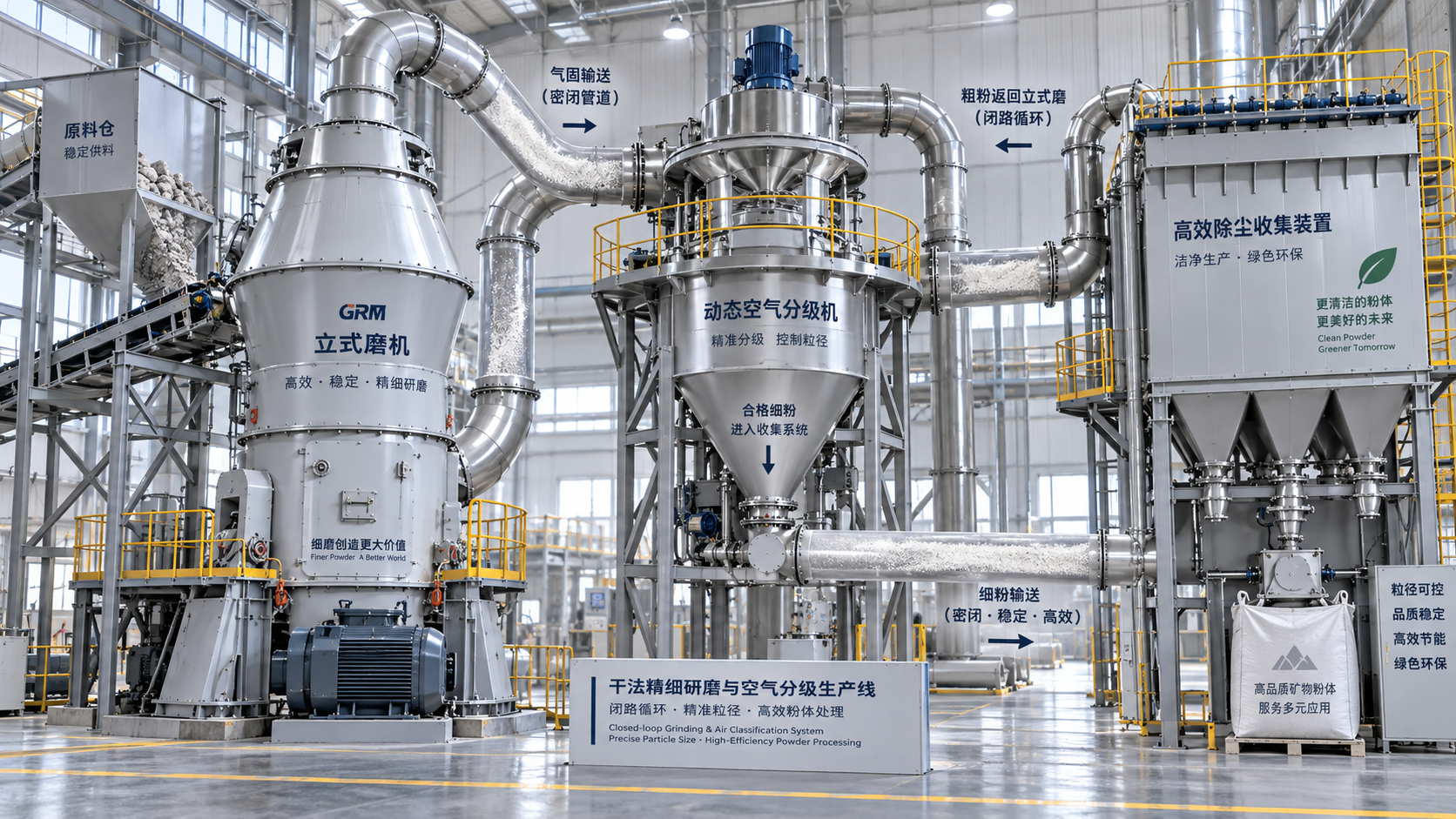
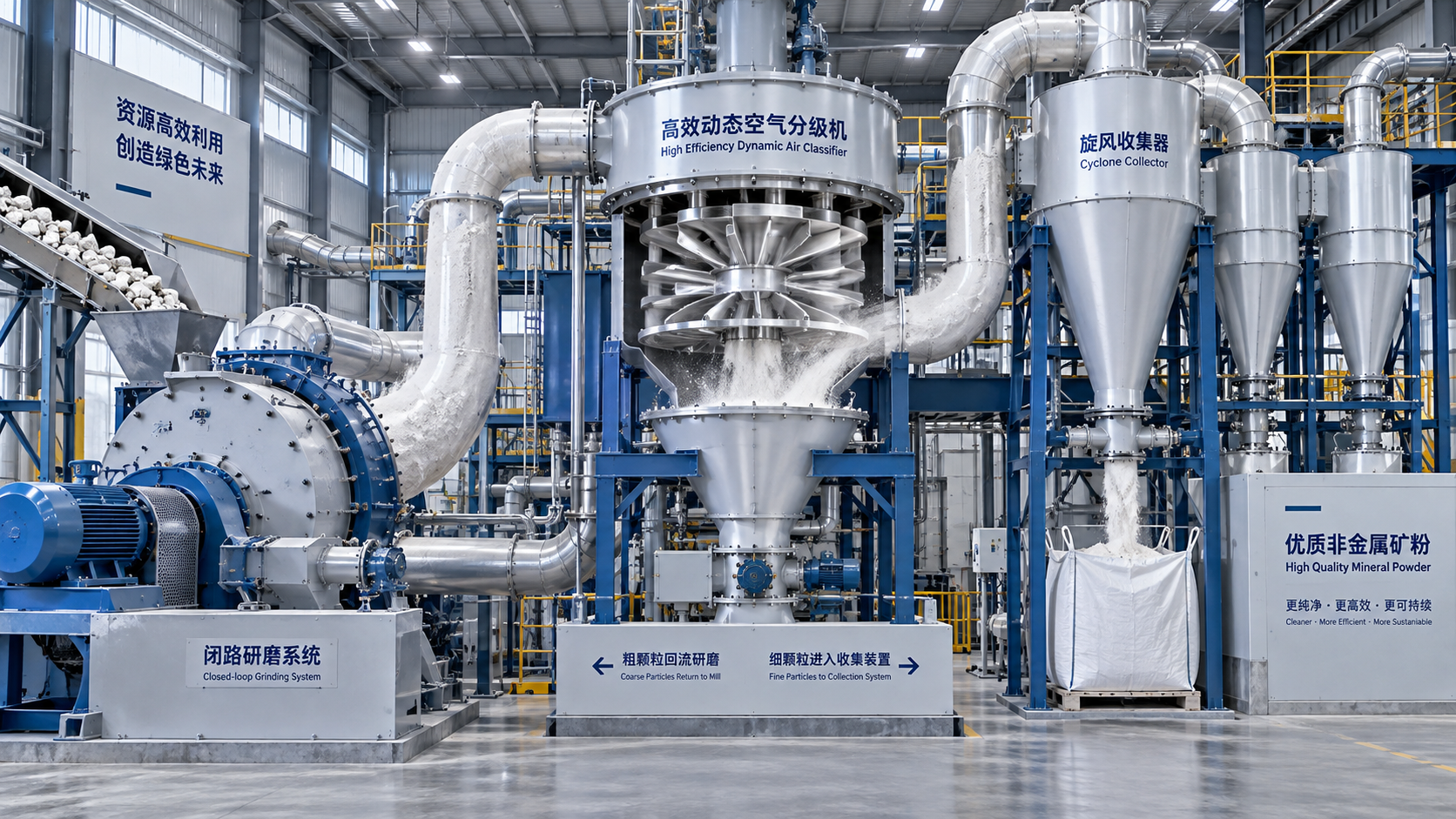
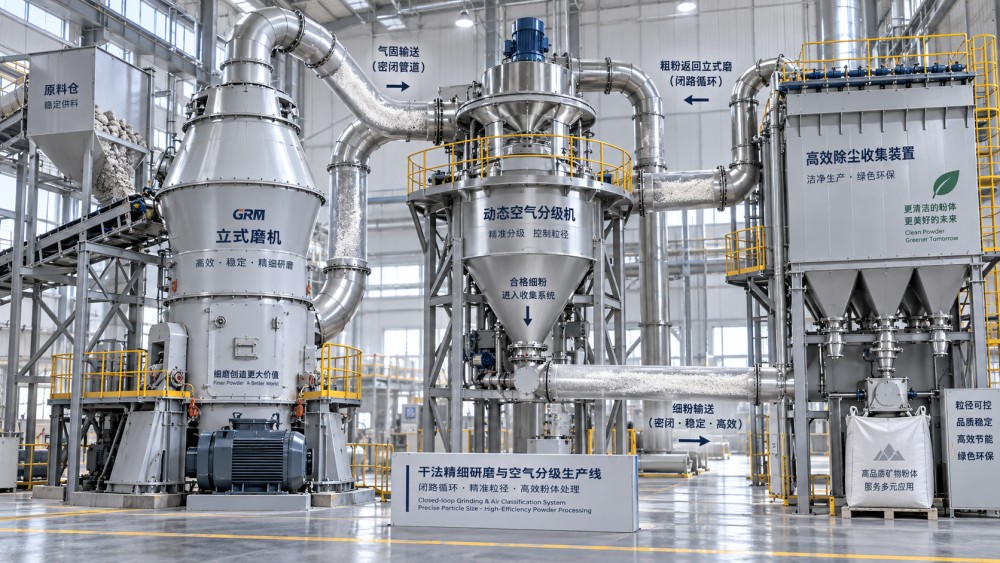
This is where a closed-circuit grinding arrangement differs fundamentally from open-circuit operation. In an open system, material leaves the mill after a residence time that may not match the actual breakage behavior of every particle. A classifier separates the finished fraction from the coarse fraction and returns only the material needing additional grinding. That recirculation is what makes fine grinding technology more selective rather than simply more aggressive.
Situations Where Air Classification Is Usually Justified
Air classification is normally worth serious consideration when one or more of the following operating conditions applies:
- The product specification limits coarse particles rather than only defining an average fineness.
- The material is prone to overgrinding, and excess ultrafines reduce yield or downstream usability.
- The mill is consuming more energy because already-finished particles remain in the grinding zone.
- Multiple product grades must be produced from the same grinding circuit.
- A downstream process is sensitive to powder consistency, such as ceramic pressing, dry mortar blending, refractory batching, or high-value mineral filling.
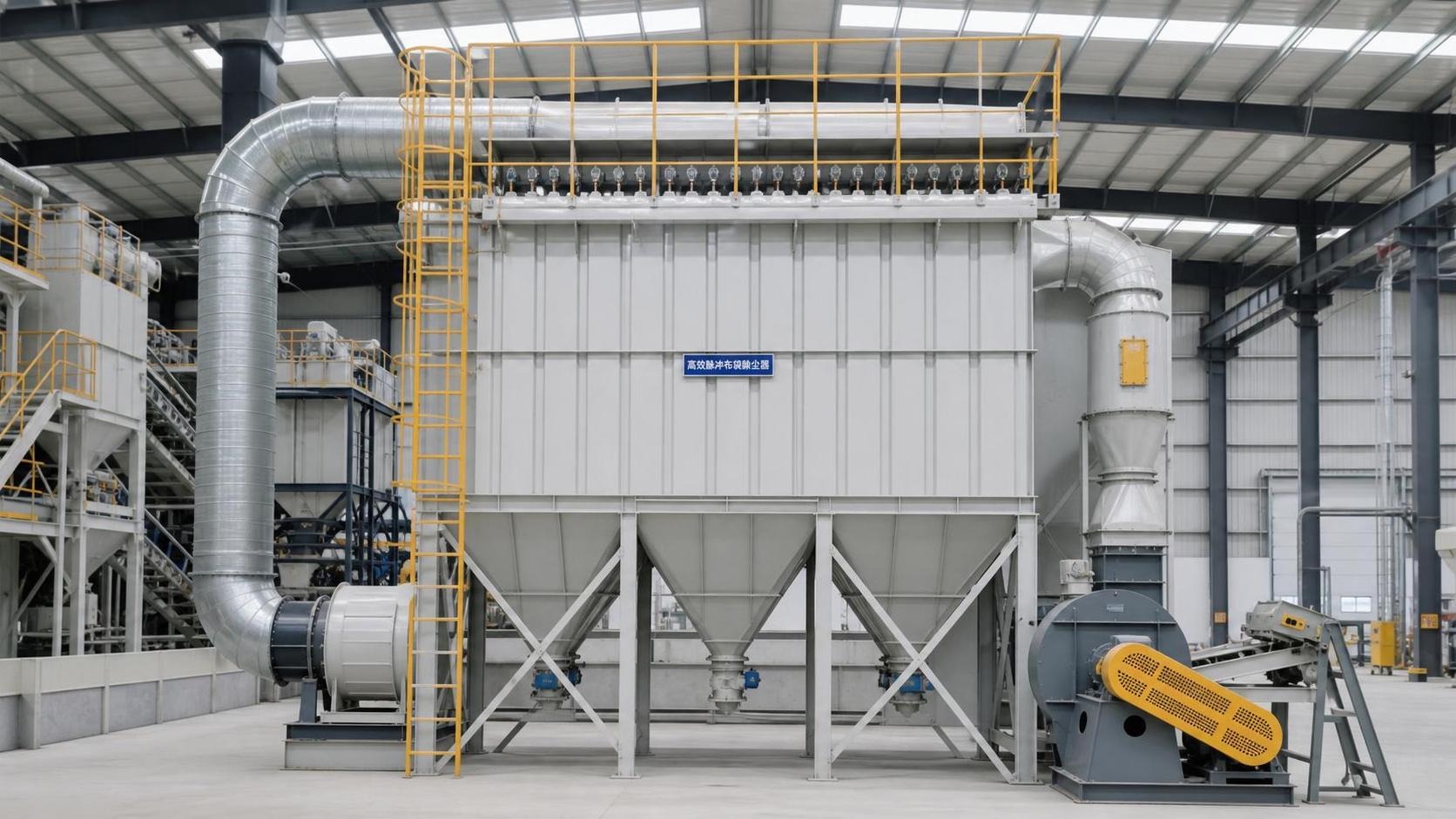
- Dust collection and product recovery must be integrated into a controlled negative-pressure process.
The strongest case often appears when the plant is caught between two unsatisfactory choices: increase mill residence time and create too many ultrafines, or maintain throughput and accept too much coarse residue. A classifier gives the operator a third option—remove acceptable fines early and focus grinding energy on the fraction that still needs size reduction.
That logic applies across non-metallic materials, although the consequences vary. A silica producer may be managing particle size for foundry, glass, engineered stone, or filler markets. A fly ash upgrading line may need to separate coarse carbon-rich or agglomerated material from a usable finer fraction, subject to the actual chemistry and end-use requirements. A ceramic raw-material plant may be aiming for predictable compaction behavior rather than maximum fineness. The equipment arrangement should follow that product logic.
How the Classifier Changes the Grinding Circuit
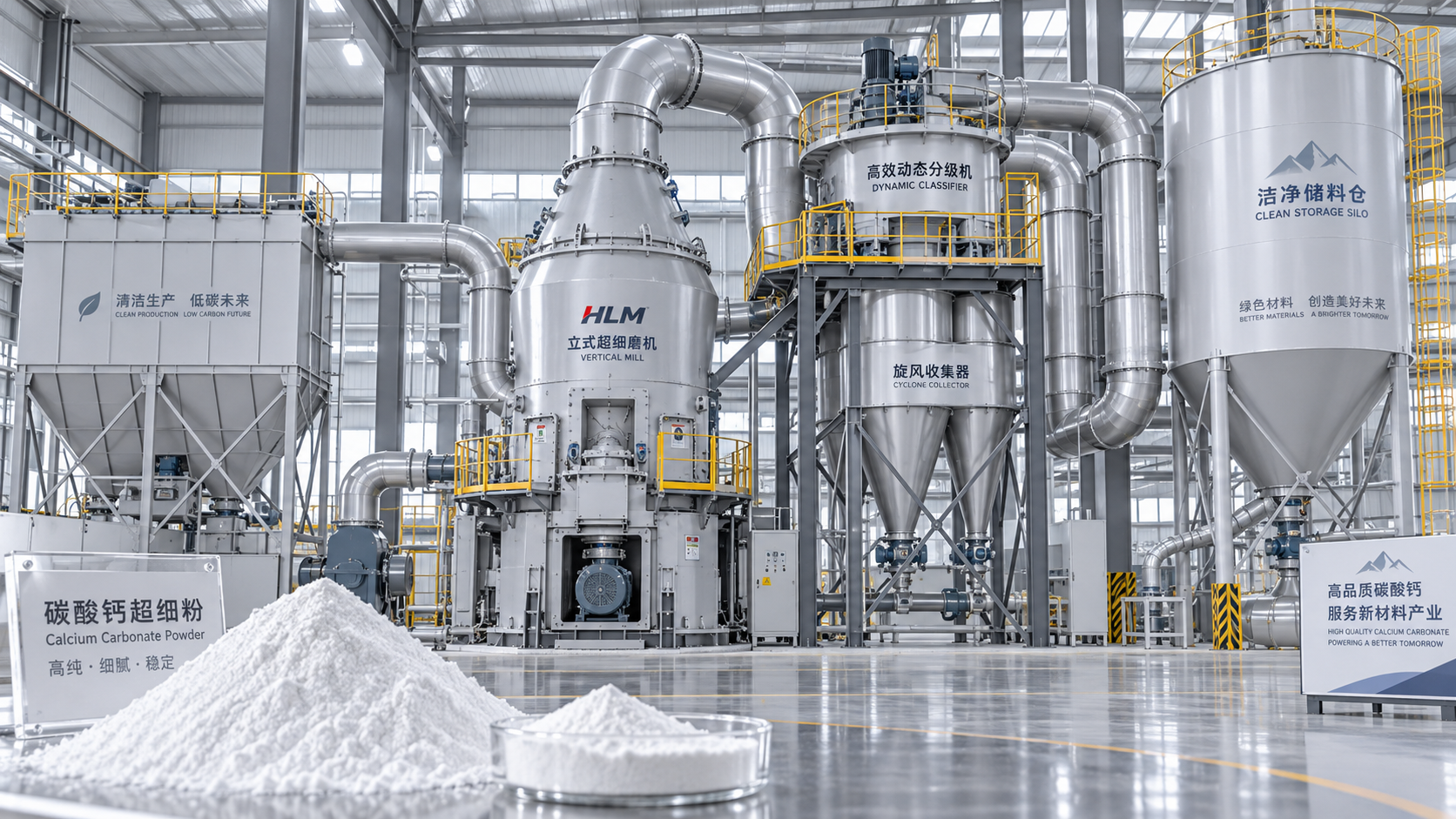
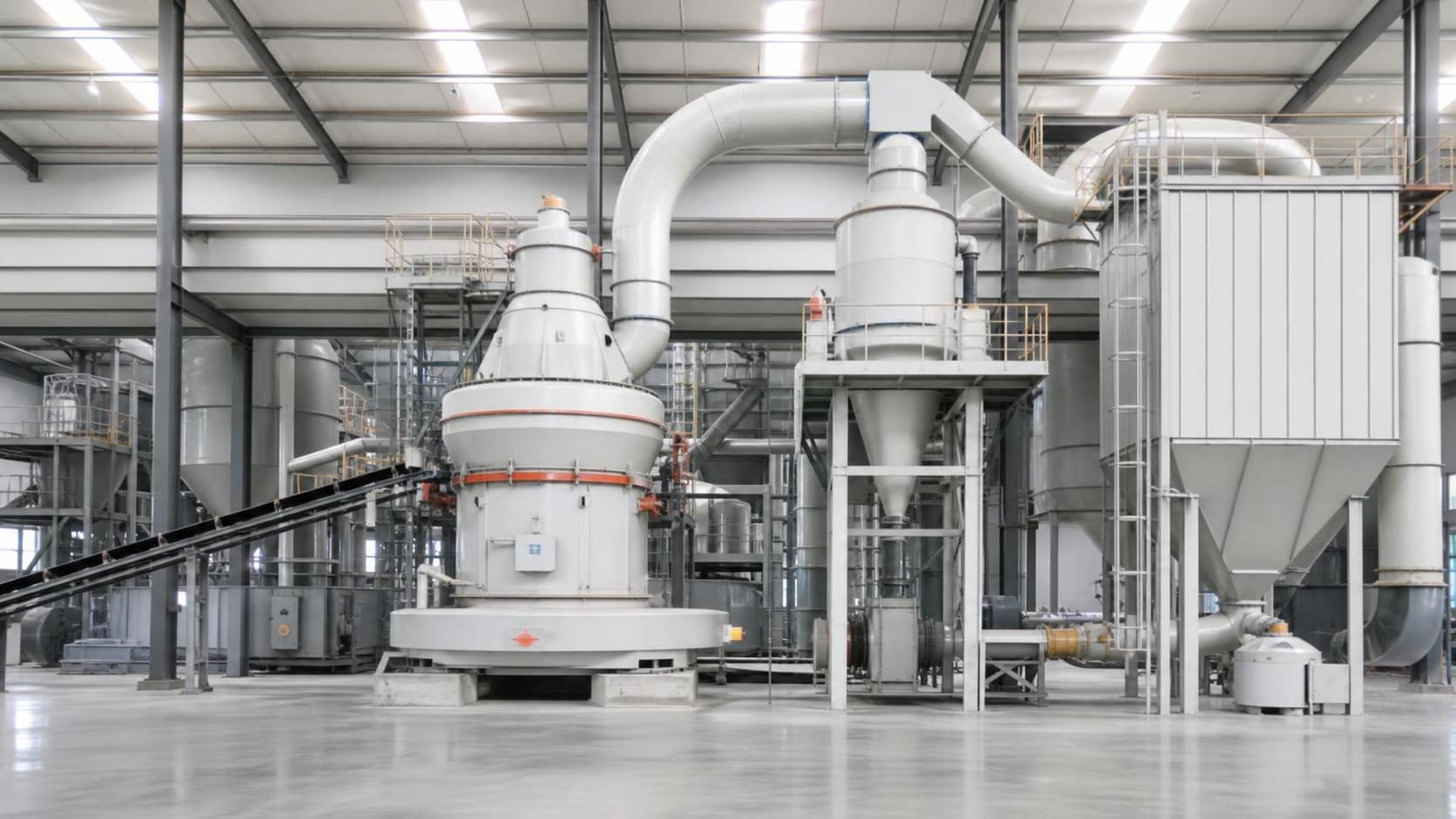
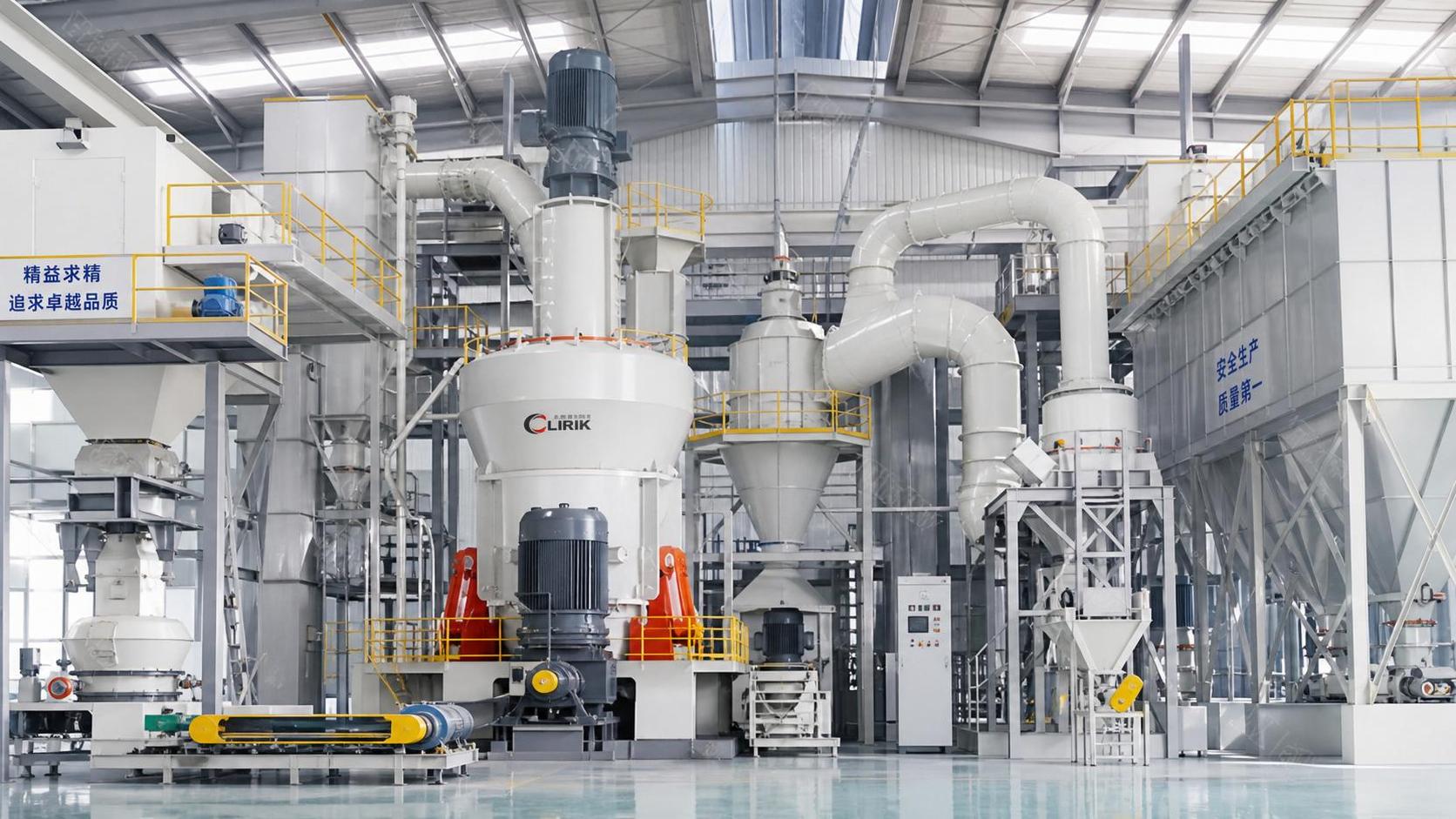
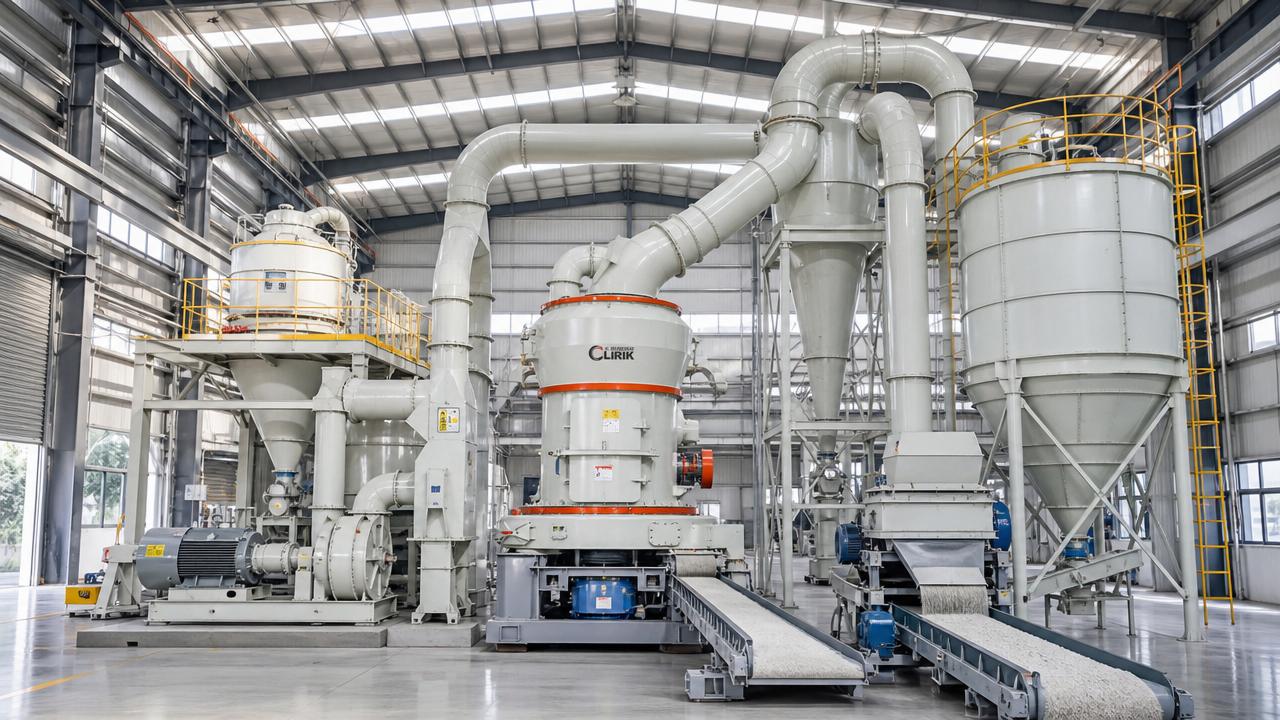
Most dry fine-grinding circuits use airflow to carry ground particles from the mill outlet toward a dynamic or static separation device. In a dynamic classifier, a rotating cage or rotor creates a separation field. Finer particles are carried with the air stream to the product collection system, while coarser particles are rejected and sent back to the mill. The exact separation mechanism differs by design, but the engineering objective is consistent: establish a controllable cut point and reduce bypass of coarse particles into the finished product.
The classifier should not be evaluated in isolation. Its performance depends on airflow stability, rotor speed where applicable, feed dispersion, pressure balance, duct geometry, fan capability, and the behavior of the material itself. A high-efficiency separator cannot compensate indefinitely for poor feed distribution or an overloaded mill. Likewise, a mill may be mechanically sound but still underperform if the classification stage allows too much coarse material into the product or sends too much fine material back for regrinding.
In practical commissioning work, the return load deserves close attention. A very high circulating load is not automatically a sign of failure; many closed-circuit systems rely on substantial internal recirculation. But it must be interpreted alongside mill power, product residue, separator reject characteristics, fan load, and stable operating pressure. If the circuit is repeatedly chasing fineness through rotor-speed changes while throughput falls, the issue may be feed hardness, moisture, internal mill condition, or inadequate air volume—not simply a classifier setting.
Material Conditions That Can Make Air Classification Difficult
Dry air classification works best when particles disperse readily in the gas stream. Materials with high moisture, strong cohesion, fibrous morphology, sticky surface films, or broad feed agglomeration can make separation less clean. In these cases, the apparent particle size measured at the classifier may reflect agglomerates rather than individual particles. The result can be unstable cut performance, excessive reject rates, buildup inside ducts, or a product that looks acceptable in routine fineness checks but behaves inconsistently in use.
Moisture is especially relevant in building-material systems. Fresh slag, certain clay-bearing minerals, wet fly ash, recycled powder streams, and some industrial by-products may need drying or controlled conditioning before fine grinding and classification. Introducing a classifier without resolving the moisture balance can turn a capacity project into a housekeeping problem. Material may coat the rotor area, blind internal surfaces, or load the bag filter unevenly. These are not minor operational details; they directly affect the reliability of particle control.
Abrasive materials introduce another trade-off. Quartz-rich feeds, hard ceramics, and certain refractory minerals can accelerate wear in classifier rotors, guide vanes, ducts, bends, and reject conveyors. Wear protection, inspection access, liner selection, and spare-part lead time should be considered before the selected cut size is treated as a permanent operating condition. Over time, worn classifier internals can change the separation curve and gradually introduce quality variation that operators may first blame on the mill.
Cement, SCMs, and Low-Carbon Binder Applications
In cement and supplementary cementitious material grinding, air classification is commonly required when strength development, reactivity, setting behavior, or blending consistency depends on a managed particle size distribution. Clinker, limestone, slag, calcined clay, fly ash, and other components do not grind in the same way. Their hardness, moisture, density, shape, and tendency to agglomerate can differ substantially. A circuit tuned for one material may not produce the intended distribution after the feed composition changes.
This matters as producers explore lower-clinker binders and more complex blends. Fine grinding may improve the reactivity of certain constituents, but the system still has to avoid wasting energy on particles that have already reached the useful size range. A separator gives operators a means to manage this balance, provided that sampling and laboratory interpretation are robust. Blaine values or sieve residues alone may not describe the whole picture. Where product performance is sensitive, particle size distribution should be read together with chemical composition, mineralogy, moisture, and the behavior of the final binder in mortar or concrete testing.
For EPC teams and plant owners, the key point is that classification capacity must match the intended future material mix, not just the original clinker design case. A line designed around a narrow feed range can become constrained when alternative raw materials are introduced for cost or carbon reasons.
When a Classifier May Not Be the Right Answer
Not every fine-powder problem needs air classification. If the product has a relatively broad acceptable size range, the feed is uniform, and downstream performance is not sensitive to coarse particles or ultrafines, a simpler grinding arrangement may be more practical. This can be true for some bulk filler applications, preliminary grinding stages, or operations where the economic value of a tighter particle size distribution does not justify the additional capital, power consumption, controls, and maintenance.
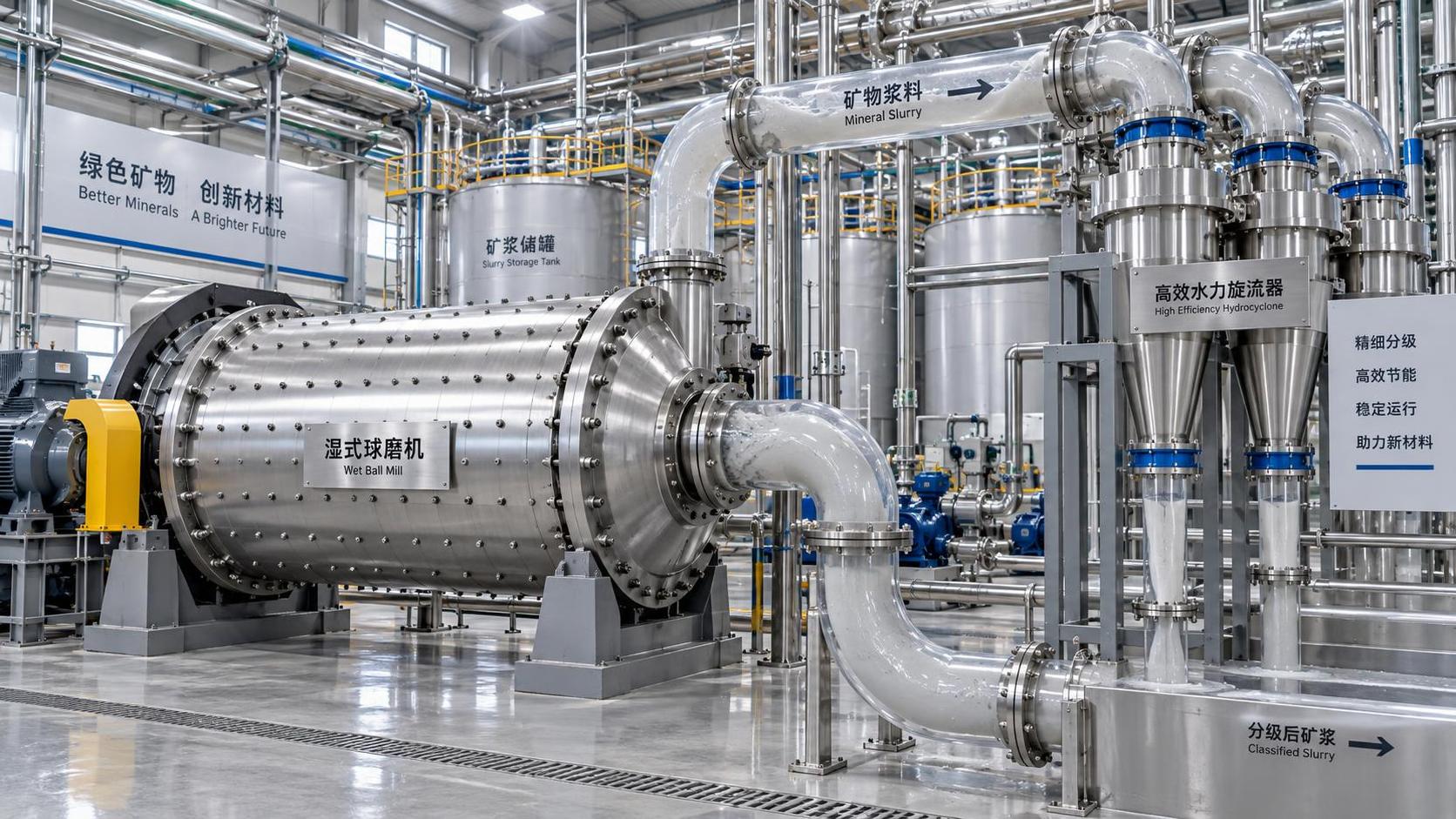
Wet classification may also be more appropriate for materials that disperse poorly in air or where the process is already water-based. Conversely, if a dry process is chosen primarily to avoid the cost of drying a wet product later, the full moisture and dust-control balance needs to be examined rather than assuming air classification is automatically simpler.
There is also a tendency to specify a very fine cut point before confirming why it is needed. Finer separation usually demands tighter operating control and can increase system resistance and fan duty. Unless the commercial or technical requirement is clear, the most aggressive target may not be the best target.
Questions to Resolve Before Selecting the System
A useful technical review starts with representative feed samples and a realistic product definition. “Fine powder” is not enough. The evaluation should identify the desired particle size distribution, allowable coarse fraction, concern about ultrafines, feed moisture range, abrasiveness, temperature, bulk density, and any tendency toward agglomeration. It should also establish whether the plant needs one stable grade or several adjustable grades.
The following questions often expose whether air classification is genuinely required:
- Is current product variation caused by grinding, separation, feed inconsistency, or sampling practice?
- Does the downstream customer reject material because of coarse particles, flow behavior, reactivity, appearance, or another property?
- Will the system handle alternative materials over its operating life?
- Can the fan, filter, conveying equipment, and control system support the required air balance?
- What is the expected wear environment, and can the plant inspect and maintain the separator without prolonged disruption?
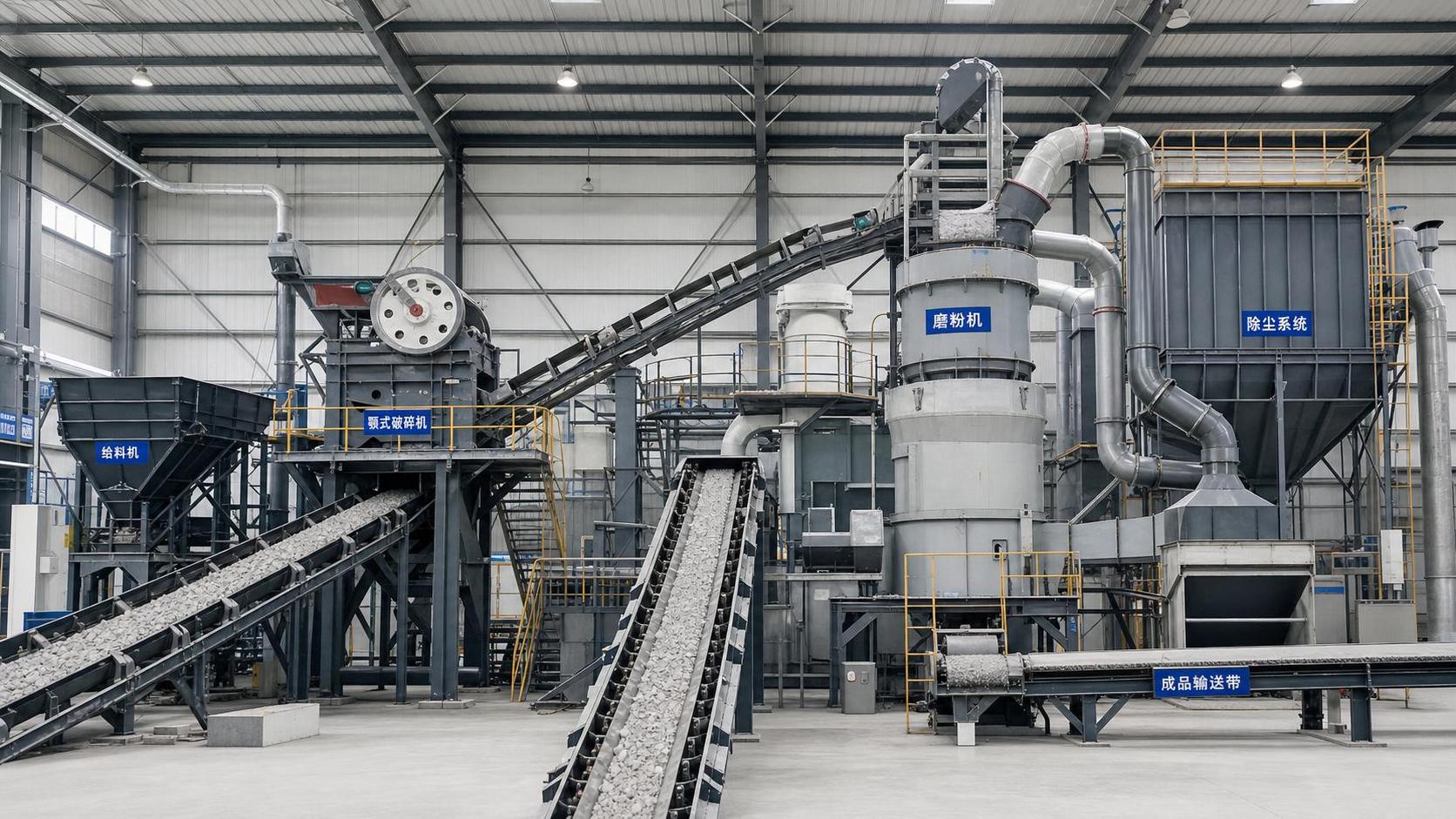
Those questions connect equipment selection to the wider process system: crushing or pre-grinding, drying, mill selection, dust collection, pneumatic transport, storage, blending, and quality assurance. This systems view is particularly relevant in non-metallic material production, where a small shift in powder behavior can influence kiln feed, pressing, packing, concrete performance, glass-batch consistency, or panel manufacturing.
A More Defensible Decision
Fine grinding technology requires air classification when separation control is necessary to turn grinding energy into a repeatable, commercially useful powder. The strongest justification is not a general preference for sophisticated equipment. It is evidence that the product needs a narrow or controlled distribution, that coarse particles or ultrafines create a measurable process risk, and that a closed circuit can reduce unnecessary grinding of material already within specification.
For cement, minerals, ceramics, glass-related powders, refractory feedstocks, and emerging low-carbon binders, the evaluation should stay grounded in actual material behavior. Review the feed, define the downstream requirement, examine the complete air-and-dust circuit, and test how the system responds to realistic operating changes. Platforms such as Global Non-metallic Materials & Building Systems can help structure that comparison across mills, separators, dust-control equipment, and process upgrades—but the final configuration still has to be validated against the plant’s own material and product targets.
Related News
- How to control fines content in monolithic refractory productionAuthor :Powder Comminution Scientist

- When does fine grinding technology require air classification?Author :Powder Comminution Scientist

- Fly Ash Production Plant Cost: CAPEX, Operating Inputs, and Payback DriversAuthor :Powder Comminution Scientist

- How air classification affects dry non-metallic mineral processing yieldAuthor :Powder Comminution Scientist

- How to select powder grinding systems for calcium carbonate finenessAuthor :Powder Comminution Scientist

- When wet powder grinding improves particle size controlAuthor :Powder Comminution Scientist

- How to size high capacity powder grinding systems for steady throughputAuthor :Powder Comminution Scientist

- High Capacity Powder Grinding Systems: When Output Gains Justify the CostAuthor :Powder Comminution Scientist

- Powder Grinding Systems India: Cost Drivers and Output BenchmarksAuthor :Powder Comminution Scientist

- How to Choose Mineral Powder Equipment for Stable OutputAuthor :Powder Comminution Scientist

- Silica Sand Processing Equipment: Key Choices for Purity and ThroughputAuthor :Powder Comminution Scientist
![]()
- How to Evaluate a Non-Metallic Mineral Processing SupplierAuthor :Powder Comminution Scientist

- Powder Processing Equipment Selection for Yield, Fineness, and Energy CostAuthor :Powder Comminution Scientist

- How to Compare a Dust Collector Manufacturer for Fine Powder ControlAuthor :Powder Comminution Scientist

- Limestone Processing Equipment: Common Bottlenecks and FixesAuthor :Powder Comminution Scientist

- Mineral Powder Preparation Plant Setup: Key Risks in Capacity and Fineness PlanningAuthor :Powder Comminution Scientist