



Search News
Industry Portal
Popular Tags
All categories
How to Evaluate a Non-Metallic Mineral Processing Supplier




Why does supplier evaluation matter so much in non-metallic mineral processing?
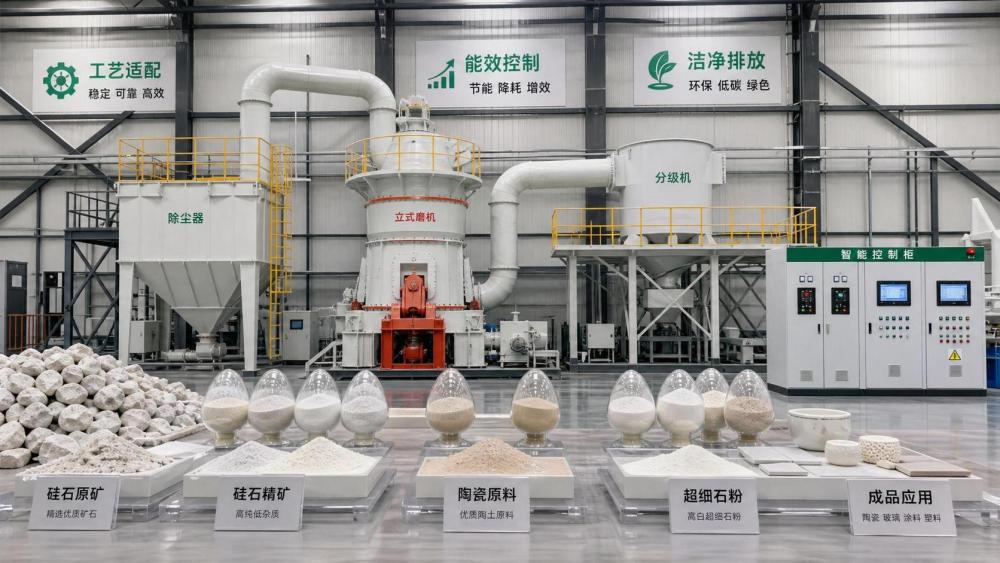
A non-metallic mineral processing supplier influences more than equipment delivery. The right partner affects uptime, fineness control, dust performance, energy use, and expansion flexibility.
That is especially true in sectors linked to cement, glass, ceramics, refractory products, stone processing, and engineered building materials.
In practical terms, a cheaper line can become expensive fast. Poor system integration often leads to unstable output, high wear, and repeated shutdowns.
A stronger non-metallic mineral processing supplier usually shows value in process understanding, not just hardware lists. That includes feed variability, moisture balance, temperature control, and automation logic.
This is why informed evaluation now extends beyond brochures. Industrial buyers increasingly compare technical intelligence, project references, carbon compliance readiness, and lifecycle service capacity.
Platforms such as NMBS have become useful in this stage because they connect supplier visibility with process context. That makes comparisons more grounded and less promotional.
What separates a credible supplier from a company that only looks strong on paper?
The first test is whether the supplier can explain the process chain clearly. A serious team should connect raw material behavior to machine selection, control systems, and finished product targets.
For example, silica, fly ash, clinker blends, ceramics, stone, and tailings do not behave the same way. Grinding force, drying demand, separation accuracy, and wear patterns differ significantly.
A dependable non-metallic mineral processing supplier should also present reference projects with measurable operating data. Installed capacity alone is not enough.
Look for details such as product fineness range, kWh per ton, dust emission levels, yield consistency, refractory life, warpage control, or line availability after commissioning.
Another useful signal is engineering depth. Can the supplier support layout planning, utility balance, automation integration, and downstream compatibility?
This matters when a project involves vertical mills, roller presses, glass processing lines, kiln systems, or CNC centers that must work inside a wider production environment.
A quick comparison framework
The table below helps screen a non-metallic mineral processing supplier before moving into technical clarification or commercial negotiation.
Which technical questions should be asked before comparing quotations?
Many quotation comparisons fail because the technical basis is still loose. Two offers may look comparable, while their actual scope is very different.
A disciplined review starts with the material. Ask about hardness, abrasiveness, feed size, moisture, thermal sensitivity, contamination limits, and target particle distribution.
Then move to production goals. Is the line designed for peak output, stable average output, or frequent product switching?
This distinction changes equipment choice. It also affects classifier sizing, furnace control, dust collection, conveying layout, and maintenance intervals.
A strong non-metallic mineral processing supplier should be able to answer questions such as these:
- How sensitive is performance to raw material variation?
- Which bottleneck is most likely during continuous operation?
- What wear parts drive annual maintenance cost?
- How is energy consumption measured and guaranteed?
- Which emissions and quality indicators are contractually testable?
In sectors covered by NMBS, these details are not minor. They determine whether a grinding line, tempering system, autoclave process, or kiln upgrade performs consistently after handover.
Is low price ever enough, or does total project value tell a different story?
Price matters, but it is rarely the best first filter. The more useful question is what the quotation leaves out.
A low-priced non-metallic mineral processing supplier may exclude foundations, ducts, electrical integration, software logic, performance testing, or spare parts inventory.
That creates a misleading comparison. Capital cost looks attractive, while operating cost and implementation risk move in the opposite direction.
In real projects, total value usually depends on five factors: throughput stability, product acceptance rate, unit energy use, maintenance intensity, and restart speed after interruption.
This is especially relevant in heavy building material production, where downtime can affect kiln balance, downstream forming, packing schedules, and delivery commitments.
Suppliers that understand ROI will usually discuss line efficiency together with utilities, automation, emissions control, and future debottlenecking options.
What belongs in a value-based comparison?
- Guaranteed output under defined feed conditions
- Specific energy consumption and testing method
- Expected wear life and replacement schedule
- Automation depth, alarms, and remote diagnostics
- Emission control performance and compliance records
- Commissioning duration and training scope
How do compliance, carbon pressure, and digital capability change supplier selection?
This has become a decisive issue, not a secondary one. Energy-intensive material industries are under tighter pressure from carbon policy, dust limits, and reporting requirements.
A non-metallic mineral processing supplier should therefore be assessed on environmental and digital maturity, especially for export-oriented or tender-driven projects.
The supplier does not need to solve every decarbonization challenge alone. Still, it should show how the equipment supports lower energy use, cleaner airflow, heat recovery, and data visibility.
Examples include variable frequency control, zero-dust collection design, kiln waste heat integration, process monitoring, and readiness for Industry 4.0 interfaces.
That is one reason industry intelligence platforms matter. NMBS follows topics like EU ETS, low-carbon upgrades, digital monitoring, hydrogen alternatives, and electrified heating with practical industrial context.
Those signals help separate suppliers that can adapt to future compliance from those built only for yesterday’s tender conditions.
What mistakes appear most often when evaluating a non-metallic mineral processing supplier?
One common mistake is trusting reference lists without checking process similarity. A supplier may have many projects, but not in the same mineral system or product standard.
Another mistake is treating service as an afterthought. In practice, startup tuning, spare parts availability, and response speed often decide whether a line reaches design performance.
A third mistake is accepting efficiency claims without operating boundaries. Performance numbers must be tied to feed conditions, ambient conditions, and testing methodology.
It is also risky to overlook integration. Even capable machines can underperform when conveyor logic, thermal control, dosing, and downstream synchronization are weak.
The final mistake is rushing the shortlist too early. Better results usually come from comparing fewer suppliers, but with deeper technical clarification.
A practical final check before selection
Choosing a non-metallic mineral processing supplier is really a judgment about long-term operating confidence. Equipment matters, but process fit, compliance readiness, and service depth matter just as much.
A practical next step is to define feed conditions, product targets, utility limits, and compliance expectations before comparing proposals. Then score each supplier against measurable criteria, not presentation quality alone.
Where the market is crowded, structured sources such as NMBS can help narrow the field by linking supplier claims with technical context, case evidence, and industry change signals.
That approach usually leads to better supplier selection, cleaner implementation, and more reliable project returns over the full operating cycle.
Related News
- When wet powder grinding improves particle size controlAuthor :Powder Comminution Scientist

- How to size high capacity powder grinding systems for steady throughputAuthor :Powder Comminution Scientist

- High Capacity Powder Grinding Systems: When Output Gains Justify the CostAuthor :Powder Comminution Scientist

- Powder Grinding Systems India: Cost Drivers and Output BenchmarksAuthor :Powder Comminution Scientist

- How to Choose Mineral Powder Equipment for Stable OutputAuthor :Powder Comminution Scientist

- Silica Sand Processing Equipment: Key Choices for Purity and ThroughputAuthor :Powder Comminution Scientist
![]()
- How to Evaluate a Non-Metallic Mineral Processing SupplierAuthor :Powder Comminution Scientist

- Powder Processing Equipment Selection for Yield, Fineness, and Energy CostAuthor :Powder Comminution Scientist

- How to Compare a Dust Collector Manufacturer for Fine Powder ControlAuthor :Powder Comminution Scientist

- Limestone Processing Equipment: Common Bottlenecks and FixesAuthor :Powder Comminution Scientist

- Mineral Powder Preparation Plant Setup: Key Risks in Capacity and Fineness PlanningAuthor :Powder Comminution Scientist