



Search News
Industry Portal
Popular Tags
All categories
How does automation affect precast concrete machinery prices?




Automation raises the initial precast concrete machinery price by adding controls, sensors, powered handling equipment, software, and integration work. Whether that premium reduces the cost of each finished element depends on production volume, product repetition, staffing, downtime, and the ability of the rest of the plant to keep pace. A highly automated line with frequent mold changes can cost more per usable unit than a simpler line running steadily.
Comparable quotations must cover the same production process. A price for an automated casting machine alone is not equivalent to a price for a complete line with batching, mold transport, curing arrangements, and stacking. The difference in scope can be larger than the difference between automation levels.
Where the automation premium appears
Manual and semi-automatic setups rely on people to position molds, control concrete placement, move products, and record production. They generally have fewer integrated components, although cranes, mixers, and powered tools can still represent substantial investment. Semi-automatic equipment adds functions such as controlled vibration, powered mold movement, or programmed dosing while leaving transfers and changeovers partly manual.
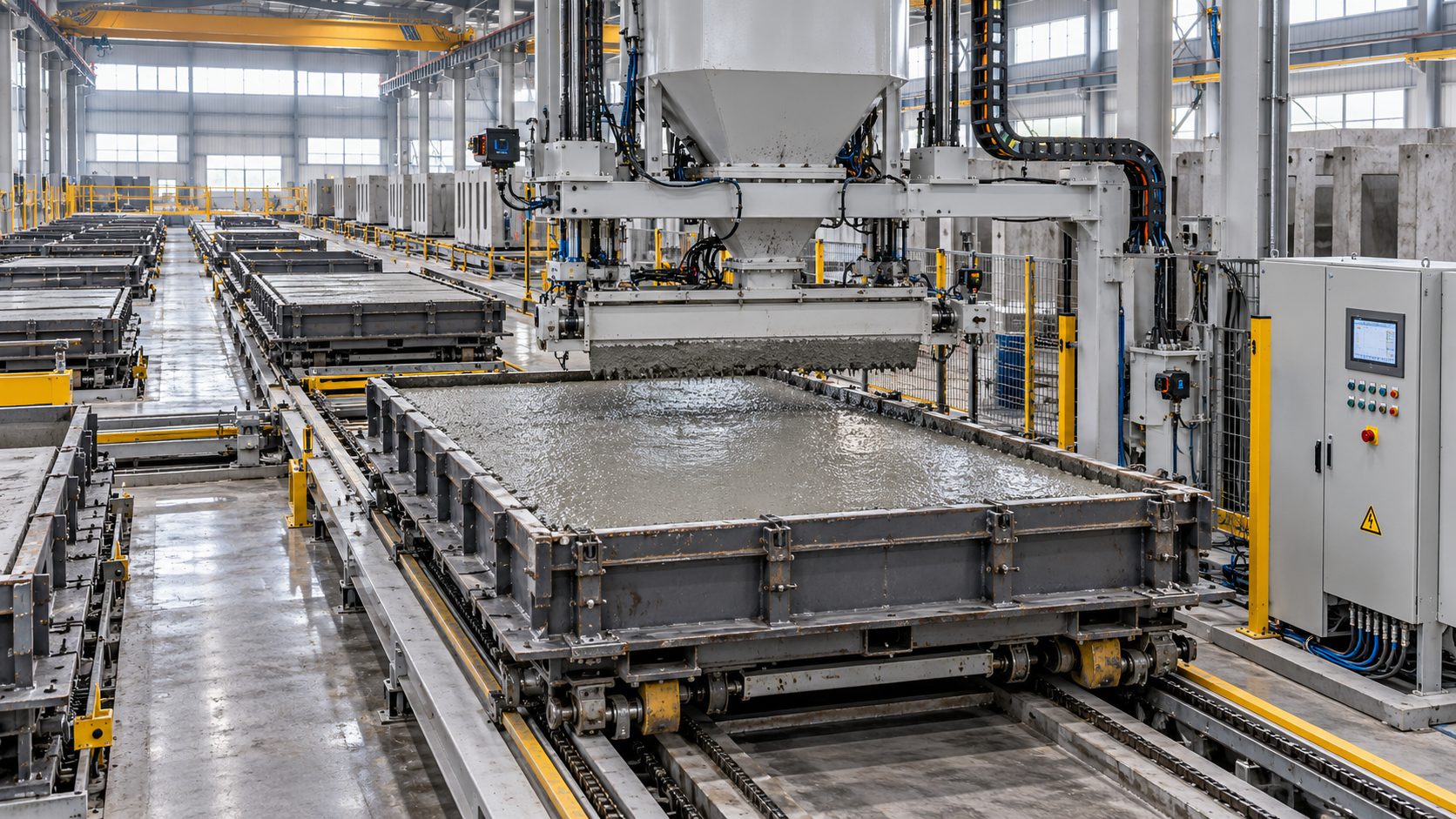
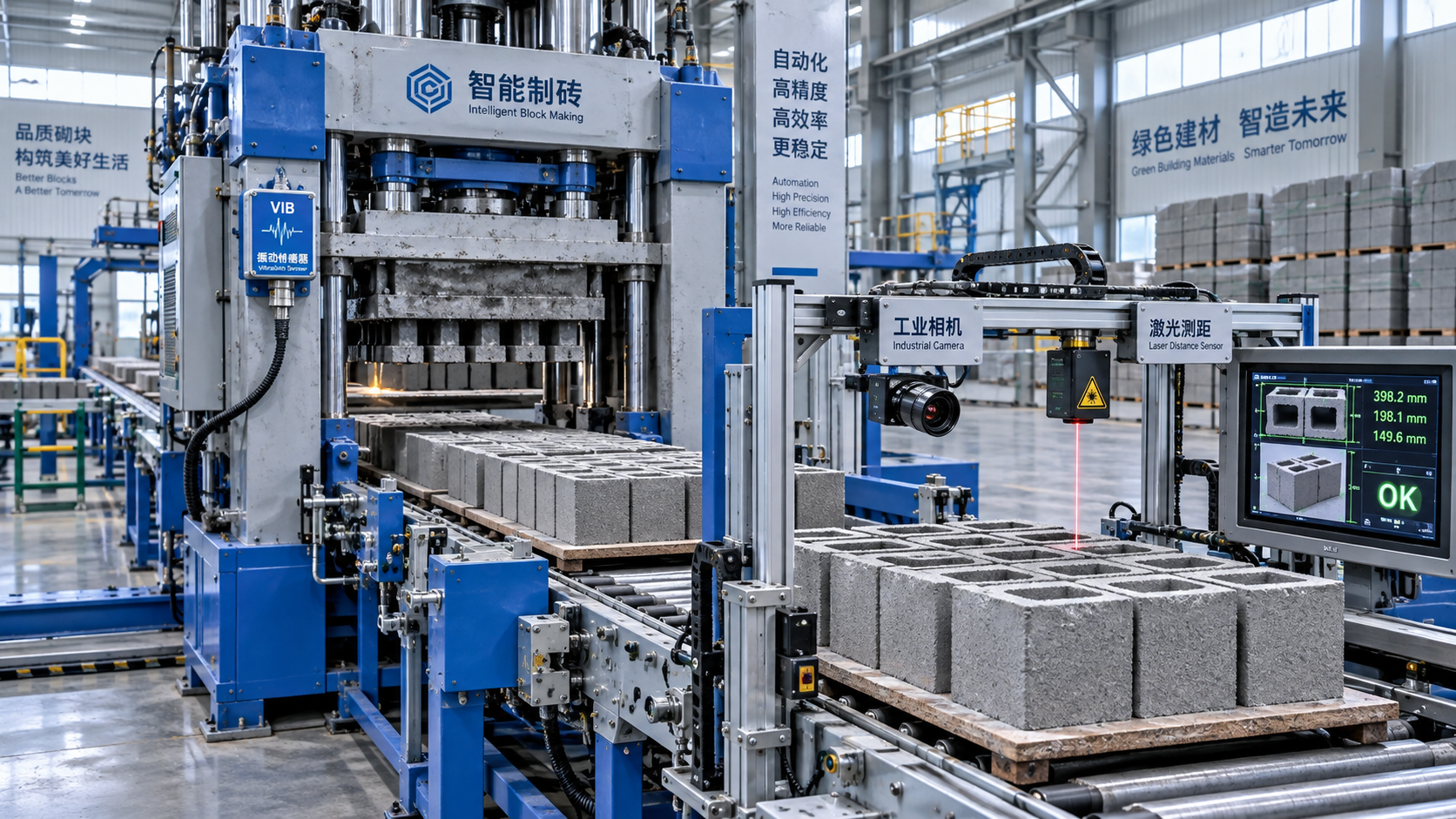
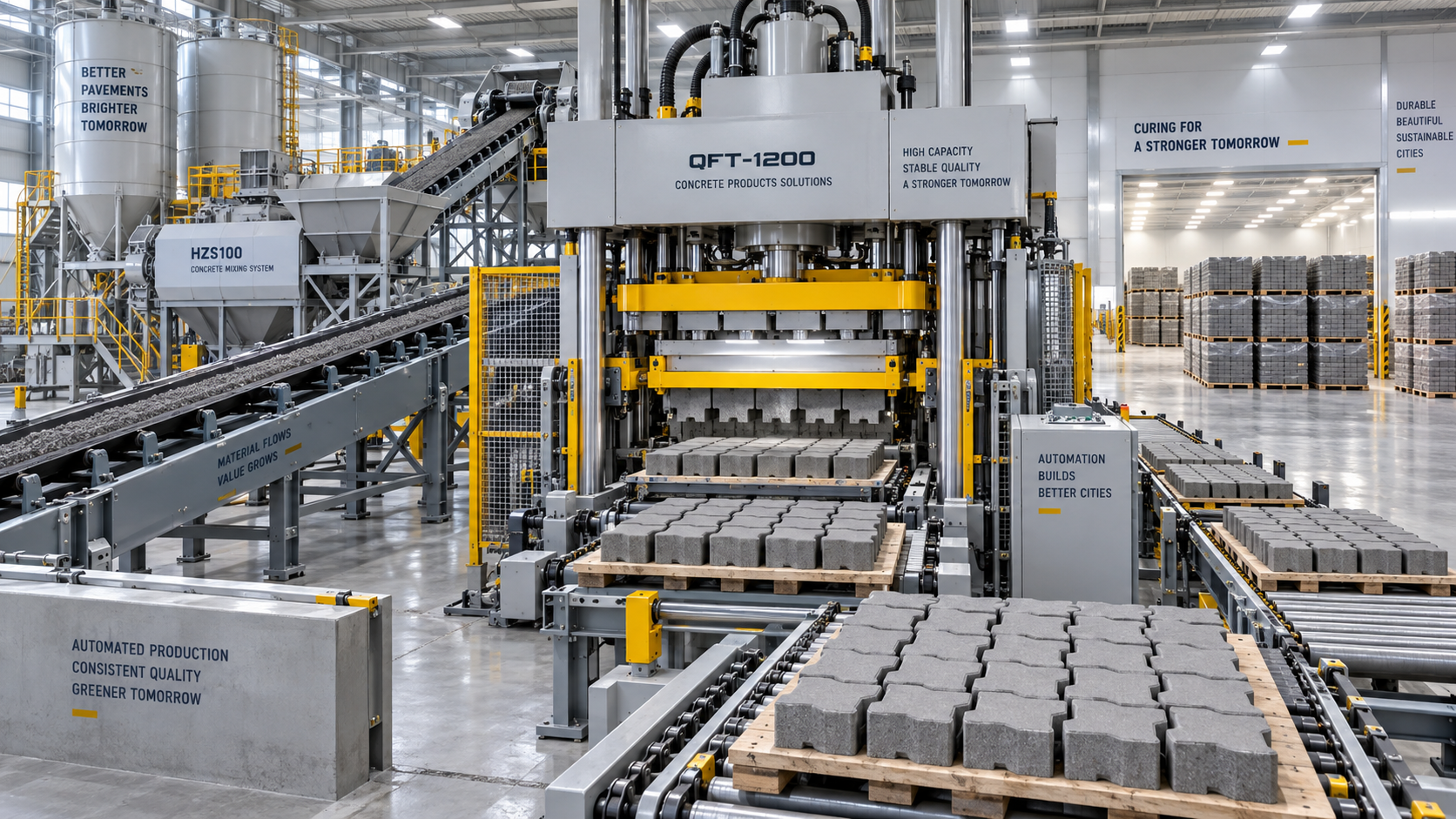
Further automation connects individual machines into a coordinated sequence. A control system tracks positions and operating states; sensors confirm that a mold or pallet is ready; conveyors, shuttles, or lifting devices move it between stations. Automated dispensers control concrete placement, while data systems record cycle times and process conditions. Each additional function adds hardware and engineering, but the expensive part is often making the functions work together reliably.
The premium also includes items that are easy to overlook in a headline equipment price: electrical cabinets, guarding, interlocks, communication networks, software configuration, commissioning, and training. A quote that excludes cabling between machines or integration with an existing batching plant leaves part of the automation cost outside the machinery figure.
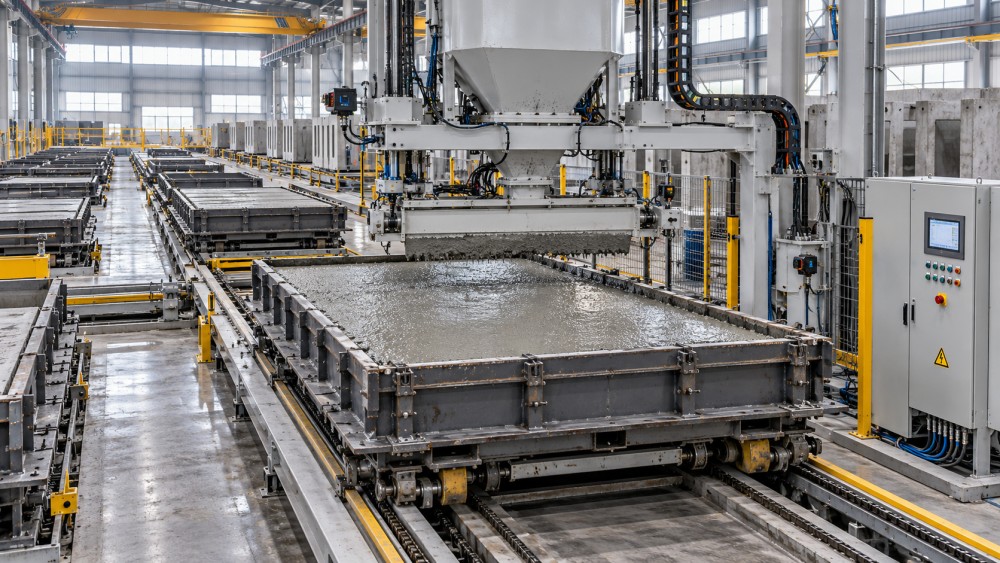
Automation does not have to cover the entire factory. A production line can use automated concrete distribution while retaining manual reinforcement placement, or add a powered pallet return system without replacing an existing casting station. The useful comparison is therefore between defined functions and their costs, rather than between broad labels such as “automatic” and “fully automatic.”
The production rate that matters
A supplier may quote the cycle time of a single machine, while the commercial decision depends on the output of finished, acceptable products over a shift. Casting speed alone does not establish line capacity. Reinforcement preparation, mold cleaning, placement of inserts, curing, demolding, finishing, and storage can all limit the number of elements that leave the plant.
For example, a faster distributor has limited value if molds wait for reinforcement cages or if a crane is shared with another production area. Conversely, automated handling can release capacity when manual transfers repeatedly interrupt an otherwise capable casting station. The position of the bottleneck determines which automation expenditure is likely to change output.
Cycle time should be stated for a specific element, mold arrangement, concrete mix, crew arrangement, and operating sequence. Ask whether the quoted figure includes mold preparation and cleaning, or only the machine's active casting time. Also distinguish simultaneous operations from sequential ones: two stations working in parallel can improve throughput, but only if the supply and transfer systems support both.
Curing deserves separate attention. Faster casting does not necessarily shorten the time concrete needs to achieve the strength required for safe demolding and handling. If curing space or mold inventory is constrained, the project may require additional molds, pallets, racks, or curing capacity before the faster machine produces more finished elements. Those additions belong in the investment comparison.
Product mix changes the value of automation
Repeated production of similar slabs, blocks, or standardized panels gives programmed equipment more time to run between adjustments. Automated dosing and movement can then deliver a consistent sequence and reduce repetitive handling. The value is less predictable when dimensions, openings, embedded parts, surface finishes, or reinforcement arrangements change frequently.
On a variable panel line, the changeover may involve repositioning side forms, placing magnets or inserts, adjusting the casting program, and verifying dimensions. An automated distributor does not eliminate those tasks. A sophisticated positioning system can reduce some setup work, but its price must be compared with the time it actually saves across the expected mix of orders.
Flexibility also has a price. Adjustable molds, servo-driven axes, recipe management, and interfaces to production planning software add cost and complexity. A low-cost dedicated machine can be attractive for a stable product, yet expensive to adapt when the element geometry changes. Quotations should identify the range of products covered and the components or programming needed outside that range.
Concrete properties matter as well. A placement system configured for one consistency or aggregate size may need adjustments for another. Automated flow control cannot compensate for an unsuitable mix, inconsistent batching, or reinforcement congestion that prevents proper filling. Those conditions affect both the machine specification and the quality expected from its output.
Compare installed scope, not equipment labels
A useful quotation separates equipment supply from installation and identifies the interfaces between packages. The following differences frequently explain why two apparently similar offers have different prices:
- Concrete supply: whether batching, mixing, delivery, and automatic recipe transfer are included, or whether the casting equipment assumes an existing system.
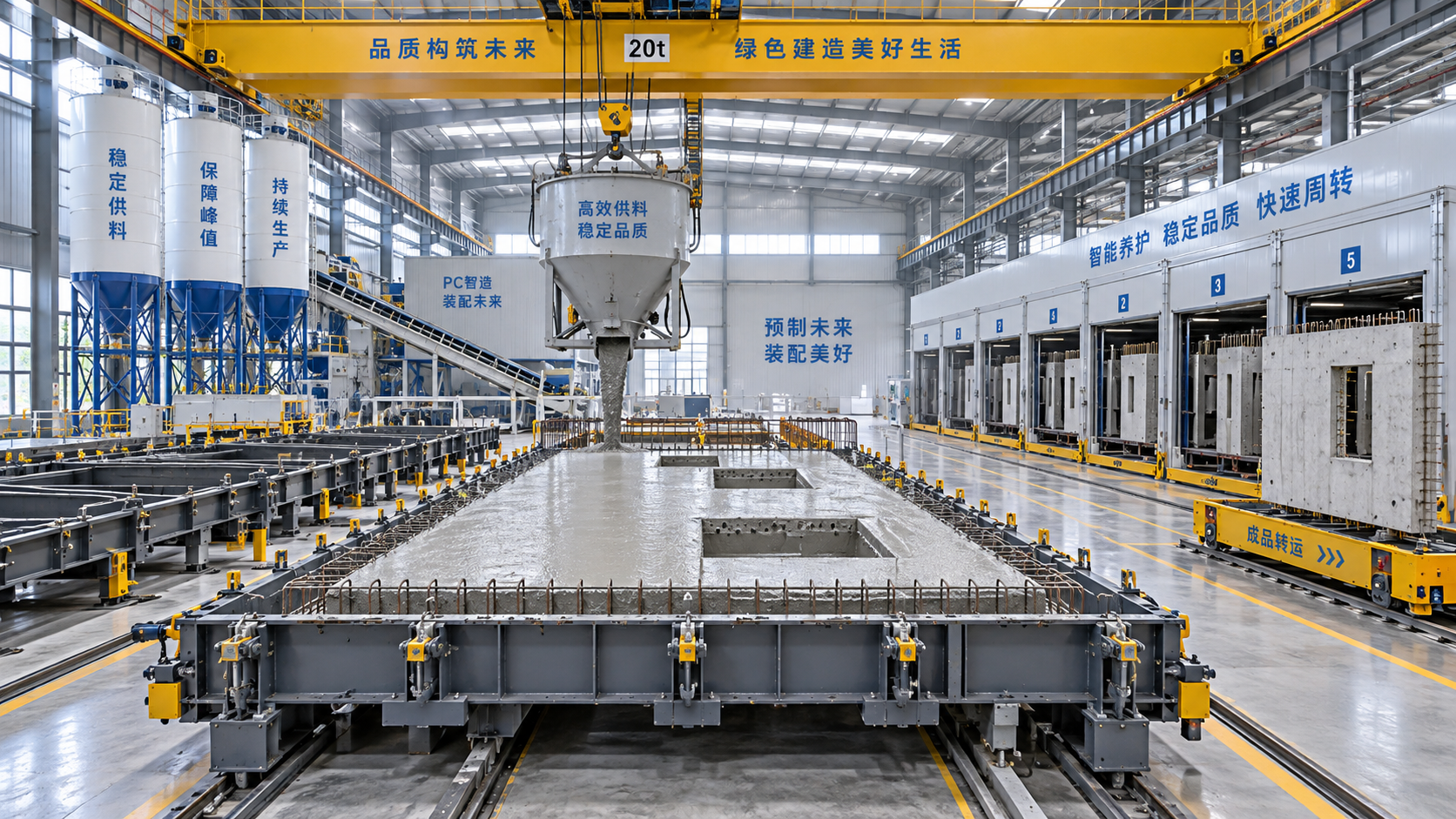
- Movement and handling: conveyors, shuttles, cranes, lifting attachments, pallet return, and finished-product transfer. A machine that needs an external crane has a different operating cost from a line with dedicated transfers.
- Molds and production accessories: the number and type of molds or pallets, change parts, vibration equipment, cleaning tools, and storage fixtures.
- Controls: local machine controls versus integrated line control, production records, remote diagnostics, and software interfaces.
- Site work: foundations, electrical supply, compressed air, network connections, installation labor, and commissioning responsibilities.
Transport and installation deserve particular attention for large machinery. Shipping dimensions, assembly on site, lifting capacity, and access to the building affect the delivered cost. A lower factory price can be offset by dismantling, freight, temporary lifting equipment, or local installation work omitted from the offer.
Existing facilities introduce interface costs that a new plant layout may avoid. Floor levels, available crane coverage, power capacity, and the location of the mixer can restrict the proposed flow. If a new automated system must exchange signals with older equipment, the quotation should specify the data and control functions included, who will implement them, and what happens if the existing system cannot supply the required signals.
Labor savings and the cost of keeping a line running
Automation can reduce repetitive manual handling and allow a different staffing arrangement, but it rarely removes every task from a precast line. Molds still need preparation, reinforcement and inserts need placement, equipment needs cleaning, and finished elements require inspection. The comparison should use the labor hours removed from the complete production sequence, including any additional maintenance or programming time.
Some savings are conditional on a sustained workload. If labor can be reassigned to a constrained station, the benefit may appear as higher output rather than a reduction in payroll. Counting both a full wage saving and the full margin from the same freed capacity can overstate the return. The calculation should reflect the actual staffing and production plan.
Maintenance costs also change with the equipment. Sensors, drives, actuators, control modules, and communication networks add components that need inspection and troubleshooting. Concrete buildup, washdown water, dust, and vibration affect component selection and accessibility. A protected sensor that is difficult to clean or replace can become a recurring source of stoppages.
Ask for the recommended spare-parts list, replacement lead times, preventive maintenance tasks, and the access arrangements for diagnostics. Software support terms matter where configuration files, licenses, or specialist assistance are needed to restore a machine. The cost of a component is only part of the exposure; a missing part that stops the line can make its downtime cost much larger.
More automation can also improve consistency when it controls a source of variation, such as concrete distribution or vibration duration. The economic value comes from fewer rejected or repaired elements only when the quality issue is connected to that function. A controlled casting cycle will not correct errors in reinforcement placement or a mold that is out of tolerance.
Calculate the premium against a defined baseline
Start with two configurations that produce the same specified element and include the equipment needed to deliver it to the same handover point. Add the installed cost of each configuration, including site preparation and the initial molds, handling equipment, and commissioning needed for the planned output. Subtract the lower investment from the higher one to find the automation premium.
Then estimate annual incremental benefit using a consistent production plan. This can include reduced labor expense, lower scrap or repair cost, and contribution from additional saleable output, provided that there is sufficient demand and capacity in the rest of the process. Deduct additional maintenance, software, energy, consumables, and other recurring costs attributable to the automated option.
Simple payback = additional installed investment ÷ annual net incremental benefit. This is a screening measure, not a full investment valuation: it excludes financing, tax effects, the timing of cash flows, and residual value. If the annual net benefit is zero or negative, the premium does not produce a simple payback under those assumptions.
Run the calculation at the expected operating level and at a lower utilization level. Fixed investment remains even when orders are intermittent, while labor and output benefits can fall with fewer operating hours. Test a slower changeover or longer downtime scenario as well, especially when the proposed line handles several product types. Showing these assumptions beside the result makes the comparison easier to revisit when quotations or production forecasts change.
Put performance assumptions into the contract
A price becomes more meaningful when the scope and acceptance conditions are explicit. Define the test product, mold configuration, concrete properties, staffing, and material supply used to demonstrate the agreed performance. State whether the acceptance measure covers a machine cycle or finished acceptable elements, and specify the test duration and treatment of stoppages.
Responsibility for an interrupted test also needs definition. A machine fault, delayed concrete delivery, and an incorrectly prepared mold have different causes, so the procedure should distinguish equipment performance from conditions outside the supplied scope. Record any prerequisites for the site, including utilities, foundations, lifting equipment, and connection to existing controls.
Finally, align the payment and handover schedule with the agreed deliverables: documentation, training, spare parts, commissioning, and acceptance. An automation premium is easier to evaluate when the quotation states exactly what will operate, under which conditions, and what remains outside the supplier's scope.
Related News
- How does automation affect precast concrete machinery prices?Author :Masonry Automation Architect

- How smart manufacturing can reduce defects in concrete blocksAuthor :Masonry Automation Architect

- How to size precast concrete equipment for planned daily outputAuthor :Masonry Automation Architect

- How production output affects the cost of a paver block machineAuthor :Masonry Automation Architect

- How to Evaluate a Brick and Block System Manufacturer for Output, Automation, and Lifecycle CostAuthor :Masonry Automation Architect

- How to Choose a Concrete Block Machine Based on Output, Mold Change Time, and Pallet SizeAuthor :Masonry Automation Architect

- Brick and Block Machine Manufacturer Checklist for Plant InvestmentAuthor :Masonry Automation Architect

- How High-Performance Concrete Technology Extends Bridge Service LifeAuthor :Masonry Automation Architect

- Fly Ash Brick Production Process: Key Steps and Quality RisksAuthor :Masonry Automation Architect

- Fly Ash Brick Production Cost: What Shapes ROI Beyond Equipment PriceAuthor :Masonry Automation Architect

- Precast Concrete Machinery: Downtime Risks Hidden in Mold ChangeoversAuthor :Masonry Automation Architect