



Search News
Industry Portal
Popular Tags
All categories
Indonesia Extends Ore Curbs to Cobalt and Tin




In early June 2026, Indonesia expanded the policy logic seen in its earlier nickel export restrictions by bringing cobalt and tin ore export limits into the implementing rules of its downstreaming law. For companies involved in cobalt- and tin-related equipment trade, project delivery, and procurement, the immediate point of attention is that equipment purchases are no longer treated as stand-alone transactions: importers are now required to include local refining capacity integration plans, and that shifts compliance, contract scope, and delivery responsibilities at the same time.

What the New Requirement Explicitly Changes
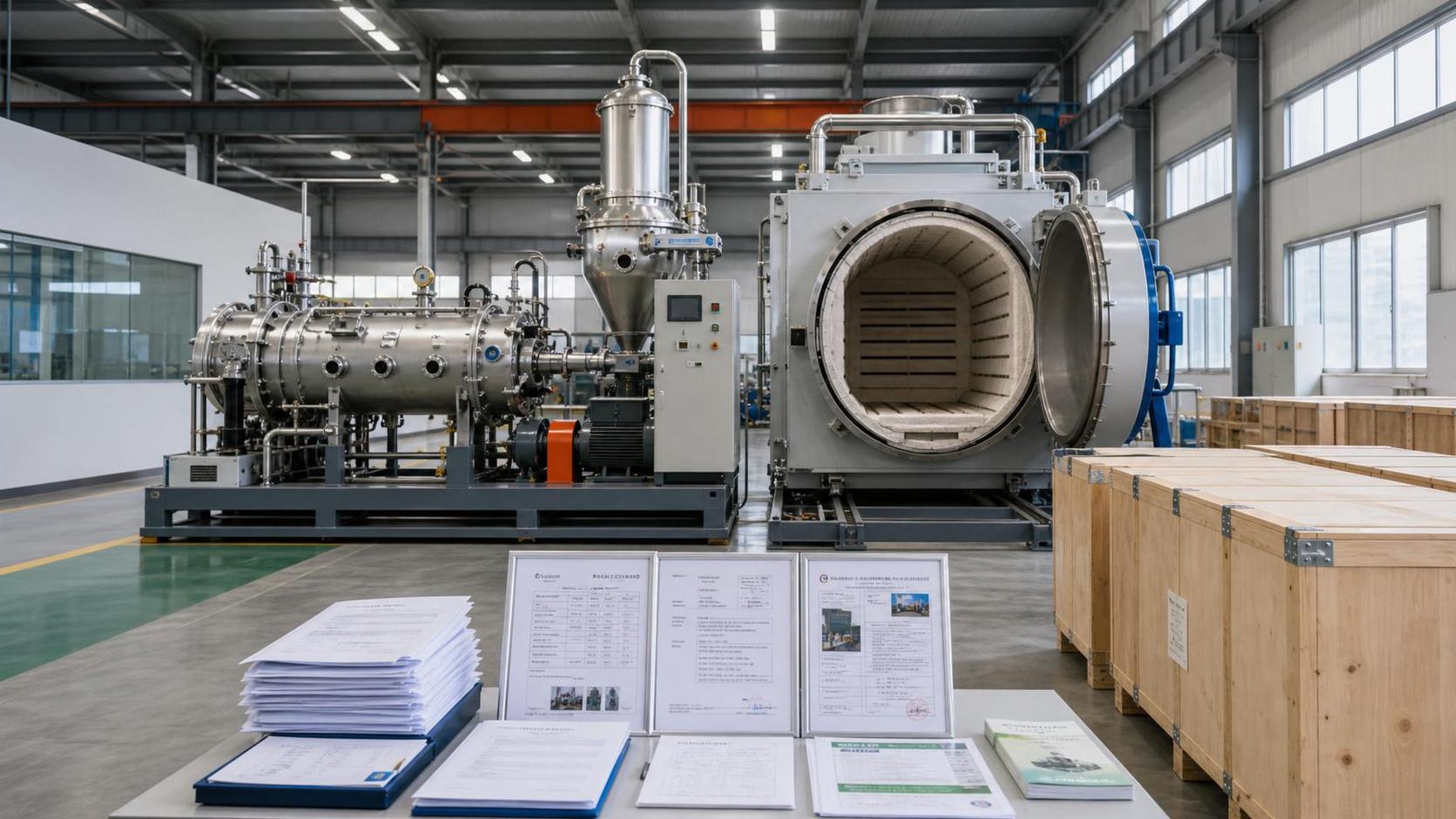
According to the information provided, the Indonesian government announced in early June 2026 that cobalt and tin ore export restrictions would be incorporated into the implementing rules of the downstreaming law. Under that requirement, all importers purchasing cobalt- or tin-related equipment, including vacuum calciners, isostatic presses, and roller kilns, must provide supporting integration plans for local refining capacity.
The same information states that the policy has already led multiple Chinese exporters of refractory brick presses and vacuum extruders & kilns to renegotiate technical agreements. The newly added mandatory clauses include local commissioning and direct data connectivity to BPS, identified here as Indonesia’s national mining data center.
Where the Pressure Appears Along the Business Chain
Equipment exporters face a wider delivery scope
From an industry perspective, exporters of processing and thermal equipment may be affected first because the policy links machinery supply to a localized refining solution. The impact is not only on product configuration, but also on technical documentation, on-site commissioning obligations, and agreement terms that now extend beyond equipment shipment itself.
Importers and project buyers must reassess procurement structure
Buyers and importers may need to pay closer attention to whether procurement packages can still be split into separate equipment and engineering components. Analysis shows that the new rule makes integration planning part of the purchasing condition, which could affect tender structure, supplier selection, and internal approval workflows.
Service providers may become part of compliance execution
For parties handling commissioning, systems integration, or industrial data connection, the reported requirement for direct linkage to BPS suggests that compliance may increasingly depend on service execution after the equipment arrives. What deserves closer attention is that delivery risk may shift from customs or shipment stages into implementation and data interface stages.
What Companies Should Watch Now
Track how official wording is applied in contracts
Companies should focus on how the policy language is being translated into binding technical and commercial clauses. The reported need to re-sign agreements indicates that the practical burden may emerge through revised appendices, scope definitions, and acceptance conditions rather than through headline policy wording alone.
Review whether existing offers cover localization obligations
Suppliers involved in vacuum calciners, isostatic presses, roller kilns, refractory brick presses, and vacuum extruders & kilns should review whether current quotations and technical proposals already address local refining integration. If not, the gap may appear later in delivery schedules, manpower planning, and customer negotiations.
Prepare for commissioning and data-interface requirements
Observably, local commissioning and direct connection to BPS are not peripheral details in the information provided; they are described as mandatory additions. That means companies may need to recheck responsibility boundaries for installation, testing, data access, and handover documentation before projects move forward.
Separate confirmed rules from operational interpretation
It is also important to distinguish the confirmed fact of new mandatory clauses from the still-evolving way those clauses may be enforced in individual transactions. For commercial teams, this means keeping procurement, legal, engineering, and customer communication aligned so that policy interpretation does not create avoidable execution disputes.
Why This Looks Like More Than a Short-Term Contract Issue
Analysis shows that this development is significant not only because cobalt and tin have now been added to the downstreaming framework, but because equipment exports are being tied directly to local processing build-out and state-linked data reporting requirements. It is more appropriate to understand this as a policy signal about how industrial equipment trade may increasingly be evaluated through local value-added and traceability expectations, rather than as a simple update to ore export restrictions alone.
At the same time, the currently available information does not support a broader conclusion about final market outcomes, cost pass-through, or the full scope of future enforcement. For that reason, this remains a policy development that has produced concrete contract-level changes, while still requiring continued observation at the implementation level.
How This News Is Best Understood at Present
For the industry, the key takeaway is that Indonesia’s downstreaming approach is now affecting not only raw material movement but also the structure of equipment procurement tied to cobalt and tin refining. The immediate relevance lies in contracts, technical scope, commissioning, and data connectivity requirements. At this stage, it is more appropriate to read the development as a clear operational signal with longer-term implications, rather than as a fully settled end-state for all related transactions.
Basis of This Article
This article is based on the user-provided news title, event date, and event summary. For this type of development, commonly relevant source categories may include official government announcements, company disclosures, industry association information, authoritative media reporting, and regulatory or standards-related documents.
No specific official source link was provided in the input, so the underlying policy wording and subsequent implementation details still require ongoing verification. Areas that warrant continued follow-up include any further official clarification, the treatment of specific equipment categories, and how local commissioning and BPS data-connection requirements are enforced in actual projects.
Related News
- Ceramic Body Forming Equipment for Stable Density and Fewer DefectsAuthor :Masonry Automation Architect

- China Tightens Vacuum Extruder Export Filing RulesAuthor :Masonry Automation Architect

- China Customs Adds Dust Test Filing for Vacuum ExtrudersAuthor :Masonry Automation Architect

- Vietnam Tightens Dust-Test Rules for Imported ExtrudersAuthor :Masonry Automation Architect
![]()
- Vacuum Extrusion Technology for Bricks: Key Quality Control PointsAuthor :Masonry Automation Architect

- How to Evaluate Ceramic Body Forming Equipment for Stable OutputAuthor :Masonry Automation Architect

- Vacuum Extrusion Technology for Ceramics: Key Quality Control PointsAuthor :Masonry Automation Architect

- Indonesia Extends Ore Curbs to Cobalt and TinAuthor :Masonry Automation Architect